
Vandaag of morgen in huis

Kwaliteit gegarandeerd

Welkomstaanbiedingen ontgrendelen: GRATIS bezorging | Tot 80% korting | Gratis 30 dagen JoyPlus-proefperiode
Download de app
A cleaning brush may seem like a simple product, but the wrong model can quickly become frustrating. Bristles that are too soft will not remove stubborn dirt, while a brush that is too hard can cause scratches. A short handle, a holder that does not dry properly or an unsuitable shape can also make a brush less useful than the product photo suggests.
This buying guide explains what to look for in cleaning brushes and which type is right for your kitchen, bathroom, toilet, floors or hard-to-reach areas.
A large cleaning brush set may seem like good value, but not every brush is suitable for every surface. Check whether the set contains different types of bristles and shapes. A grout brush for tile edges, for example, needs a narrow head, while a hard scrubbing brush can have a wider surface.
Steel, copper and hard plastic can be effective against baked-on dirt, but they are not automatically suitable for ceramic, glass, painted surfaces or plastic. Use a detail brush or a brush with softer nylon or PET bristles on surfaces that may scratch. If in doubt, test it on an inconspicuous area first.
A brush that remains wet in an enclosed holder can start to smell unpleasant and wear out more quickly. Look for a holder with room for water to drain away, or choose a model with a hanging hole. Rinse the brush after use and allow it to dry completely before storing it.
The bristles largely determine what you can use the product for.
A hard brush does not always remove dirt more quickly. It is often better to apply water or a suitable cleaning product first, so you do not need to use as much pressure.
A gap brush needs a narrow head to reach along taps, cabinet seams and window tracks. A longer handle is more practical for cleaning radiators. A 64 cm radiator brush, for example, can reach between the fins without having to dismantle the radiator.
Also consider the handle length. A hand brush measuring around 20 to 25 cm is easy to manoeuvre in the kitchen and bathroom. For floors or a patio, a longer handle is more comfortable. According to the product information, the 36 cm hand brush with 29 mm bristles is intended for floors, patios, grout and outdoor use.
With a specialist brush, such as a replacement robot vacuum brush, the model number is crucial. According to the product description, MOVA ACC-BRUSH-MA-1 is suitable for the MOVA E30 and P50 Ultra. Another MOVA brush in the range is listed for the P10 Ultra, P10 Pro Ultra and E30 Ultra. Always check the exact appliance before ordering.
For a toilet brush, the head size, length and holder all matter. A model with 25 mm PP bristles and a holder measuring 11.5 by 11.5 cm takes up very little space. Use this type of brush only for the toilet bowl and follow the maintenance instructions on the product page.

Why it suits this profile: This double-ended plastic brush is a practical starting point for general cleaning jobs in the kitchen, bathroom, garage and on tiles.
The double-ended design provides two brushing surfaces, so you do not need a separate set for every small household task.
Plastic construction, one brush per pack and suitable for several household surfaces.
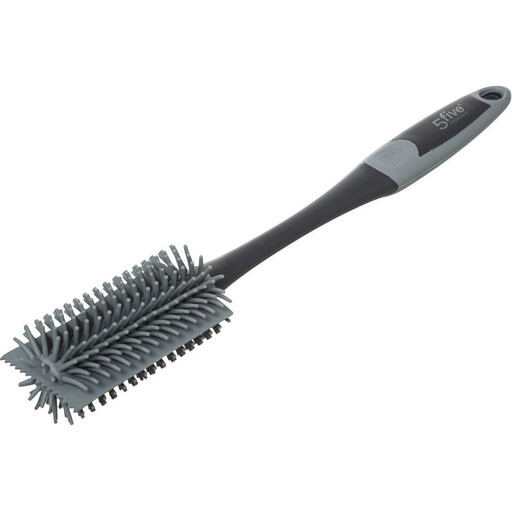
Why it suits this profile: A suitable choice for households that regularly clean bottles, narrow glasses or baby bottles.
The 35 cm length and narrow brush shape are designed for narrow containers rather than general surfaces.
Rubber bristles, non-slip handle, scraping edge and product information stating that it is dishwasher-safe.
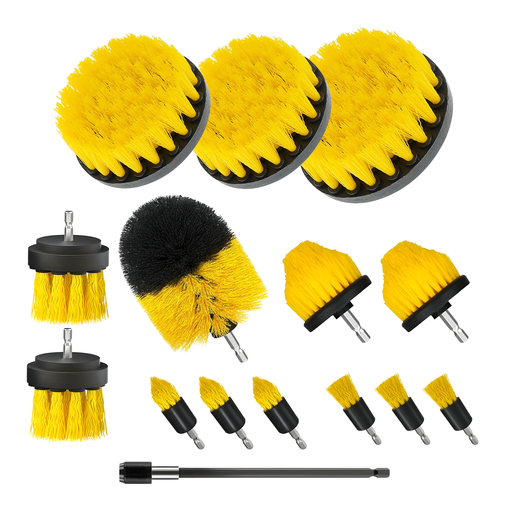
Why it suits this profile: This set is ideal for intensive cleaning jobs involving tiles, floors, sanitaryware or car parts when you already have a suitable cordless drill.
The set contains several head sizes and bristle grades. This lets you match the head to the material more effectively than with a single universal hard brush.
Standard hex shank, extension piece and several nylon brushes; follow the included instructions to help prevent scratches and loosening.
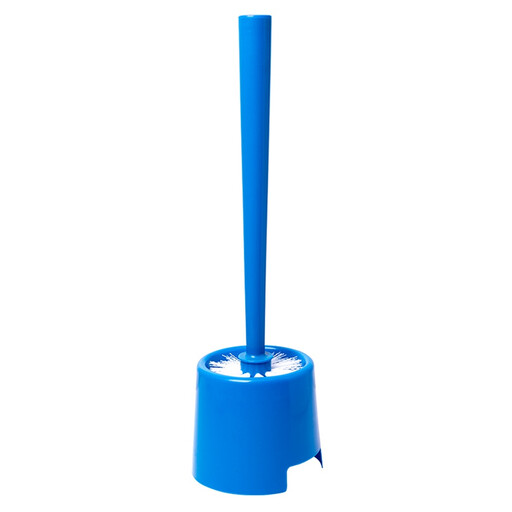
Why it suits this profile: The compact holder and total height of 37 cm make it practical beside a toilet, even when floor space is limited.
The product information specifies a separate holder and recommends keeping it dry. This makes storage tidier than leaving a loose brush on the floor.
25 mm sturdy PP bristles, 37 cm total height and a holder measuring 11.5 by 11.5 cm.
We have compiled a complete, up-to-date list of products that fully meet these strict selection criteria and the applicable European safety regulations.
For the kitchen, a washing-up brush and bottle brush are useful. For crockery, choose a brush that feels comfortable in your hand, and for bottles, opt for a longer, narrow head. A rubber bottle brush can be a good choice if you want to minimise scratches on glass or plastic.
In the bathroom, a grout brush, detail brush and gap brush are useful for taps, tile edges and the areas around sinks. Always check the bristle stiffness first when cleaning delicate sealant or chrome surfaces.
For the toilet, use a separate toilet brush. Rinse it after use, allow it to drain and replace it when the bristles become misshapen or worn.
A radiator brush is designed for the narrow spaces between radiator fins. Switch off appliances and allow surfaces to cool before cleaning them. For floors, patios and garages, a hard scrubbing brush with a longer handle is more practical than a small detail brush.
The lifespan depends on how often it is used, the cleaning product, the pressure applied and the material. Replace a brush when the bristles come loose, flatten, become misshapen or no longer remove dirt effectively. Rinsing the brush after use and storing it dry will help prevent unnecessary wear.
A narrow grout brush with sturdy nylon or PP bristles is the obvious choice. Do not use metal bristles on glazed surfaces, painted tiles or delicate sealant. Allow the cleaning product to soak in first and scrub using limited pressure.
That depends on what it contains. A set makes sense when you will genuinely use several sizes or bristle grades. Compare the number of useful brushes, the materials and the intended surfaces rather than looking only at the price per item.
