
Vandaag of morgen in huis

Kwaliteit gegarandeerd

Welkomstaanbiedingen ontgrendelen: GRATIS bezorging | Tot 80% korting | Gratis 30 dagen JoyPlus-proefperiode
Download de app
A scouring sponge for pans, a washing-up brush for daily use, or a grout brush for the bathroom: not every tool is right for every cleaning task. Choosing the wrong combination of material, hardness and size can cause scratches, wear out quickly, or fail to remove dirt effectively.
In this buying guide for cleaning sponges and cleaning brushes, you'll discover what to look out for before you order. Afterwards, you'll find practical product choices for different households and cleaning tasks.
A tough scouring sponge or steel wool pad can remove baked-on residue, but it isn't automatically suitable for non-stick coatings, glass, polished metal or plastic. Always check the usage information. Some products explicitly state that they are not suitable for scratch-prone surfaces or non-stick coatings.
For delicate materials, it's better to use a soft washing-up sponge or a sponge with a non-abrasive side. If in doubt, test on an inconspicuous area first.
A pack of 24 or 28 scouring pads might seem like good value, but the right question is also: do the pads suit your routine? A bulk pack is handy for families, shared use, or different zones around the house. For a small household, a smaller set can be more practical.
Also pay attention to the size. A sponge measuring roughly 10 × 7 cm feels different in the hand compared to a compact model of 8.5 × 5.5 cm. When you're cleaning for a while, thickness and grip make a real difference.
Dirt in grout, around taps, or behind the sink calls for a narrow head and sufficient reach. A standard washing-up brush sometimes falls short there. A long grout brush or sink brush helps you reach crevices more precisely without having to put your hand deep into water or cleaning solution.
Don't just look at the handle length; also consider the shape of the brush head and the stiffness of the bristles.
The choice of material determines what you can use a product for:
A product description may use terms like "non-scratch". Treat this as a product specification from the brand, not a guarantee for every surface. The condition of the material being cleaned, the pressure applied, and the cleaning product used also play a role.
For pans and sinks, a handy size is important. A sponge with a handle or a brush with a handle of around 28.5 cm can help when you need to keep your hands dry or when you're cleaning a deep pan.
For floors, patios and grout, more reach is useful. A hand brush of 36 cm allows you to work upright. A smaller grout brush, on the other hand, works more precisely around tile edges, taps and narrow gaps.
Rinse a sponge or brush thoroughly after use and let it dry completely in a well-ventilated place. A damp washing-up sponge can start to smell unpleasant more quickly. Replace the tool as soon as the sponge falls apart, the scouring layer comes loose, or the bristles are clearly deformed.
Use separate colours or products for the kitchen, bathroom and, for example, outdoor cleaning. This limits cross-contamination between different areas.
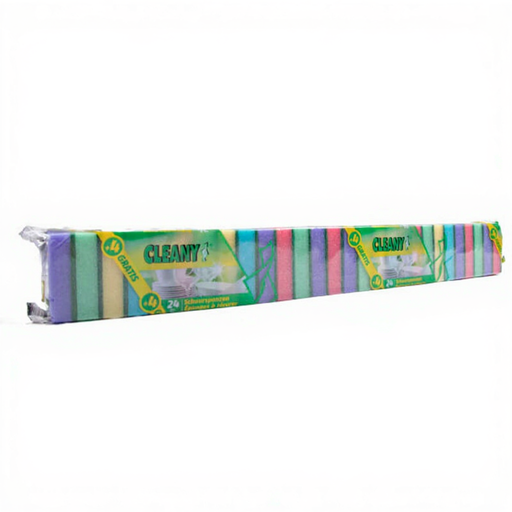
Why this fits the profile: A large pack is practical for everyday kitchen tasks, switching between rooms, or a household with multiple users.
The set contains 28 pads measuring 85 × 55 × 25 mm, so you're not reliant on one quickly worn-out example. Only use the scouring side where appropriate.
28 pieces per pack; combination of a firm scouring side and a soft sponge side according to the product description.
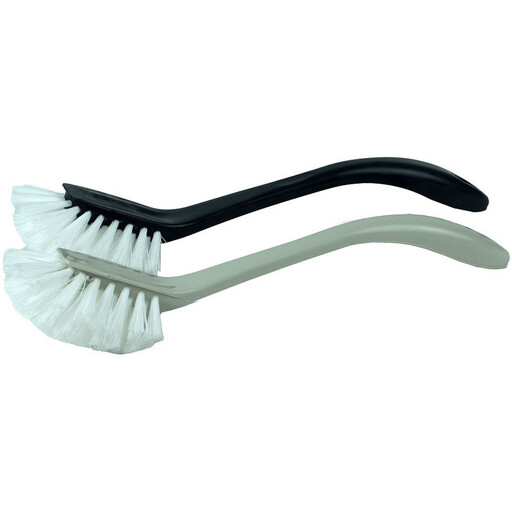
Why this fits the profile: Home cooks who regularly wash plates, pans and pots benefit from a fixed brush with an ergonomic handle.
The brush is designed to be rinsed after use and left to dry quickly. That's more practical than a sponge that stays constantly wet on the edge of the sink.
Stiff bristles; suitable for plates, pans, pots and kitchen surfaces; one piece per pack.
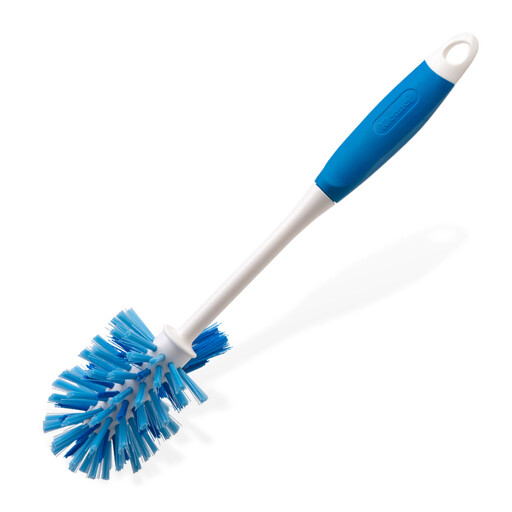
Why this fits the profile: Ideal for anyone who regularly tackles floors, patios, grout or garden furniture and needs extra reach.
The specifications mention a 36 cm handle and 29 mm bristles. This means the tool is designed for large or stubborn surfaces, not for delicate crockery.
36 cm reach; dense brush head with 29 mm bristles; TPR handle for grip; suitable for floors, grout and outdoor applications.
We've put together a full, up-to-date list of products that fully meet these strict selection criteria and comply with current European safety regulations.
That depends on usage, material and care. Replace a sponge when it discolours, smells unpleasant, becomes damaged, or loses its shape. Rinse it after every use and let it dry out.
Choose a narrow grout brush with firm nylon or plastic bristles. For larger tiled floors, a brush with a longer handle can be more efficient. Only use a wire brush when the surface is suitable for it.
Not every scouring sponge is suitable for that. Check the product information and avoid abrasive materials when the packaging warns about non-stick coatings or scratch-prone surfaces. A soft sponge side is generally a more cautious choice, but even then, test without applying much pressure.
