
Vandaag of morgen in huis

Kwaliteit gegarandeerd

Welkomstaanbiedingen ontgrendelen: GRATIS bezorging | Tot 80% korting | Gratis 30 dagen JoyPlus-proefperiode
Download de app
A full cleaning cupboard doesn’t automatically mean you have the right equipment. Many households buy a large cleaning set, only to find they’re missing a suitable cloth for glass, a narrow brush for grout or a sponge that’s right for the surface. Choosing the right cleaning products helps you avoid unnecessary scrubbing, damage and duplicate purchases.
A scouring sponge that works well on a pan may be too abrasive for a hob, plastic or a non-stick coating. Always check what a product is designed for. Some scouring sponges specifically state that they’re not suitable for scratch-prone surfaces or non-stick coatings.
A pack containing lots of cleaning sponges may seem like good value, but the size, texture and intended use determine its real worth. A small sponge can be handy for everyday cleaning, while a large floor cloth is better for floors. So look at dimensions, material and use, not just the pack size.
A manufacturer may state in its product description that a melamine sponge or scouring sponge is suitable for delicate surfaces. That doesn’t guarantee it will be suitable for every surface or finish. Test a new product on an inconspicuous area first, use gentle pressure and follow the instructions on the packaging.
For everyday wiping, microfibre cloths, viscose cloths and soft sponge sides are practical options. Microfibre can be used dry for dusting or slightly damp for dirt. A cloth with a density of 260 g/m², such as one of the available microfibre cloths, gives you a specific point of comparison rather than relying on vague claims.
For stubborn, stuck-on residue, scouring pads, wire brushes or soap-filled steel wool pads are more effective. Use them only when the surface allows it. A soap-filled steel wool pad may be suitable for a barbecue or grill, but not for painted furniture.
A roughly hand-sized sponge is usually easy to grip. For example, the Cleany scouring sponges measure 85 × 55 × 25 mm. Larger cloths are more practical for floors: available floor cloths include sizes of 50 × 60 cm and 50 × 70 cm.
A narrow or flexible brush is useful for taps, tile grout and gaps. Check the handle length and brush head width. If the brush is too short, you may still have to reach into a damp grout line with your fingers.
Rinse reusable sponges and cloths thoroughly after use and let them dry completely. Replace a sponge when it becomes worn, smells unpleasant or is difficult to rinse clean. Check whether cloths are machine washable and whether there are any restrictions on bleach or fabric softener.
It’s best to use separate cloths for the kitchen, bathroom and toilet, or to colour-code them. This reduces the chance of using the same cleaning tool for different tasks.
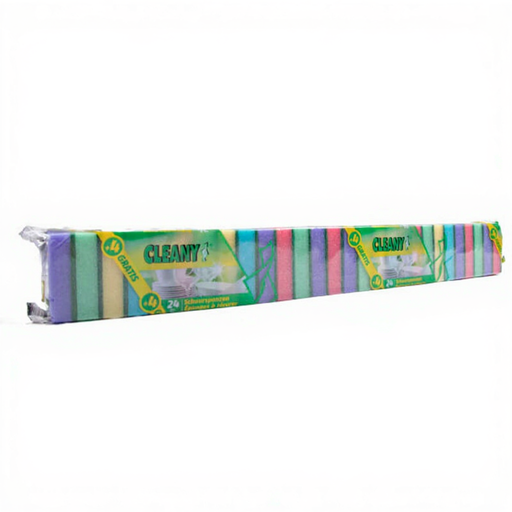
Why it suits this profile: A pack of 28 gives you plenty of sponges for the kitchen, bathroom or garage. The two sides are designed for different cleaning tasks.
The dimensions and pack quantity are clearly stated. Use the green scouring side only on suitable surfaces, and the soft side for lighter cleaning.
28 pads per set; one scouring side and one sponge side; suitable for wet and dry use according to the product description.

Why it suits this profile: If you want to wipe glass, stainless steel, screens or furniture without leaving streaks, a soft, reusable cloth is a better choice than a rough sponge.
The cloth is designed for gentle cleaning and has a specified density of 260 g/m². This makes it easier to compare the material and intended use than relying on a generic “premium” claim.
Measures 30 × 30 cm; machine washable up to 60 °C according to the product information; can be used dry or damp.
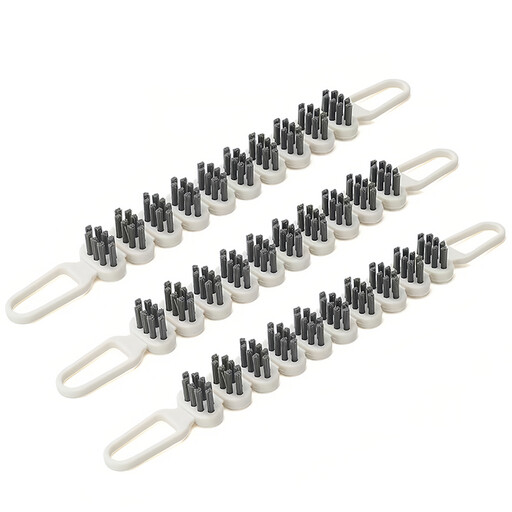
Why it suits this profile: If you regularly clean grout, taps, edges and other hard-to-reach spots, a narrow brush is more practical than a wide sponge.
The brush is specifically designed for narrow, hard-to-reach areas. Check first that its soft bristles are suitable for the finish you want to clean.
Set of three; flexible design; measures 23 × 3 × 2 cm; suitable for bathrooms, taps and kitchens according to the product description.
We’ve put together a complete, up-to-date list of products that meet these strict selection criteria and the applicable European safety regulations.
Start with a soft cleaning cloth, a few scouring sponges, a floor cloth and a narrow brush for grout or taps. Add a melamine sponge if you regularly need to tackle pencil, marker or soap marks. Choose the right tool for each surface rather than using one sponge everywhere.
Lifespan depends on how often you use them, the material, the cleaning product and how well they dry. Rinse sponges thoroughly and leave them to dry. Microfibre cloths that are machine washable according to the product information can be reused many times. Replace any item as soon as it starts to fray, loses its shape or can no longer be cleaned properly.
That depends on the purchase price, the number of washes and how often you use them. Reusable cloths require water and washing, but can be used several times. Disposable wipes are handy for quick dusting, for example on floors, but you need a new one for each cleaning session. So compare the cost per use rather than just the price per pack.
