
Vandaag of morgen in huis

Kwaliteit gegarandeerd

Welkomstaanbiedingen ontgrendelen: GRATIS bezorging | Tot 80% korting | Gratis 30 dagen JoyPlus-proefperiode
Download de app
Buying cleaning products seems straightforward, until a cloth starts shedding fibres, a brush becomes misshapen after a few weeks or an appliance requires more maintenance than expected. For a Dutch household, making the right choice is about more than just the price. The surface, frequency of use, storage space and safety also determine whether a product is genuinely right for you.
Words such as “professional”, “powerful” or “multifunctional” mean little without measurable information. For a steam cleaner, for example, power, heat-up time, water tank, steam pressure and accessories are more relevant. For cleaning cloths, dimensions, material, density and washing instructions matter more than a general promise of a sparkling finish.
So always check whether the product page provides specific details. If important specifications are missing, comparing products becomes more difficult.
Scouring sponges and wire brushes are designed for stubborn dirt, but they are not suitable for every surface. Stainless steel, painted surfaces, glass, plastic and hobs can be scratched. Test a new cleaning accessory in an inconspicuous area first and use a soft cleaning cloth for delicate materials.
Also pay attention to the grit or material. A stainless steel scouring sponge with grit 120 is a different type of product from a soft plastic sponge.
A steam cleaner or stain remover takes up more space than a dustpan and brush. In addition, you need to empty the tanks after use, clean the accessories and allow the appliance to cool down. A compact model is practical for a flat, while a larger tank may be more suitable for a family cleaning several rooms one after another.
Also consider the cable length, hose length, weight and where you want to store the product. An appliance that is difficult to reach is less likely to be used.
For everyday dust, grease and light stains, microfibre cloths are often practical. A cloth can be used dry for dusting or slightly damp for more thorough cleaning. Check whether the cloth is machine washable and whether the use of fabric conditioner is discouraged. Fabric conditioner can affect the properties of microfibre.
Scouring sponges may be suitable for kitchen worktops, tiled floors or cookware, but check the material warnings first. For grouting, edges and hard-to-reach areas, cleaning brushes are more useful than a wide cloth.
A floor mop and bucket should suit the area you are cleaning. A narrow mop is easy to manoeuvre in a small bathroom, while a wider mop can be more efficient on a large floor. Check that the handle is long enough and that the mop head can reach underneath furniture.
For a window cleaning set, the length of the telescopic handle, the width of the squeegee and the number of components are important. For example, according to the product information, the Alpina Window Cleaning Set has a handle adjustable from 57 to 130 centimetres and includes a window squeegee, window washer and two microfibre cloths.
For a steam cleaner, wattage, pressure and heat-up time provide an initial indication of how it can be used. On their own, they do not indicate how much dirt will be removed. Also check the water tank and operating time. A model with a 250 ml tank is intended for shorter cleaning tasks; a 1.5-litre tank may be more suitable for several rooms.
Only use steam on surfaces approved by the manufacturer. Avoid heat-sensitive materials, untreated wood, electrical connections, people and pets, among other things. For electrical appliances, check the safety information, plug, manual and the available EU responsible person. A CE mark should form part of the mandatory product information whenever it applies to the product.
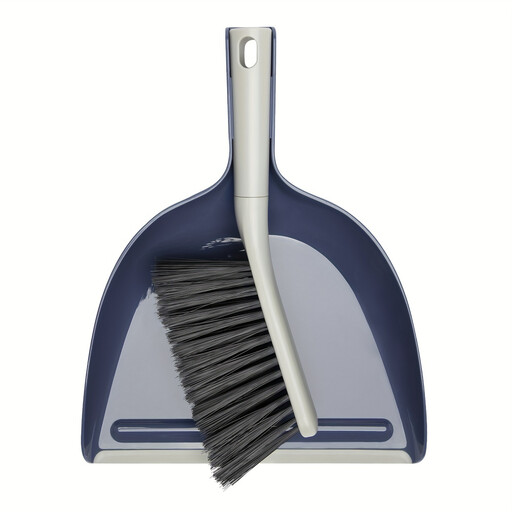
Why it suits this profile: For crumbs, dry spills and everyday tidying, a compact dustpan and brush set is always ready to use, with no assembly or power connection required.
Its functions are clearly defined: a hand brush and dustpan for dry dirt. The rubber edge of the dustpan and the stated dimensions of approximately 30 × 23.3 cm make its use clear.
Polypropylene, a portable design and easy cleaning with warm soapy water.
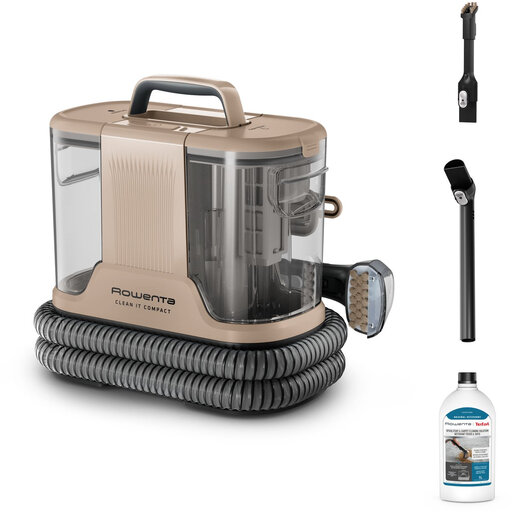
Why it suits this profile: Suitable for households that regularly want to clean carpets, sofas, mattresses or car interiors locally using an electric appliance.
The stated capacity consists of a 1.5-litre clean water tank and a 0.85-litre dirty water tank. This makes it clear in advance what maintenance and collection capacity are required.
400 W, a 4-metre cable, 175 cm hose and several attachments; according to the product information, a self-cleaning accessory is included.
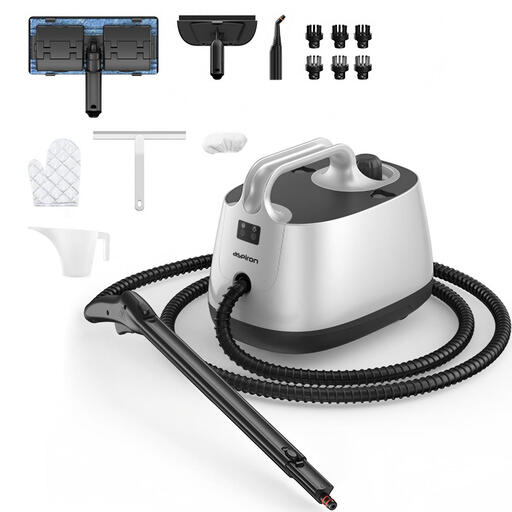
Why it suits this profile: A household wanting to tackle floors, bathrooms, kitchens, windows and hard-to-reach areas with one appliance can benefit from the extensive accessory set.
The product information lists 1,500 W, a maximum of 4 bar, a heat-up time of approximately 5 minutes and a 1.5-litre tank. Before buying, check that this capacity and waiting time suit your cleaning sessions.
21 accessories, integrated wheels and a child lock on the handle, according to the stated product details.

Why it suits this profile: A reusable cloth is handy for the kitchen, bathroom, car, office and delicate surfaces such as glass or screens.
The cloth has a stated size of 30 × 30 cm and a density of 260 g/m². This lets you assess in advance whether its size and structure suit your tasks.
Machine washable up to 60 °C according to the product information; suitable for dry or damp use.
We have put together a complete, up-to-date list of products that fully meet these strict selection criteria and the applicable European safety regulations.
A practical basic kit consists of microfibre cloths, a soft brush, a dustpan and brush, a floor mop, a suitable glass cleaner and, if necessary, a scouring sponge for stubborn dirt. Only add a steam cleaner or stain remover if you are going to use it regularly.
That depends on the material, use and maintenance. Wash microfibre cloths according to the label and replace them when they lose their structure, remain heavily soiled or become damaged. It is best to replace sponges and scouring sponges sooner once they become worn or start to smell unpleasant.
This depends on the purchase price, electricity consumption, maintenance and how often you use the appliance. A steam cleaner can be useful for certain tasks, but it requires an investment and safe handling. So do not compare only the purchase price; also consider the accessories, storage, cleaning and the cost of water and electricity.
