
Vandaag of morgen in huis

Kwaliteit gegarandeerd

Welkomstaanbiedingen ontgrendelen: GRATIS bezorging | Tot 80% korting | Gratis 30 dagen JoyPlus-proefperiode
Download de app
A full cleaning cupboard does not automatically mean you have the right products at home. Many households buy cleaning products based on a low price, eye-catching packaging or a promise such as “for every surface”. In practice, problems often arise from the wrong combination of material, size and intended use.
For example, a scouring sponge suitable for a pan can scratch a hob. A washing-up cloth that dries too slowly can start to smell unpleasant. And a duster with a short handle remains awkward when you want to reach high cupboards or light fittings.
Worktops, glass, stainless steel, tiles and non-stick coatings do not always require the same approach. Steel wool sponges and heavy-duty scouring sponges are intended for stubborn dirt, but are not suitable for scratch-prone surfaces. Always check the usage instructions.
A pack containing lots of cleaning cloths may seem like good value, but the size and quality determine how practical they are. A 30 x 30 cm cloth is useful for furniture and windows, while a larger washing-up cloth can absorb more moisture when doing the dishes.
Also pay attention to what “reusable” actually means. A product description may state that a cloth is washable, but you should then check the recommended washing temperature and care instructions.
A brush that feels comfortable in your hand is easier to use for longer periods. With washing-up brushes, a cleaning brush or a bottle brush, the shape of the handle, grip and length are important considerations. A 35 cm-long brush can be useful for narrow bottles, but less suitable for small sinks.
First, consider the material of the cleaning product and the surface you want to clean.
If in doubt, measure the space where you will use the product. A bottle brush measuring 35 cm is designed for deep or narrow items. For everyday washing-up, a shorter washing-up brush may be easier to manoeuvre.
For cloths, dimensions such as 30 x 30 cm, 32 x 38 cm or 35 x 35 cm provide useful points of comparison. A larger size does not automatically mean a better choice: smaller cloths are often easier to wring out and sort by room.
For students, offices and small catering businesses, a multipack can be useful. Think of 10, 28 or even 48 sponges. For a small household, a smaller pack may be more sensible, so unused items do not sit in storage unnecessarily long.
Use different colours to assign cloths to different rooms. For example, you could use blue washing-up cloths in the kitchen and reserve other colours for the bathroom or office.
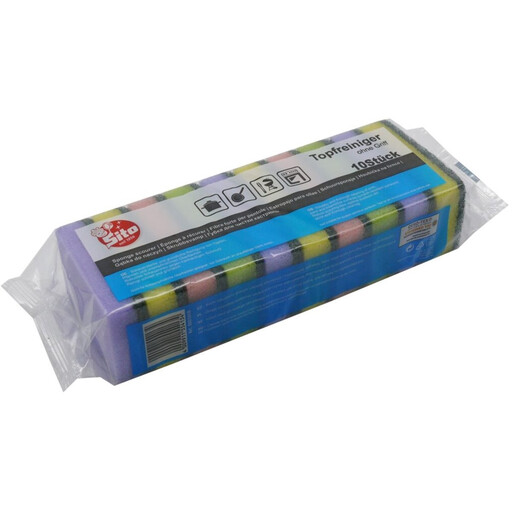
Why it suits this profile: A set of 10 scouring sponges is a manageable choice for everyday use in the kitchen or bathroom and does not require a large stock.
The number of items and the plastic material are clearly stated. Do not use the sponge without first checking whether it is suitable for the surface.
10 items per pack; size 9 x 6 x 3 cm.
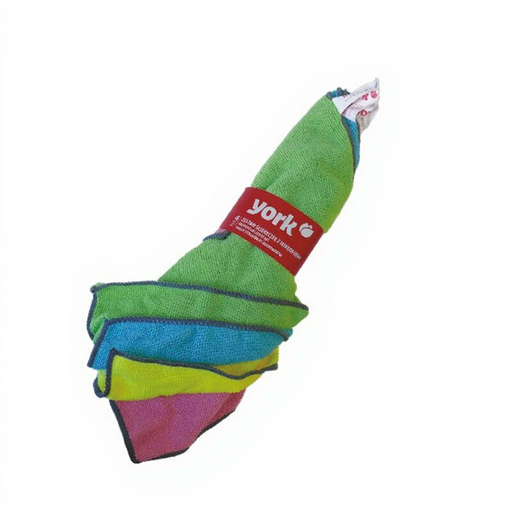
Why it suits this profile: Suitable for anyone looking for a single set of reusable cleaning cloths for smooth surfaces, windows, mirrors and furniture.
The dimensions and washability are stated. This means you can assess in advance whether four cloths will be enough for your cleaning routine.
4 microfibre cloths measuring 30 x 30 cm; suitable for dry and damp use according to the product description.
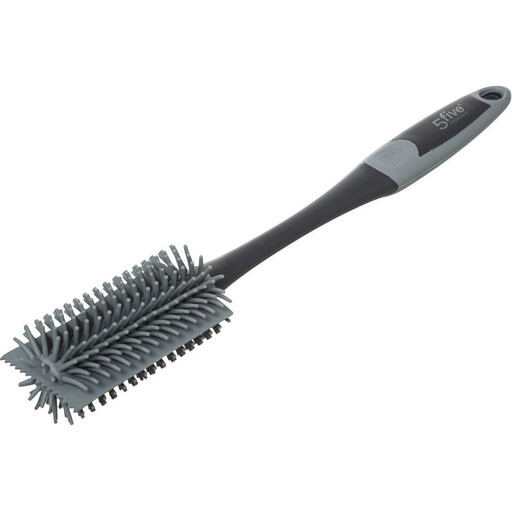
Why it suits this profile: A suitable choice for deep bottles, narrow glasses and items with baked-on residue in hard-to-reach places.
The 35 cm length makes the reach easy to assess. The item is specifically described as a bottle brush, not as a universal brush for every surface.
35 cm long; rubber bristles, non-slip handle and dishwasher-safe according to the product information.
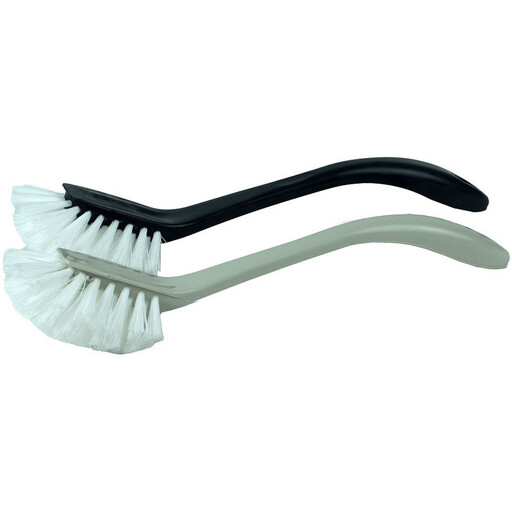
Why it suits this profile: The handle and brush shape are designed for plates, pans, pots and kitchen surfaces.
The recommended uses, materials and care instructions are described. Rinse the brush after use and allow it to dry completely.
Plastic handle; one item per pack; suitable for washing-up and kitchen surfaces according to the product description.
We have put together a complete, up-to-date list of products that fully meet these strict selection criteria and the applicable European safety regulations.
Lifespan depends on more than just the material. Proper care helps prevent you from having to buy new cleaning essentials too soon.
A duster with replaceable refills can be practical if you regularly remove dust. The Duster PP Cleaning Tool with 3 Refills - White has a flexible head, a lightweight design and three replaceable refills according to the product information. According to the description, the refills can be shaken out or washed by hand, then left to dry completely in the air.
Start with a set of washing-up cloths, several microfibre cloths, a few kitchen sponges, a washing-up brush and a cleaning brush. Add a bottle brush if you often clean narrow bottles or reusable drinking cups. A duster is useful for removing dust from shelves and furniture.
This depends on how frequently they are used, the material and how well they are maintained. You can continue using washable cloths as long as they become properly clean and do not fray. Replace sponges when they wear out, retain odours or lose their shape. Always check the label and product packaging.
Not automatically. According to many product descriptions, microfibre cloths are suitable for smooth surfaces, glass and furniture, but first check the manufacturer’s instructions and the surface itself. Use a clean cloth on screens and lenses, and avoid sand or hard particles that could cause scratches.
