
Vandaag of morgen in huis

Kwaliteit gegarandeerd

Welkomstaanbiedingen ontgrendelen: GRATIS bezorging | Tot 80% korting | Gratis 30 dagen JoyPlus-proefperiode
Download de app
The right cleaning cloth or sponge makes everyday jobs in the kitchen and bathroom easier. Yet many purchases are based on a low price, a large pack size or a striking claim on the packaging. That doesn’t always tell you how well a product will work in your home.
Pay particular attention to the material, size and suitability for the surface. For example, a scourer for a burnt-on pan isn’t automatically suitable for a hob or non-stick coating. Use these points to compare cleaning cloths and sponges based on verifiable product information.
Scourers are designed for stubborn dirt, grease and burnt-on residue. However, the abrasive layer can scratch delicate materials and non-stick coatings. That’s why the g'woon Scrub Sponges are explicitly described as unsuitable for scratch-sensitive surfaces and non-stick coatings.
For delicate surfaces, it’s better to use a soft sponge, viscose cloth or microfibre cloth. If you’re unsure, test it on a small, inconspicuous area first.
A pack with lots of dishcloths or household sponges may seem like good value, but the items can vary in size, material and intended use. A 30 x 30 cm cloth feels different to use from a 32 x 38 cm cloth. A set in different colours can also be useful if you want to assign cloths to different rooms.
So compare more than just the number of items: also consider the price per cloth, size and whether they’re washable.
Terms such as ‘absorbent’, ‘streak-free’ or ‘extra strong’ don’t, on their own, guarantee results in every home. A brand’s product description may say that a cloth is suitable for certain uses, but the result also depends on the surface, the cleaning product and how you use it.
Always follow the label. For example, don’t apply undiluted bleach directly to the Cleany viscose sponge cloths mentioned in the product information.
Microfibre cloths are reusable and washable, according to the Cleany set’s product information. The set contains ten 30 x 30 cm cloths in different colours. They’re handy for dust, dirt and stains on a range of surfaces.
Viscose cloths and sponge cloths are flexible and easy to wring out. The g'woon viscose cloths come in a pack of three and should be rinsed in warm water before first use. Some viscose products are described as plant-based or made from cellulose; check the exact product specifications rather than relying on the packaging alone.
Scourers usually combine a soft sponge side with a coarser scouring surface. They’re suitable for pans, sinks and other sturdy surfaces, but not necessarily for glass, high-gloss finishes, non-stick coatings or delicate surfaces.
A compact cloth is handy for a worktop or washbasin. Larger dishcloths provide more surface area when cleaning tables, doors and larger worktops. The blue and yellow Cleany cloths measure 32 x 38 cm and are sold in packs of ten.
Shape also matters when it comes to sponges. A rectangular scrubbing sponge measuring 150 x 100 x 70 mm feels different in the hand from a smaller washing-up sponge. If you often clean large surfaces, a bigger size may be useful. For washing up and smaller areas, a smaller sponge is often easier to handle.
Rinse dishcloths and sponges thoroughly after use and let them dry completely. Don’t leave damp cloths and sponges crumpled up in a wet sink for long periods. For washable products, check the care instructions on the label. The Multy G'Woon terry cloths can be washed at up to 60 °C, according to the product description.
Use different colours for the kitchen, bathroom and toilet if you want to avoid using the same cloth in multiple areas. Colour-coding isn’t a legal hygiene guarantee, but it is a simple household routine.
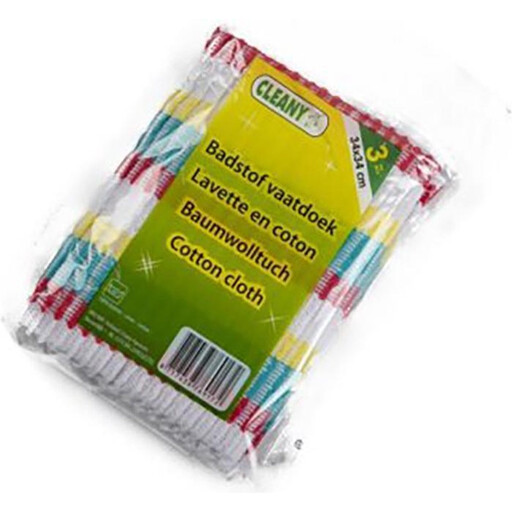
Why it suits this profile: A handy set of three cloths for everyday washing-up and kitchen tasks, without having to buy a large supply straight away.
The clearly stated pack size of three helps you avoid choosing a product based solely on a large number of items. The product description says the cloths can be used on a range of kitchen surfaces.
Set of 3; designed for kitchen surfaces; a practical first supply of dishcloths.
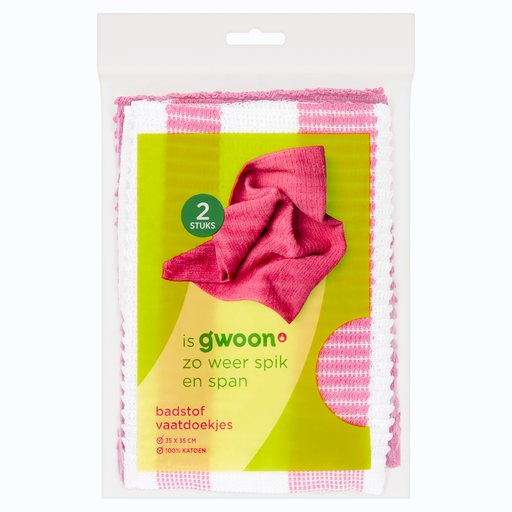
Why it suits this profile: Ideal if you consider material, washability and product information as well as the purchase price.
The relevant specifications are clearly stated: terry cloth, bamboo fibres, washable at up to 60 °C and two cloths per pack.
Material and care instructions are specified; the product description lists OEKO-TEX certification; reinforced edges.
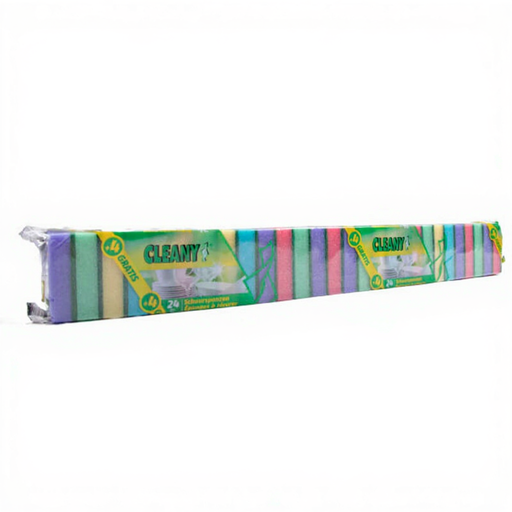
Why it suits this profile: A large supply for households that regularly clean pans, hobs, sinks or other sturdy surfaces.
The size and quantity are clearly stated. Use the scouring side only on suitable surfaces, and the soft side where appropriate.
28 items; measures 85 x 55 x 25 mm; combines a scouring side and a sponge side, according to the product description.
We’ve put together a complete, up-to-date list of products that meet these strict selection criteria and the applicable European safety regulations.
It depends on the material, how often you use it and how well you rinse and dry it. Replace a cloth when it looks worn, smells unpleasant or is no longer easy to clean properly. Washable models can be used for longer if you follow the care instructions.
Microfibre cloths, viscose cloths and soft dishcloths are practical options for everyday wipe-downs. For grease or burnt-on residue, washing-up sponges or scourers may be suitable, but always check whether the surface is prone to scratching. Ideally, use separate cloths for worktops, crockery and bathrooms.
A microfibre cloth can be used several times and washed, according to the Cleany set’s product information. This can make a reusable set a good option for households that clean frequently. However, compare the purchase price, washing instructions and expected lifespan.
