
Vandaag of morgen in huis

Kwaliteit gegarandeerd

Welkomstaanbiedingen ontgrendelen: GRATIS bezorging | Tot 80% korting | Gratis 30 dagen JoyPlus-proefperiode
Download de app
A loose dishcloth for the kitchen, a glass-cleaning cloth for windows and a scouring sponge for baked-on pans: many households use several types of cleaning products. Yet the range can often look very similar. A low price says little about how many cloths you receive, while an “extra-strong” sponge is not automatically suitable for every surface.
This guide helps you compare cleaning cloths and scouring sponges by material, size, quantity, care and intended use. That way, you can avoid a disappointing purchase and choose a set that suits your household, office, catering kitchen or cleaning routine.
A set containing 1 cloth and a pack of 10 microfibre cloths are difficult to compare directly. Calculate the price per item and consider the size too. A 40 × 30 cm cloth offers a different working area from a 30 × 30 cm cloth.
Also check whether the item is reusable and machine washable. A slightly more expensive cloth may be more cost-effective in practice if you can wash and reuse it repeatedly.
An abrasive layer can help remove baked-on residue, but it is not automatically suitable for non-stick coatings, polished stainless steel, glass or painted surfaces. Product packaging sometimes explicitly states that a sponge is unsuitable for scratch-sensitive materials.
If in doubt, test it on an inconspicuous area first. For delicate surfaces, use a soft microfibre cloth or a sponge with a non-abrasive side.
A wet sponge left on the edge of the sink dries slowly. This can lead to unpleasant smells and faster wear. Rinse dishcloths and cleaning sponges thoroughly after use, squeeze out excess water and allow them to dry completely.
Replace a sponge when its structure starts to come apart, the abrasive side is visibly worn or the sponge can no longer be rinsed properly.
Microfibre cloths are often made from polyester and polyamide. According to the product descriptions of various models, they are designed to pick up dry dust or remove damp dirt and grease. A soft, low-lint cloth is better suited to glass, screens, furniture and stainless steel than a hard scouring sponge.
For the kitchen, kitchen cloths and dishcloths with good absorbency are practical choices. Check the washing instructions: some cloths can be washed at 60 °C, while others should only be cleaned at a moderate temperature. Do not use fabric softener if the manufacturer states that it may affect the properties of the microfibre.
A size of 30 × 30 cm is convenient for everyday tasks and smaller surfaces. Larger cloths, such as 40 × 30 cm or 38 × 28 cm, are suitable when you want to wipe a larger area without having to turn the cloth over so often.
For a scouring sponge with a handle, the length is important. A 28.5 cm handle can help when cleaning deep pans, a sink or a baking tray without putting your hand directly into the water. The combination of a sponge side and an abrasive side offers greater flexibility, but always check that it is suitable for the surface.
A set of cleaning cloths in different colours makes it easier to maintain a consistent task allocation. For example, you could use one colour for the kitchen, another for the bathroom and a third for furniture or glass. This prevents the same cloth from being used in multiple rooms.
For small businesses, larger packs are worth considering. A set of 20 glass-cleaning cloths or 24 handled sponges can be useful for rotation, multiple workstations or daily cleaning in a catering establishment.

Why it suits this profile: The set contains 10 microfibre cloths measuring 30 × 30 cm in different colours. This provides a simple foundation for the kitchen, furniture and general cleaning tasks.
You can see the quantity and size at a glance, making it easier to assess the price per cloth. According to the product description, the cloths are washable and reusable.
10 cloths; different colours; compact 30 × 30 cm size; suitable for dry and damp wiping according to the product description.

Why it suits this profile: The stated density of 260 g/m² provides a clear point of comparison for anyone looking for a robust microfibre cloth for everyday use.
The product information states the material, size, density and washing instructions. You therefore do not have to rely solely on general terms such as “extra absorbent”.
260 g/m²; 30 × 30 cm; machine washable up to 60 °C according to the product description; suitable for glass, stainless steel, kitchens, bathrooms and offices, among other surfaces.
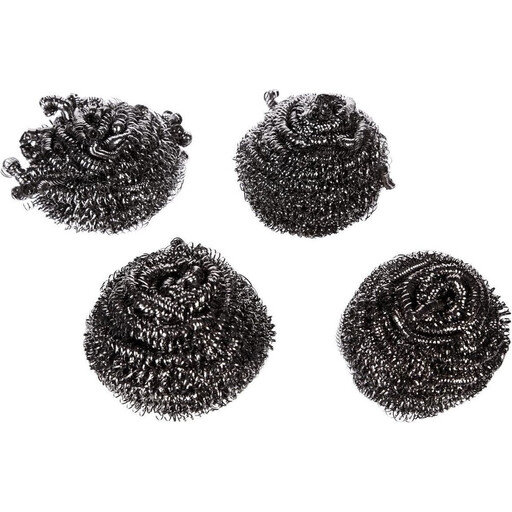
Why it suits this profile: According to the product description, these stainless steel scouring pads are designed for pans, baking trays, oven racks and barbecues.
Its intended use is clearly defined. Do not use this type on non-stick coatings, glass or other scratch-sensitive surfaces without checking the product information first.
4 pads; stainless steel; each pad measures 6 × 6 × 4 cm; designed for stubborn residue on suitable, robust surfaces.
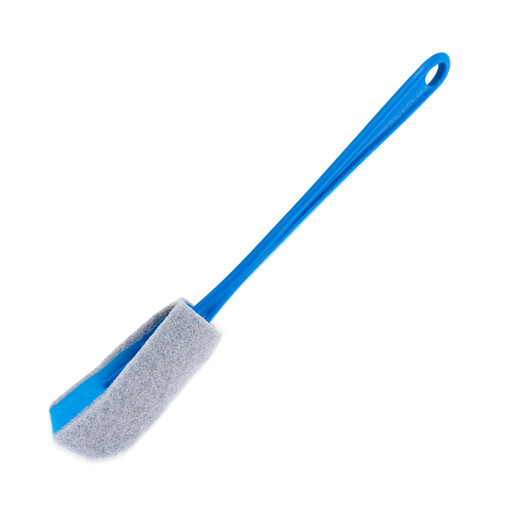
Why it suits this profile: The 28.5 cm handle is practical for deep pans, sinks and baking trays. According to the product description, the sponge and abrasive sides are designed for different cleaning tasks.
The dimensions and intended use are clearly described. Rinse the pad after use, squeeze out the water and allow it to dry thoroughly before using it again.
28.5 cm handle; 10 × 4.5 cm pad; 3 cm thick; two sides for normal cleaning and scrubbing.
We have put together a complete, up-to-date list of products that fully meet these strict selection criteria and the applicable European safety regulations.
That depends on use, material, number of washes and care. Wash the cloth according to the label and allow it to dry completely. Replace a cloth when the fibres start to come loose, it becomes heavily discoloured or it no longer absorbs dirt effectively.
For non-stick pans, only use a sponge that explicitly states it is suitable for scratch-sensitive surfaces, or one with a non-abrasive sponge side. Stainless steel scouring pads and hard pan sponges can damage the coating. Always check the instructions for the pan and the product packaging.
That depends on the purchase price, washing costs and lifespan. According to the product information for many models, microfibre cloths are washable and reusable. This can make them practical for regular cleaning, while disposable cloths mainly offer convenience for one-off or quick use.
