
Vandaag of morgen in huis

Kwaliteit gegarandeerd

Welkomstaanbiedingen ontgrendelen: GRATIS bezorging | Tot 80% korting | Gratis 30 dagen JoyPlus-proefperiode
Download de app
A pack of cleaning cloths might seem like a simple purchase. Yet microfibre cloths, dishcloths, kitchen towels and disposable cloths vary greatly in how they're used. A cheap set can be too small for large surfaces, leave lint behind, or feel less pleasant after just a few washes. You might also pay for a large number of cloths that barely absorb any moisture.
With these practical checkpoints, you can choose cleaning cloths that suit your home, office, kitchen or personal care routine.
A set of cleaning cloths with ten or more pieces might seem like good value. But you should also check the size and the material. Ten small microfibre cloths measuring 30 x 30 cm are handy for daily tasks, but they're not the same as ten cotton towels measuring 50 x 70 cm. So don't just compare the price per pack – compare the price per usable cloth and the intended use, too.
Terms like "ultra-absorbent", "streak-free" or "suitable for all surfaces" sound appealing, but the actual result depends on moisture, cleaning product, surface and care. According to the product description of some brands, microfibre cloths work dry for dust and damp for dirt or grease. That's a product claim, not a universal guarantee. So look for verifiable information such as material, dimensions, washing instructions and weight or density.
Cleaning cloths for the kitchen shouldn't be confused with face towels or disposable washcloths. For home care, travel or situations where washing is difficult, dry, non-impregnated disposable washcloths can be practical. Use them once and dispose of them according to local waste regulations. Do not flush them down the toilet unless the packaging explicitly states it's safe to do so.
Microfibre cloths are often made from polyester and polyamide. The fibre structure is suitable for dusting and cleaning smooth surfaces. For some products, the manufacturer advises washing without fabric softener or bleach, as this can affect the properties of the fibres.
Cotton towels generally feel soft and are suitable for drying, kitchen work and hands. A cotton set may absorb more water thanks to its larger size, but it also takes up more space when washing and drying. Check whether the cloths are machine washable and whether tumble drying is allowed.
Viscose cloths are often used as dishcloths for the kitchen and bathroom. With a product like g'woon Viscose Cloths, the packaging states that the cloths should be rinsed thoroughly with warm water before first use. Always follow the manufacturer's washing and storage advice.
Non-woven disposable cloths are intended for single use. According to the product information, HeltiQ Disposable Washcloths are dry and not impregnated. You can moisten them with water if you wish. They are designed for personal cleansing, not as general cleaning cloths for furniture or glass.
For small surfaces, sizes around 30 x 30 cm are easy to hold and store. Larger cloths, such as 40 x 60 cm, are more convenient for tables, worktops or drying. Towels measuring 35 x 75 cm are better suited to hands and personal care than to detailed cleaning work.
Also pay attention to the quantity:
Reusable cleaning cloths are only practical if they can be washed properly. Check the maximum temperature and look out for restrictions such as no bleach, no ironing or no tumble drying. Wash cloths for the toilet, kitchen and personal hygiene separately if possible, or use a colour-coding system.
A colour-coded set makes it easier to separate tasks. The Cleany Micro Cloth Multicolour set, for example, contains ten microfibre cloths measuring 30 x 30 cm in different colours. That can help you use a dedicated cloth for each room. Allow cloths to dry completely after use and do not store them damp in a sealed bucket.
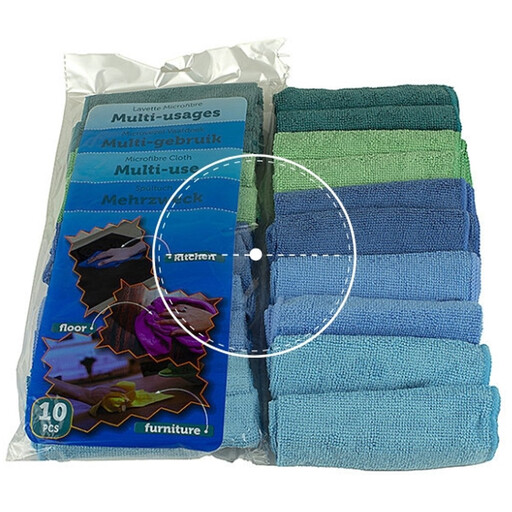
Why this fits the profile: The set contains ten washable microfibre cloths in different colours. That's a straightforward starting point for the kitchen, bathroom, furniture and quick cleaning tasks.
The number of cloths and the size are clearly stated: 10 pieces of 30 x 30 cm. So you know exactly what you're getting per pack.
Microfibre, 30 x 30 cm, assorted colours and reusable according to the product information.
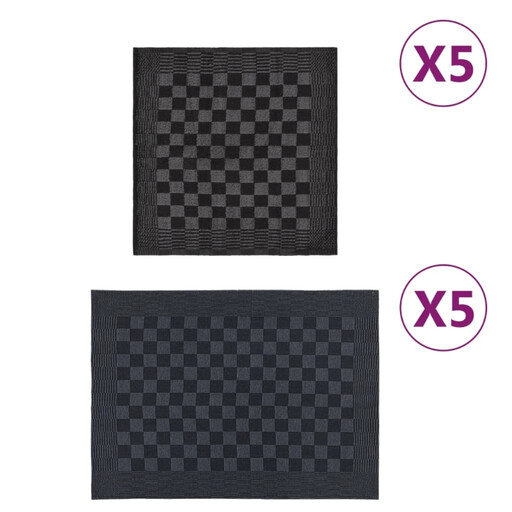
Why this fits the profile: For households that do a lot of drying and like to have several towels on hand, this set combines kitchen towel and hand towel sizes.
The contents are specified as 5 tea towels of 50 x 70 cm and 5 hand towels of 50 x 50 cm. So the set isn't judged on piece count alone.
100% cotton according to the product information, 10 pieces and machine washable; low-temperature tumble drying is mentioned.

Why this fits the profile: This cloth is aimed at users who want one specific, compact cloth for the home, car, office or delicate smooth surfaces.
The product information states a density of 260 g/m², washable up to 60 °C and a clear size of 30 x 30 cm.
High stated density, lint-free microfibre according to the description and suitable for dry or damp use.
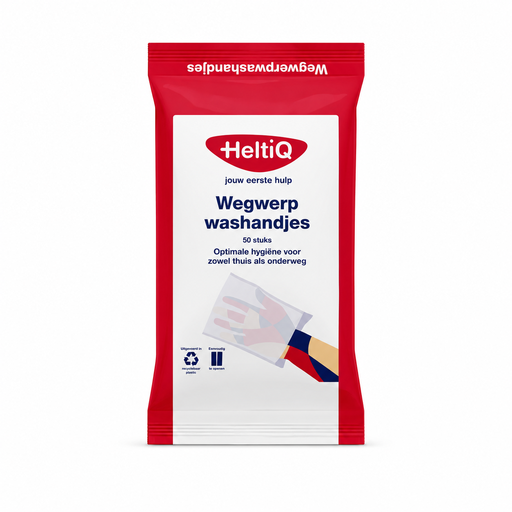
Why this fits the profile: The dry, non-impregnated disposable washcloths are designed for personal cleansing on the go, after sport or in a home care setting.
The product is clearly labelled for single use. This prevents a personal cloth from being accidentally treated as a reusable cleaning cloth.
50 pieces, dry and non-impregnated; can be moistened with water according to the product information.
We've put together a full, up-to-date list of products that fully meet these strict selection criteria and comply with current European safety regulations.
Microfibre cloths with a smooth, low-lint structure are often practical for this. Use a clean cloth and not too much water. Check the product description: some microfibre cloths explicitly state that they are intended for smooth surfaces such as glass and stainless steel. The final result also depends on the surface and the cleaner you use.
That varies depending on the material, frequency of use and wash cycle. Washable microfibre cloths and cotton towels can last for multiple use cycles as long as you follow the washing instructions. Do not use fabric softener on products where the manufacturer advises against it, and allow cloths to dry thoroughly. Replace a cloth when it develops a persistent unpleasant smell, starts to fray or no longer releases dirt properly.
That depends on how often you use them. Reusable cloths require water, detergent and energy, whereas disposable washcloths are ready to use straight away but create waste with each use. For daily kitchen work, reusable dishcloths are usually the more sensible option. For travel, sport or personal care away from home, a pack of disposable washcloths can be more practical.
