
Vandaag of morgen in huis

Kwaliteit gegarandeerd

Welkomstaanbiedingen ontgrendelen: GRATIS bezorging | Tot 80% korting | Gratis 30 dagen JoyPlus-proefperiode
Download de app
A cloth may seem like a simple household essential, but differences in material, size and care can have a big impact on how easy it is to use. If you focus only on a low price or a bold claim, you could end up with cloths that quickly start to fluff, absorb very little moisture or lose their shape after a few washes.
Use this practical guide to compare cleaning cloths, microfibre cloths and dishcloths by features you can check in advance.
A pack with lots of cloths may seem like a good deal, but size and quality matter too. A small cloth can be handy for a screen or washbasin, while a larger surface is better for a worktop or table. So always check the dimensions of each cloth, not just how many are in the pack.
Using the same cloth for the toilet, bathroom and worktop isn’t practical. Different colours, such as blue, yellow or a mix of colours in one pack, make it easier to keep cloths separate by room or task. This makes a dishcloth set easier to manage in everyday use.
Words such as “extra absorbent” don’t tell you much without information about the material, texture or intended use. Some manufacturers provide an absorbency rating. For example, according to its own product information, the Multy G'Woon cloths have a water absorption rate of 400%. Treat this as a manufacturer’s product specification, not a universal guarantee for every cleaning task.
Also look out for conflicting information. The description for the blue Cleany model states that the pack contains 10 cloths, while another product specification lists 12 per pack. If in doubt, check the product page and packaging before buying.
Microfibre cloths are made from fine synthetic fibres and are often used for dust, fingerprints, glass and smooth surfaces. The product description for the 30 x 30 cm Microfibre Cloth lists a density of 260 g/m², a lint-free texture and machine washing up to 60 °C. Use a cloth like this dry for dusting or slightly damp for a more thorough clean, following the instructions provided.
Viscose and sponge cloths are particularly useful for moisture and everyday kitchen tasks. They’re generally easy to wring out and handy for worktops, sinks and tables. According to the product information, the 18 x 20 cm Cleany viscose sponge cloths should be rinsed before use. Do not use them with undiluted bleach.
A size of around 30 x 30 cm is versatile for use in the kitchen, bathroom, on furniture and in the car. Larger cloths give you more surface area to work with, but also take up more room in the laundry basket. The 32 x 38 cm Cleany dishcloths, for example, are designed for washing dishes and cleaning surfaces.
A raised or honeycomb texture may help retain moisture and dirt, but how well it works depends on the material and how you care for it. For glass, screens and stainless steel, choose a soft cloth without a rough scouring layer. A sponge or scourer is better for stuck-on dirt, but always test it on an inconspicuous area first to avoid scratches.
Reusable cleaning cloths are especially practical when you rotate between several cloths. Check:
According to the product description, the Cleany microfibre cloth can be machine-washed at up to 60 °C. Washing without fabric softener and drying at a low temperature are recommended. Washable cleaning cloths aren’t automatically suitable for every cleaning product, so always follow the care label.
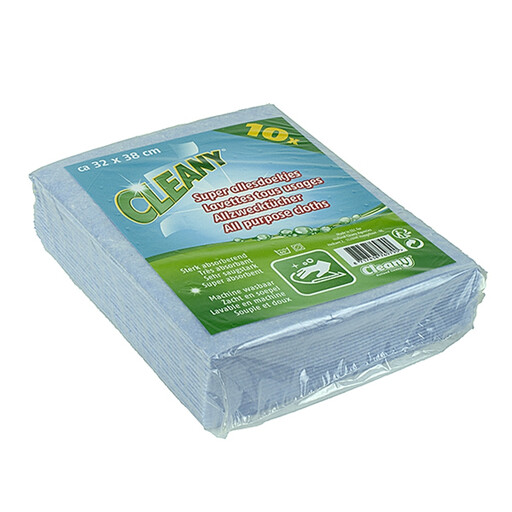
Why it suits this type of user: The generous size and blue colour make this a practical starter pack for the kitchen or bathroom.
The dimensions and stated pack size are clearly listed. However, check the conflicting pack information on the product page.
32 x 38 cm; blue colour for easy task separation; described as a pack of 10.

Why it suits this type of user: This cloth is designed for smooth, delicate surfaces such as glass, screens and stainless steel.
The product information lists the material, density, care instructions and size, so you don’t have to rely on a vague marketing claim alone.
260 g/m²; 30 x 30 cm; described as machine-washable up to 60 °C and suitable for dry or damp use.
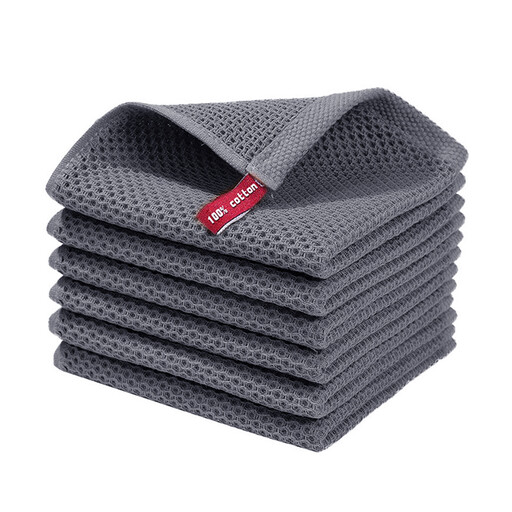
Why it suits this type of user: This six-pack is handy for households that use several cloths a day and want to keep tasks separate.
The pack size and dimensions are clear from the outset. The product name mentions the honeycomb texture; decide whether it suits your cleaning tasks.
Six cloths; 30 x 30 cm; textured surface, according to the product name.
We’ve put together a complete, up-to-date list of products that meet these strict selection criteria and the applicable European safety regulations.
Wash cloths as soon as they look dirty, smell unpleasant or have been used in different rooms. Kitchen cloths may need replacing more often than cloths used for dry dusting. Always follow the care label. For microfibre, the product information advises against using fabric softener, as it can affect the fibre structure.
They can be, provided the cloth is soft and lint-free and you don’t rub the surface with sand or hard particles of dirt. Use a clean, slightly damp cloth, then dry the surface afterwards if needed. For screens and delicate surfaces, check the manufacturer’s instructions first.
That depends on the purchase price, washing costs, lifespan and how often you use them. A set of washable cloths can be practical if you rotate between several. Work out the cost per use and check whether the cloth is suitable for machine washing. This gives you a more sustainable way to compare options than looking only at the number of cloths in a pack.
