
Vandaag of morgen in huis

Kwaliteit gegarandeerd

Welkomstaanbiedingen ontgrendelen: GRATIS bezorging | Tot 80% korting | Gratis 30 dagen JoyPlus-proefperiode
Download de app
A cloth might seem like a simple household essential, but there are big differences between cleaning cloths, washing-up cloths and microfibre cloths. A cloth that’s too small gets saturated quickly, a cloth that sheds fibres leaves you with extra work, and a set with too few cloths can be inconvenient when you want to clean your kitchen, bathroom and car separately.
So don’t just look at the colour or a claim such as “extra absorbent”. Check the material, size, number of cloths and washing instructions.
Words such as “super absorbent” or “streak-free” don’t tell you much if the product description doesn’t say what the cloth is made of, how big it is or how to wash it. Some products provide little more than a general product name. Compare details you can check, such as 30 x 30 cm, the number of cloths or a microfibre density of 260 g/m².
Using the same washing-up cloth for the worktop, bathroom and floor isn’t practical. It also increases the risk of spreading dirt between rooms. Ideally, choose a cleaning cloth set with several cloths and use different colours for different rooms. This makes it easier to keep kitchen towels, cleaning cloths and bathroom cloths separate.
Reusable cleaning cloths are only good value if you can wash and dry them properly. Check the washing instructions on the packaging. For example, the 30 x 30 cm microfibre cloth can be machine-washed at up to 60 °C, without fabric softener. A disposable cloth, on the other hand, doesn’t need washing, but does create more waste.
Microfibre cloths have fine fibres that, according to the product description, can pick up dust, dirt and grease. They’re suitable for dry dusting or damp cleaning, and are often used on glass, mirrors, screens, furniture and stainless steel. For delicate surfaces, watch out for grains of sand and coarse dirt: removing loose debris first helps prevent scratches.
Viscose cloths and traditional washing-up cloths are especially handy for everyday jobs in the kitchen and bathroom. They’re usually easy to rinse out and suit households that like to have several cloths in use at once.
A 30 x 30 cm cloth is handy for mirrors, taps, furniture and smaller surfaces. Larger kitchen towels, such as 40 x 60 cm or 40 x 66 cm, are useful for drying, soaking up spills and cleaning larger surfaces.
Also check how many cloths are included. A set of three may be enough for occasional use, while a pack of six, eight, nine or ten gives you more flexibility to set aside different cloths for different tasks or rooms.
Absorbent cloths are handy for wet surfaces. For windows, mirrors and screens, lint-free cloths are more important. A product description may say that a cloth dries quickly or leaves no streaks. Treat this as information from the brand, and bear in mind the surface, the amount of water and the cleaning product you use.
Where the packaging recommends it, wash microfibre without fabric softener. Fabric softener can affect the fibre structure. Let cloths dry completely after use to help prevent musty smells.
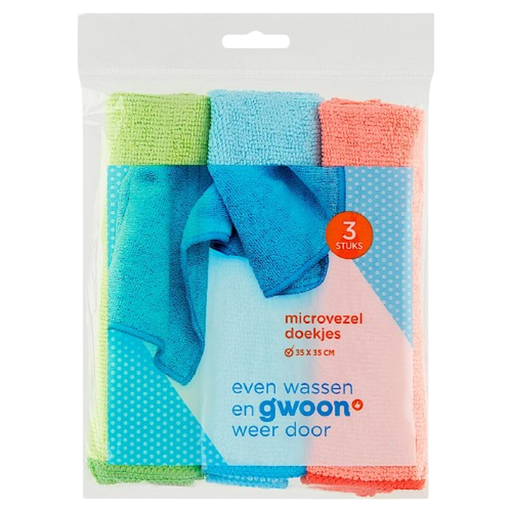
Why it suits this profile: This set of three microfibre cloths is a handy starting point for everyday jobs in the kitchen, bathroom or living room.
The pack clearly states that it contains three cloths, so you don’t have to rely solely on a vague claim about cleaning power.
Microfibre material; pack of 3; suitable for different surfaces according to the product description.

Why it suits this profile: The stated density of 260 g/m² and size of 30 x 30 cm give you clear details to compare when choosing a cloth.
The product information specifies the material, size, density and washing instructions, so your choice depends less on vague superlatives.
260 g/m²; machine-washable at up to 60 °C according to the product information; soft, lint-free texture for surfaces including glass and stainless steel.
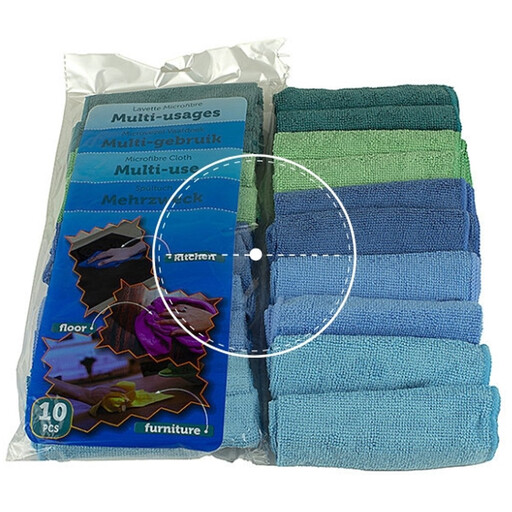
Why it suits this profile: This set of ten cloths is handy for households that want to keep cleaning tasks for the kitchen, bathroom, furniture and other areas separate.
The different colours help you assign cloths to different rooms or tasks. With ten cloths in the pack, you’re less likely to need to reuse a cloth straight away.
Set of 10; microfibre; size 30 x 30 cm; washable and reusable according to the product description.
We’ve put together a complete, up-to-date list of products that meet these strict selection criteria and current European safety regulations.
Choose lint-free microfibre cloths with a soft texture. Remove sand and coarse dirt first, and don’t use too much cleaning product. A 30 x 30 cm cloth is easy to handle for mirrors, windows and smaller glass surfaces.
Wash them when they’re visibly dirty, remain very damp or start to smell. Always follow the care label. The washing instructions for the microfibre cloth mentioned above recommend washing at up to 60 °C without fabric softener. Let cloths dry completely before putting them away.
It depends on how often you use them and how they’re packaged. Disposable cloths are handy for a quick, one-off clean, such as the Cleany Mop Cloths set of 50. Reusable cleaning cloths may make more sense if you clean every day and have enough cloths to use while others are in the wash. Compare the price per cloth and take washing costs and waste into account.
