
Vandaag of morgen in huis

Kwaliteit gegarandeerd

Welkomstaanbiedingen ontgrendelen: GRATIS bezorging | Tot 80% korting | Gratis 30 dagen JoyPlus-proefperiode
Download de app
A single cleaning brush seems like a simple purchase, until you find that the bristles are too soft for grout, the handle is uncomfortable to hold or the brush head won’t fit inside a bottle. In Dutch homes, common uses include cleaning kitchens, bathrooms and floors, as well as hard-to-reach gaps.
The product name doesn’t always tell you everything. Check the dimensions and materials, and think about how you plan to use the brush. That way, you can avoid buying several brushes that ultimately don’t do the job properly.
A hard scrubbing brush may be suitable for tiled floors, patios or grout, but it can damage delicate surfaces. Glass, painted wood and some plastic surfaces need softer bristles. Always check which surfaces the product information says the brush is suitable for.
A 3-pack or 5-pack may look like good value, but the number of brushes tells you little about how useful the set will be. Check whether the brushes come in different shapes or if the set contains several identical ones. A set with several narrow brushes is handy for gaps, taps and rails, but less suited to large floor areas.
A short handle is usually practical for cleaning a sink or worktop. For floors, shower walls or a patio, a long-handled cleaning brush may be more comfortable to use. A short model can mean unnecessary bending and less reach. So, check the handle length and the distance from the handle to the brush head before you buy.
The bristle stiffness determines how much pressure you can apply and which surfaces the brush is suitable for.
A grout brush usually has a narrow head and bristles designed to reach between tiles. A wide scrubbing brush spreads the pressure across a larger area, making it more practical for floors.
If you’re buying a bottle brush, first measure the bottle opening and check the length of its interior, too. A narrow cleaning brush needs a compact head and a suitably curved or straight handle. A brush for hard-to-reach areas shouldn’t just be narrow; it also needs to be stiff enough to loosen dirt.
For everyday washing-up, a washing-up brush measuring around 20 to 30 centimetres is often easy to handle. A long handle is especially useful if you want to keep your distance from water or dirt, or need to clean a large area.
Many household brushes are made from plastics such as PP, PET or nylon. These materials are easy to rinse clean. A wooden or bamboo handle can feel comfortable to hold, but needs to dry thoroughly after use. Also check whether a product is dishwasher-safe; that isn’t automatically the case for every kitchen brush.
Rinse the brush after use, remove any food or cleaning product residue, and leave it to dry completely. Replace it when the bristles come loose, become misshapen or no longer clean effectively.
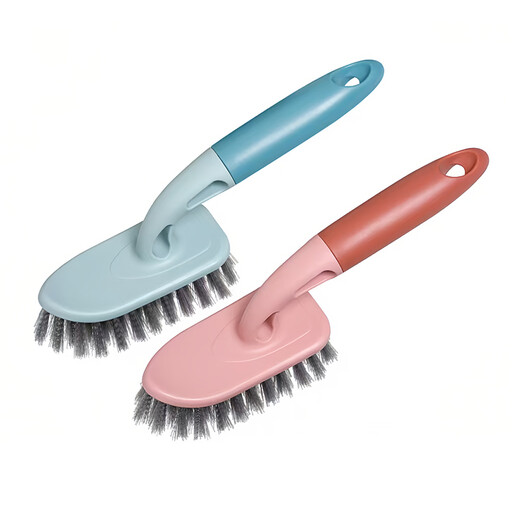
Why it suits this type of user: This set contains two multi-purpose brushes made from PP and PET, with stated dimensions of 23 × 5,5 × 21 cm. It makes a useful addition for cleaning the kitchen, bathroom and other areas around the home.
Having two brushes lets you keep, for example, the kitchen and bathroom brushes separate. Check in advance, though, that the head shape is right for your grout or narrow gaps.
2-pack; PP+PET material; multi-purpose use for household cleaning tasks.
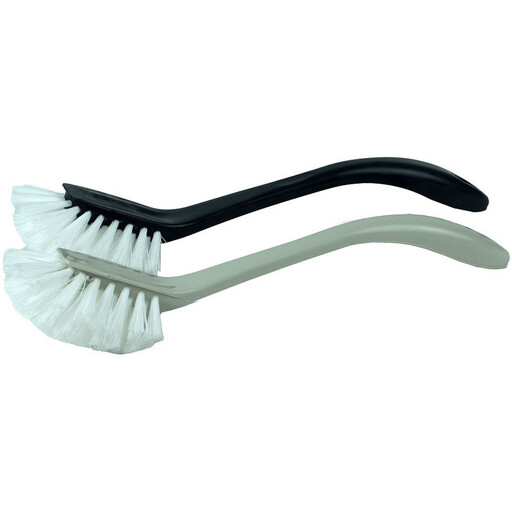
Why it suits this type of user: For everyday washing-up, what matters most is a comfortable grip, a brush head that rinses clean easily, and a size that works well for plates, pans and pots.
The product description mentions an ergonomic handle, sturdy bristles and suitability for crockery, pans, pots and kitchen surfaces. Avoid harsh cleaning products and rinse the brush after every wash.
Ergonomic grip; suitable for different types of kitchenware; easy to rinse and leave to dry.
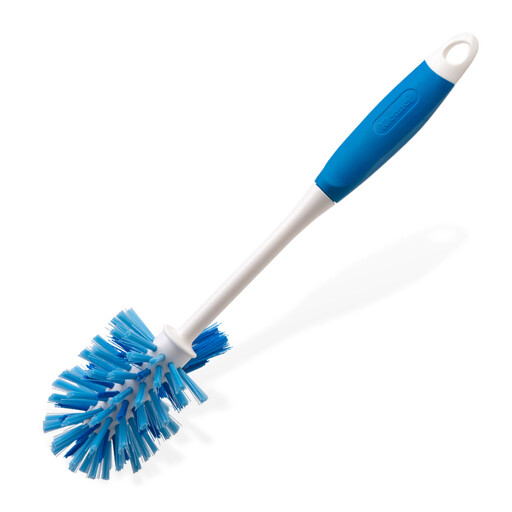
Why it suits this type of user: The 36 cm handle and 29 mm bristles are designed for floors, patios, grout and other surfaces that need a thorough scrub.
The dimensions make it clear that this isn’t a washing-up brush or a delicate bathroom brush. Don’t use it on glass, polished wood or other surfaces that could be scratched.
36 cm handle; 29 mm stiff bristles; TPR grip for a secure hold when wet.
We’ve put together a complete, up-to-date list of products that meet these strict selection criteria and current European safety regulations.
Choose a grout brush with a narrow head and relatively stiff bristles. The head should fit between the tiles without you having to press hard against their edges. If you’re unsure, test it first on a small, inconspicuous area.
Rinse the brush thoroughly with water after use. Remove any dirt caught between the bristles, then stand the brush upright or leave it somewhere well ventilated to dry. Only put it in the dishwasher if the product information explicitly says it’s dishwasher-safe.
Its lifespan depends on how often you use it, the cleaning products you use, the surface you clean and how you store it. A brush used every day with strong cleaning products will generally wear out faster. Replace it when the bristles flatten, come loose or stop picking up dirt effectively.
