
Vandaag of morgen in huis

Kwaliteit gegarandeerd

Welkomstaanbiedingen ontgrendelen: GRATIS bezorging | Tot 80% korting | Gratis 30 dagen JoyPlus-proefperiode
Download de app
A cleaning brush may seem like a simple household product, but choosing the wrong one can quickly become frustrating. A brush that is too soft for baked-on dirt may not fit into a narrow bottle, or could scratch a delicate pan. A long handle is not automatically more convenient either: the length, grip and brush head should suit the cleaning task.
A washing-up brush, grout brush and stiff scrubbing brush all have different functions. Soft or flexible bristles are suitable for bottles and crockery, while firmer bristles are better suited to tile grout, patios and garage floors. Do not use a metal barbecue brush on delicate surfaces, and avoid stiff bristles on non-stick coatings.
A cleaning brush set with several items may seem like good value, but first check whether the brush heads can genuinely handle different tasks. Three almost identical grout brushes are less versatile than a set containing nylon, stainless steel and copper wire brushes. Also look at the dimensions and material of each brush.
A brush left wet in a sealed container will dry slowly. Food residue, soap and dirt can then build up. A stand, hanging loop or well-ventilated storage area is useful. Also check regularly whether the bristles are coming loose, bending or losing their shape. Replace the brush when the cleaning performance noticeably declines.
For glasses, bottles and delicate crockery, flexible nylon, rubber or silicone bristles are often a sensible choice. A bottle brush must also be narrow enough for the opening and long enough to reach the bottom.
For pots, pans and sinks, consider a pot brush with firm nylon bristles or a combination of sponge and scouring surface. Take extra care with non-stick pans and check the product warning. Some pot brushes explicitly state in their product descriptions that they are not intended for surfaces that can be scratched.
For grout, garage floors or outdoor tiles, a stiff scrubbing brush is more suitable. According to the product specifications, a model with 29 mm stiff polypropylene bristles and a 36 cm handle is designed for floors, patios, grout and other hard-wearing surfaces. Do not use this type of brush on glass, polished wood or other sensitive materials.
A long-handled cleaning brush keeps your hands further away from water, soapy water and dirt. A handle measuring around 22 to 36 cm can be useful for deep pans, floors and hard-to-reach areas. For the edge of a tap, a shower profile or a narrow gap, a compact grout brush with a narrow head works better.
Do not just check the overall length; look at the diameter of the brush head too. A wide head scrubs larger surfaces more quickly, while a narrow head gets into joints and bottles more effectively.
An anti-slip grip is particularly useful in a wet kitchen or bathroom. According to the product description, TPR rubber can provide extra grip, while PP and ABS are commonly used for plastic handles and housings. Also check the care instructions: some brushes should be rinsed after use and dried upright, while others are described in the product information as dishwasher-safe.
With a kitchen brush, it is sensible to match the use to the material. A sponge-and-scouring system, for example, can combine a soft side for everyday dirt with a rougher side for baked-on residue. Always test unfamiliar brushes on a small, inconspicuous area of the surface first.
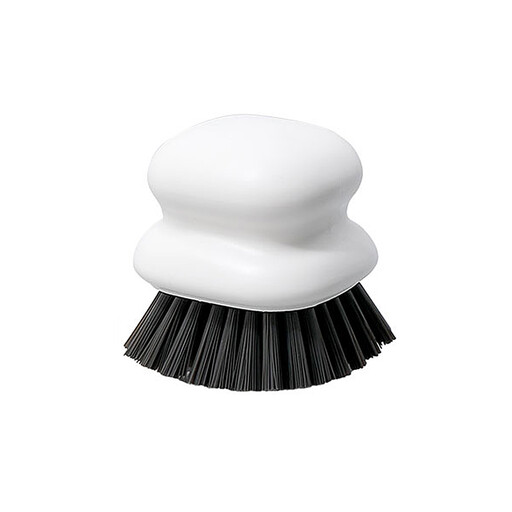
Why it suits this profile: A compact pot brush for anyone looking for one practical kitchen brush for crockery, pans, sinks and light bathroom cleaning.
The short handle gives you more control when cleaning pots and pans. However, check the warning for non-stick surfaces that are prone to scratching.
Plastic construction, ready to use straight away and suitable for kitchen and shower applications.
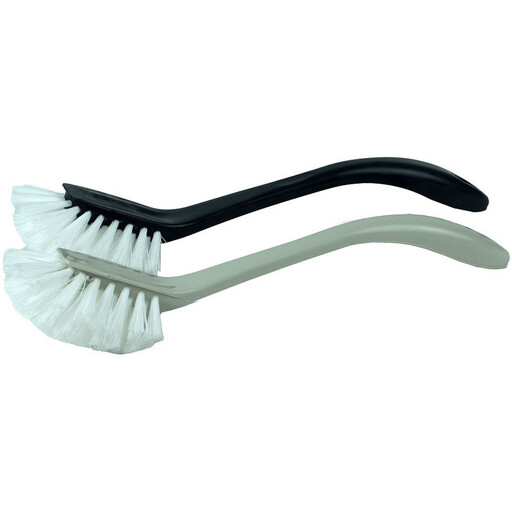
Why it suits this profile: For everyday washing up, when a comfortable grip, easy rinsing and quick drying are important.
The product description mentions an ergonomic handle and bristles which, according to the listed specifications, are suitable for crockery and kitchen surfaces. Check the surface beforehand.
Plastic construction, one item per pack, with care involving rinsing and air-drying.
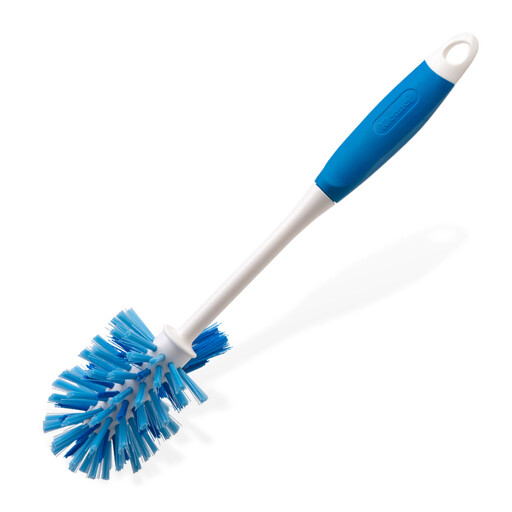
Why it suits this profile: Designed for floors, tiles, grout, patios and other surfaces where greater pressure and reach are needed.
The length and 29 mm stiff bristles are clearly specified, so you do not have to rely only on general terms such as ‘powerful’.
36 cm handle, TPR grip for better control and a dense brush head for larger cleaning surfaces.

Why it suits this profile: A bottle brush for water bottles, thermal flasks, vases and other narrow containers.
The flexible bristles are designed to reach awkward corners, while the included stand helps with drying.
Lightweight at 0.04 kg, with flexible bristles and a flat brush stand.
We have put together a complete, up-to-date list of products that fully meet these strict selection criteria and the applicable European safety regulations.
A brush will generally last longer when you use it for the right task. How often it is used, the pressure applied and the type of dirt all help determine when it needs replacing. Manufacturers may provide additional information; treat such performance claims as details from the product description and always check the specific specifications and warnings.
For tile grout, a narrow grout brush with firm nylon bristles is usually suitable. For larger floors or patios, a long-handled cleaning brush may be more practical. First check that the brush is suitable for the type of tile and the width of the grout.
Rinse the bottle brush with warm water and a mild washing-up liquid after every use. Allow it to air-dry completely, preferably on a stand or hanging from a hole in the handle. Replace the brush if the bristles become loose or deformed.
That depends on what it contains. A set is practical when the brush types are clearly different, such as a soft bottle brush, a grout brush and a stiff scrubbing brush. Compare the number of items, materials, dimensions and suitability for your surfaces before buying.
