
Vandaag of morgen in huis

Kwaliteit gegarandeerd

Welkomstaanbiedingen ontgrendelen: GRATIS bezorging | Tot 80% korting | Gratis 30 dagen JoyPlus-proefperiode
Download de app
A cleaning brush might seem like a simple household item, but choosing the wrong one can quickly become frustrating. A brush with bristles that are too soft will barely shift caked-on dirt. A scrubbing brush that is too hard can damage delicate surfaces. And a long handle that doesn't feel secure in your hand is far less pleasant to use than you'd expect.
So, when you're buying a cleaning brush, it's a good idea to start by thinking about the job you need it for. A washing-up brush for pans needs different features than a grout brush, a radiator brush, or an accessory for a robot vacuum.
A kitchen brush for pans, a bathroom brush for tiles, and a crevice brush for gaps don't all have the same bristles. Hard nylon or PP bristles might be suitable for a floor or patio, but they are less appropriate for glass, varnished wood, or delicate plastic surfaces.
So, don't just rely on words like "multi-functional." Also check:
If you're unsure, a set with different brushes is often more practical than a single universal model.
A cleaning brush with a long handle can help with floors, high spots, and awkward corners. However, length alone isn't enough. A long handle without a non-slip grip can slide out of your hand when wet. Also, a wide brush head can be difficult to manoeuvre in small bathrooms.
A hand brush of 22 to 25 cm is usually better for controlled work, such as washing up or cleaning a sink. For floors and outdoor surfaces, a handle of around 36 cm can be more comfortable.
A wet brush that is constantly kept in a closed holder dries slowly. This can cause the bristles to deform and unpleasant odours to develop. Rinse a cleaning brush after use, remove any dirt from the bristles, and store it upright or in a well-ventilated place.
Replace the brush when bristles start to come loose, bend, or no longer make proper contact with the surface.
Nylon is often used for washing-up brushes and pot scrubbers. The material is sturdy and suitable for removing grease and food residue. Always check the manufacturer's warning for cookware. For example, the JORDAN&JUDY pot scrubber states that it is not intended for surfaces that could scratch, including certain non-stick coatings.
PP bristles are suitable for more intensive scrubbing, such as floors, grout, and outdoor surfaces. According to the product specification, the 36 cm blue hand brush has dense, stiff bristles of 29 mm. This makes it designed for stubborn dirt, but not for glass or polished wood.
PET and soft plastic bristles are often used in grout brushes or household brush sets. For bottles and baby accessories, soft silicone brush heads are a logical choice. According to the product description of the Momcozy set, the silicone parts are suitable for boiling for sterilisation; this is a product specification from the brand and not a general guarantee for every bottle brush.
Choose the size based on the area you want to clean:
A 64 cm radiator brush, for example, is designed to get between slats and behind radiators. A bottle brush, on the other hand, works thanks to its narrow shape and flexible bristles in a tight opening.
A TPR handle can provide extra grip when scrubbing wet surfaces. A holder for a toilet brush prevents the brush from lying loose on the floor, but it must be able to drain and dry. So, check that the holder is stable and that the product is easy to clean.
With a brush set for cleaning, it's also wise to look at the included parts. A set with multiple crevice brushes can be handy for taps, tile grout, window tracks, and kitchen edges, while a single specialised brush takes up less storage space.
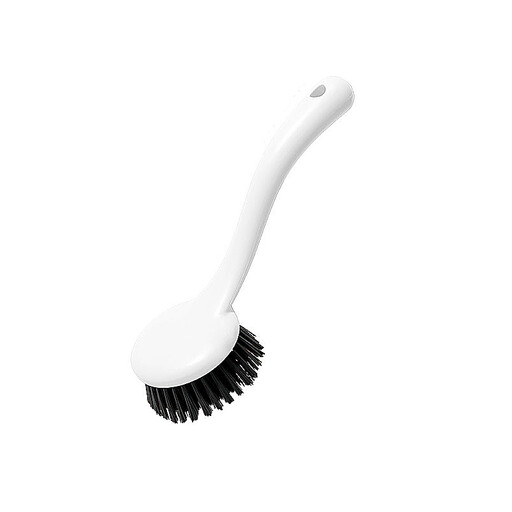
Why this fits the profile: The brush is ready to use straight away and combines a 22 cm handle with nylon bristles for washing up, pans, and sinks.
The size and application are clearly described. Do not use the brush on delicate non-stick surfaces or with boiling water.
PP handle, nylon bristles and a length of 22 cm; suitable for multiple kitchen and sink tasks.
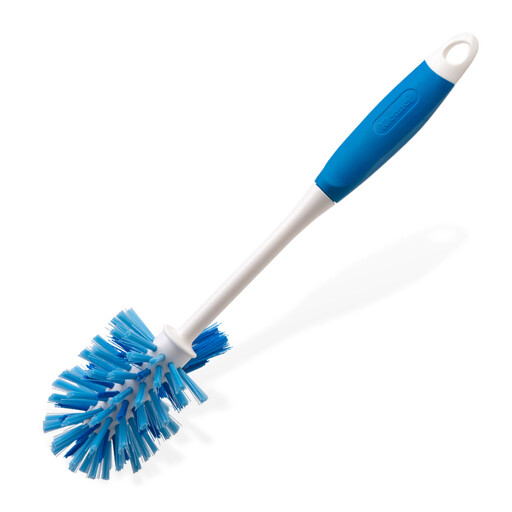
Why this fits the profile: This scrubbing brush is designed for floors, grout, patios, and other surfaces where firm brushing is needed.
The firm bristles are not hidden behind general marketing language: the product information states a bristle length of 29 mm. Do not use it on glass or polished wood.
36 cm length, 29 mm dense PP bristles and a TPR grip for control when used wet.

Why this fits the profile: The set is intended for bottles, teats, straws, and breast pump parts, and includes multiple specialised tools.
Instead of one wide brush, the set includes a bottle brush, teat brush, and straw brush. This means the choice is tailored to narrow openings.
7-in-1 set with food-grade silicone, BPA-free plastic, drying rack, and storage case according to the product description.
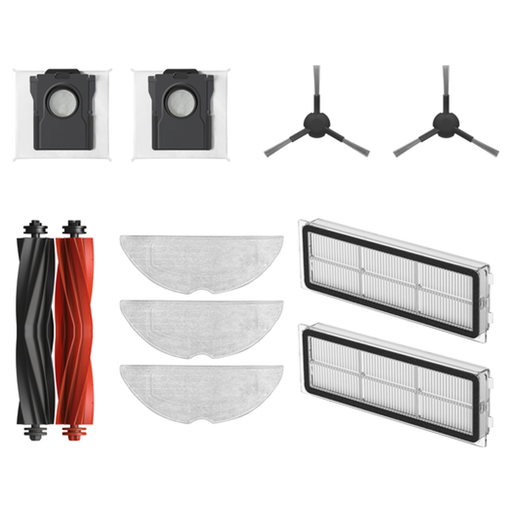
Why this fits the profile: For users looking for replacement robot vacuum accessories for the MOVA E30 Ultra, this set includes multiple maintenance parts.
Compatibility is specifically stated for the MOVA E30 Ultra. Check your robot's model before ordering; this is not a universal set.
According to the specifications, the package contains a main brush, two side brushes, three mopping pads, two filters, and two dust bags.
We have compiled a full, up-to-date list of products that fully meet these strict selection criteria and current European safety regulations.
The lifespan depends on how often you use it, the cleaning product, and the surface. A brush used for daily scrubbing will wear out faster than a brush used for light dust removal. Rinse it after use and replace it as soon as the bristles start to come loose or become clearly deformed.
Technically, sometimes you can, but it is more hygienic and practical to keep brushes separate for each room. For example, use a kitchen brush for pans and a separate bathroom brush for tiles, grout, and the sink. This prevents dirt and residue from being transferred between rooms.
Usually not. Filters, brushes, and mopping pads often have a specific fit. So, check the exact model number, such as MOVA E30 Ultra or MOVA M1, and compare it with the product information before you order.
