
Vandaag of morgen in huis

Kwaliteit gegarandeerd

Welkomstaanbiedingen ontgrendelen: GRATIS bezorging | Tot 80% korting | Gratis 30 dagen JoyPlus-proefperiode
Download de app
A cleaning brush might seem like a simple product, but the wrong one can quickly become frustrating. A dish brush with bristles that are too soft won't shift baked-on grease properly. A hard cleaning brush can damage delicate surfaces. And a brush that stays damp after use will wear out faster and can start to smell unpleasant.
As a Joybuy Product Recommendation Officer, I focus on the features you can actually check: material, dimensions, bristle stiffness, handle design, and intended use. Below, you'll find out what to look for before you buy a cleaning brush or brush set.
A stiff brush can be handy for grout, patio slabs or a barbecue grate, but it isn't automatically suitable for glass, polished wood or delicate coatings. Always check whether the product description includes warnings for certain surfaces.
Extra care is needed with a pan brush. Some models are designed for stubborn residue in pans, but according to the safety information, they may be unsuitable for non-stick coatings. When in doubt, use a soft sponge or a dish brush with flexible nylon.
A cleaning brush with a long handle gives you more reach, but you also need to consider the overall length and grip. A handle that's too long or too smooth can offer less control on smaller surfaces. For floors and outdoor use, a longer handle can be practical; for pans, taps and sinks, a compact model is often more precise.
A cleaning brush set with multiple brushes is only useful if the brushes have different functions. Check whether the set includes, for example, a narrow crevice brush, a grout brush and a wider scrubbing brush. Three almost identical brushes offer less flexibility than a smaller set with clearly defined uses.
Many kitchen brushes use nylon, PET or PP bristles. Nylon is flexible and suitable for everyday washing-up. Stiffer plastic bristles are useful for grout, floors and stubborn dirt. Metal bristles, such as those on a wire brush, are intended for specific heavy-duty cleaning and require extra caution.
A BBQ brush or grill brush with metal parts should only be used on a cool grate and in line with the product instructions. Check the grate for loose bristles or fragments after brushing, before you use it again.
A handle of around 20 to 30 cm is practical for deep pans, sinks and bottles. A model of 36 cm can offer more reach for floors, tiles and outdoor surfaces. Alongside the length, look for:
A grout brush or crevice brush usually has a narrow head to reach dirt between tiles, around taps and along skirting boards. A bottle brush has an elongated shape and flexible bristles for narrow openings. A sponge or scourer brush works better on broad surfaces such as pans, worktops and sinks.
Never use a brush for longer than necessary once the bristles are distorted. Wear reduces contact with the surface and can cause you to apply more pressure.
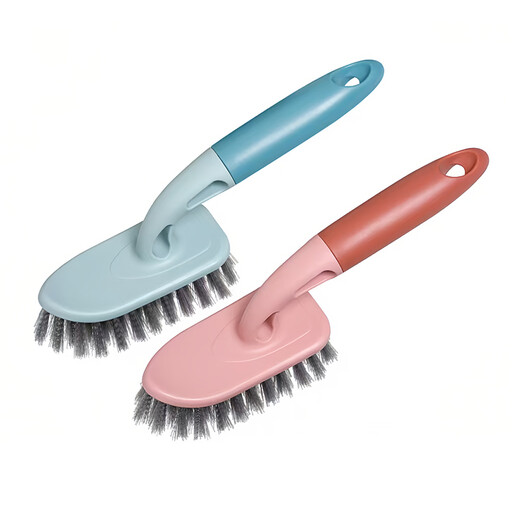
Why this fits: A two-piece set is practical for everyday use in the kitchen, bathroom and around the sink.
The product name mentions PP and PET and an application for crevices. Still, check the surface before scrubbing firmly.
Two brushes and a compact design for household use.

Why this fits: Handy for households that clean bottles, teats, straws or pump accessories in different shapes.
The set includes several specific heads, so you don't have to use one wide brush for all tasks.
7-in-1 set with silicone bottle brush, straw brush, drying rack and storage case according to the product description.
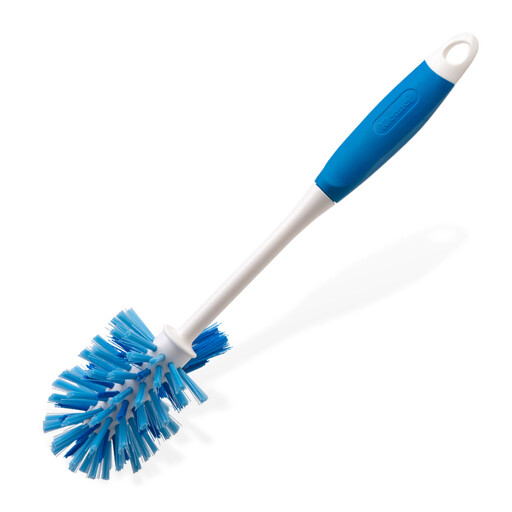
Why this fits: For floors, patios, grout and garden furniture where extra reach and stiff bristles are needed.
The product information explicitly states that the brush is not intended for delicate or easily scratched surfaces.
36 cm handle, 29 mm stiff plastic bristles and a TPR grip according to the product specifications.
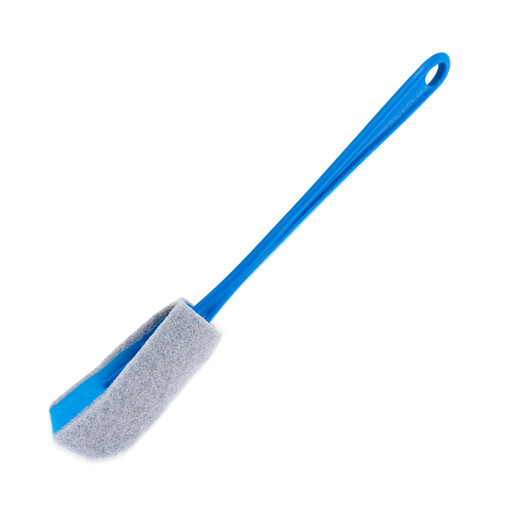
Why this fits: Suitable for deep pans, baking trays, sinks and worktops where you want to keep your hands out of the water.
The sponge side and scourer side have different uses. Do not use the abrasive side without first checking the surface.
28.5 cm plastic handle and a pad measuring 10 × 4.5 cm with a thickness of 3 cm.
Browse a current selection of kitchen brushes in different materials, sizes and applications.
Rinse a dish brush, bottle brush or grout brush thoroughly after use. Remove food residue and cleaning product from the bristles. Then leave the brush to dry upright or on a stand. Do not store it for long periods in a container of water.
Replace the brush when:
Always follow the instructions on the label when using cleaning products. Wear protection if a product advises it, and do not mix different products together.
A narrow grout brush or crevice brush with firm plastic bristles is usually practical for tile grout and narrow edges. First check whether the brush is suitable for your type of tile. If in doubt, test it on an inconspicuous area.
The lifespan depends on use, pressure, cleaning product and drying method. A brush for everyday washing-up wears differently from a stiff brush for the patio or barbecue. Check regularly for loose or bent bristles and replace the model as soon as the cleaning performance clearly decreases.
The terms are often used interchangeably, but always check the material and finish. A metal BBQ brush is intended for a cool grate. A brush without metal bristles can be an alternative if you want to avoid loose wire strands, but always follow the product instructions and check the grate before use.
