
Vandaag of morgen in huis

Kwaliteit gegarandeerd

Welkomstaanbiedingen ontgrendelen: GRATIS bezorging | Tot 80% korting | Gratis 30 dagen JoyPlus-proefperiode
Download de app
A cleaning brush may seem like a simple household item, but the wrong design can quickly become frustrating. A washing-up brush with bristles that are too soft will not remove baked-on residue. A grout brush with a head that is too wide will not fit between tiles. And a cleaning brush with a long handle can be awkward if the grip becomes slippery when wet.
Marketing copy does not always tell the full story either. Pay particular attention to verifiable details such as bristle length, material, handle, head shape and intended use. This helps you avoid buying a brush that becomes misshapen, causes scratches or is difficult to clean after just a few uses.
A stiff cleaning brush is useful for floors, grout, patios and baked-on dirt. However, on glass, varnished wood, delicate plastic or non-stick coatings, rigid fibres can cause scratches. Always check what the brush is intended for according to the product information.
For crockery and pans, choose a washing-up brush with suitable bristles that are not too aggressive. A pot brush with short, firm fibres gives you more control over stubborn residue, but it is not automatically suitable for every cooking surface.
A long handle may sound practical, but a handle that is too long or thin can give you less control. For floors and larger surfaces, a length of around 30 to 36 cm is often useful. For a sink, pan or bottle, a shorter handle is usually more convenient.
Pay attention to the shape of the grip, too. According to the product description, a rubber or TPR coating may provide extra grip when wet. This does not mean that the brush will be slip-proof in all circumstances; dry the handle and store the brush properly after use.
A set containing several brushes may seem good value, but check what you are actually getting. Some sets are designed for narrow gaps, while others are intended for metal or heavy dirt. A wire brush, for example, is not suitable for delicate tiles or varnished surfaces.
When choosing a brush for hard-to-reach places, check the width and flexibility of the head. For bottles, flasks and vases, you need a long, slim bottle brush. For tile grout, a narrow grout brush with firm bristles works better.
Polypropylene, nylon and PET are commonly used in household brushes. Stiff polypropylene bristles are suitable for heavy dirt on floors, patios and grout. Nylon bristles are often more practical for crockery, bottles and general kitchen cleaning. Metal wires are intended for specific heavy-duty applications, such as certain barbecue grills or stubborn residue.
Check that the bristles are firmly secured in the head and that the product information does not list any restrictions. With a barbecue brush, you should also consider the material of the grill. Do not use a metal brush without first checking that it is suitable for your grill.
A cleaning brush with a long handle can reduce the need to bend when scrubbing a floor, shower tray or patio. According to the product information, the model with a 36 cm handle has a wide head with 29 mm-long, stiff bristles and a TPR grip. The length is easy to verify; suitability depends on the surface and your preferred working position.
For a kitchen brush, a short or medium-length handle is usually sufficient. An ergonomic shape can make repeated movements more comfortable, but it does not replace good cleaning technique. Where possible, soak dirt first and use the right cleaning product according to the label.
Rinse a cleaning brush thoroughly after use and remove food residue, sand or cleaning product from the head. Stand the brush upright or place it somewhere with good airflow. Storing it wet for long periods can encourage odours, deformation or material deterioration.
Regularly check for loose bristles, cracks and a misshapen head. Replace the brush when you can no longer apply sufficient pressure or when the bristles no longer spring back. Use cleaning products only as directed and wear protective equipment when indicated on the label.

Why it suits this profile: According to the product description, this double-ended plastic brush is intended for use in the kitchen, bathroom, garage, on tiles and on carpets, among other areas. This makes it a practical choice if you want one compact brush for a range of household tasks.
The product information lists several areas of use, so you are less likely to buy a brush intended for just one task without checking first. However, check the bristle stiffness before using it on delicate surfaces.
Plastic construction, a double-ended brush design and a handle that provides control during everyday use.
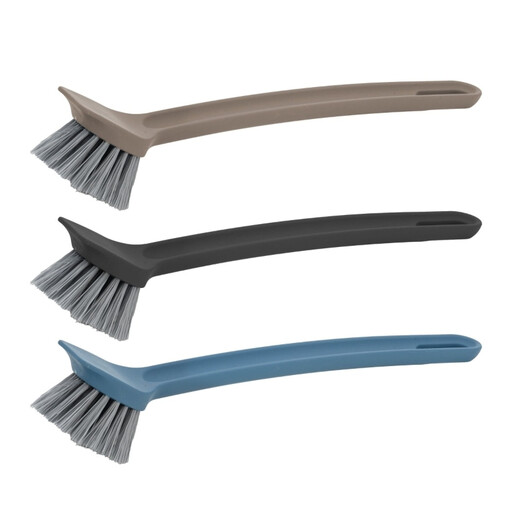
Why it suits this profile: According to the product information, this kitchen brush has a handle made from recycled PP granulate and nylon bristles. Its round shape and the stated angle of the bristles are suitable for everyday washing-up and pre-cleaning crockery.
The materials and intended use are clearly stated. This makes it easier to distinguish the brush from a stiff grout brush or metal scrubbing brush.
Nylon bristles, recycled PP in the handle and a design that, according to the description, can dry quickly.
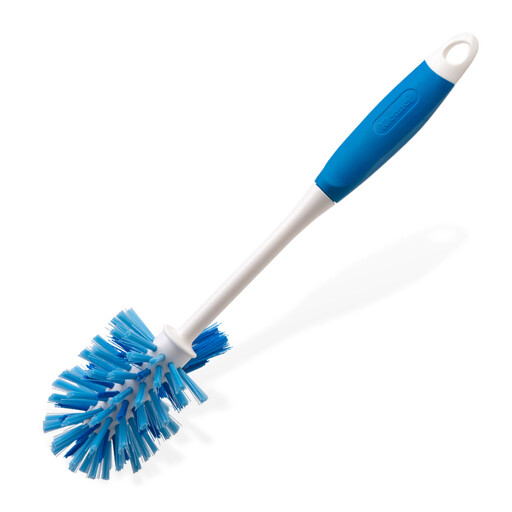
Why it suits this profile: According to the product description, the 36 cm handle is intended for floors, patios, grout and outdoor surfaces. The dense head with 29 mm stiff polypropylene bristles is suitable for more intensive scrubbing.
The key measurements and bristle material are specified. Do not use it on glass, polished wood or other surfaces that may be damaged according to the product information.
36 cm handle, 29 mm stiff bristles and a TPR grip that, according to the description, provides extra hold when wet.
We have put together a complete, up-to-date list of products that fully meet these strict selection criteria and the applicable European safety regulations.
Rinse the brush with water after each use and remove any visible dirt from between the bristles. Allow it to dry completely in a well-ventilated place, preferably upright. Do not use an aggressive cleaning product on a kitchen brush unless this is permitted on the product label.
Its lifespan depends on how often it is used, the pressure applied, cleaning products and storage conditions. Check the bristles and handle regularly. Once the bristles are flat, loose or damaged, performance will decline and replacing the brush is advisable.
Use a washing-up brush with soft to medium-stiff plastic or nylon bristles and avoid metal wires. Always follow the care instructions provided by the pan manufacturer. A brush’s suitability may vary depending on the surface.
