
Vandaag of morgen in huis

Kwaliteit gegarandeerd

Welkomstaanbiedingen ontgrendelen: GRATIS bezorging | Tot 80% korting | Gratis 30 dagen JoyPlus-proefperiode
Download de app
A cleaning brush might seem like a simple household item, but choosing the wrong one can quickly become frustrating. A brush with bristles that are too soft will barely shift caked-on dirt. One that is too hard can damage surfaces. And an awkward handle can make a short cleaning task unnecessarily tiring.
For British households, there are three main pitfalls to watch out for:
Below, you’ll find out what to look for before buying a household brush, washing-up brush or specialist cleaning brush.
Start with the surface and the type of dirt. A brush for hard-to-reach areas needs different features from a pan scrubber.
A cleaning brush set is handy if you maintain several rooms, but check how many brushes actually suit your tasks. A large set with unsuitable heads is less useful than a few targeted brushes.
Nylon and synthetic bristles are common materials for kitchen and household brushes. The hardness determines where you can safely use them. Soft fibres are better suited to glass, plastic and varnished surfaces. Stiffer bristles are useful for grout, tiles or caked-on dirt, but can damage delicate coatings.
With a car polishing brush, extra care is essential. First remove any sand and hard particles from the bristles, and apply minimal pressure. According to the product information for the Car Detailing Brush, the fibres are intended for crevices and interior parts; the usage instructions also advise working carefully on glass, paintwork and polished surfaces.
The length of the handle determines how much you need to bend down or work with your hands in dirt and water. A 22 cm brush with a long handle, for example, is practical for pans and sinks. For a toilet, a 36 or 37 cm brush can offer more distance from the surface.
For narrow openings, the head shape matters most. A bottle brush must fit through the opening and still reach the bottom. A 64 cm radiator brush is designed for deep, narrow spaces. So measure the area you want to clean beforehand; “long” or “compact” is hard to judge without dimensions.
A brush holder, hanging loop or magnetic fitting makes storage easier. More importantly, water must be able to drain away and the brush must be able to dry completely. Rinse the bristles after use, remove any dirt residue and leave the tool to air dry.
With electric drill brushes, the connection must fit. According to the product description, the Oxerbog set uses a standard hexagonal shank for most cordless drills and electric screwdrivers. Still, check the drill chuck and secure the brush before you start. Use a low speed on delicate materials and wear eye protection against flying debris.
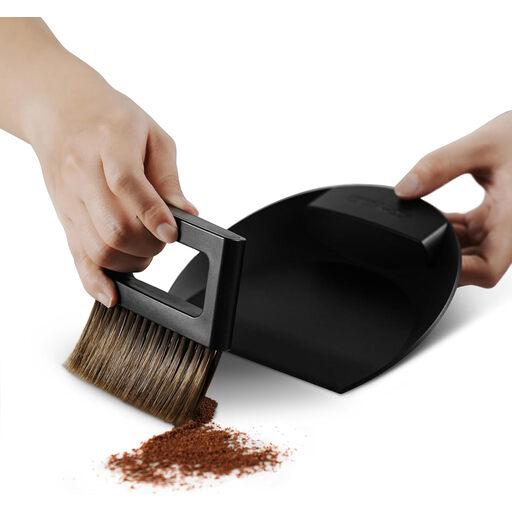
Why it suits this profile: The compact set is designed for crumbs, coffee grounds and other fine debris on a worktop, coffee station or desk.
The product information states specific dimensions of 6.3 × 5.1 inches, a magnetic coupling and a non-slip base. This keeps the intended use clearly defined.
Soft synthetic bristles, ABS plastic, silicone base and a weight of 168 grams.
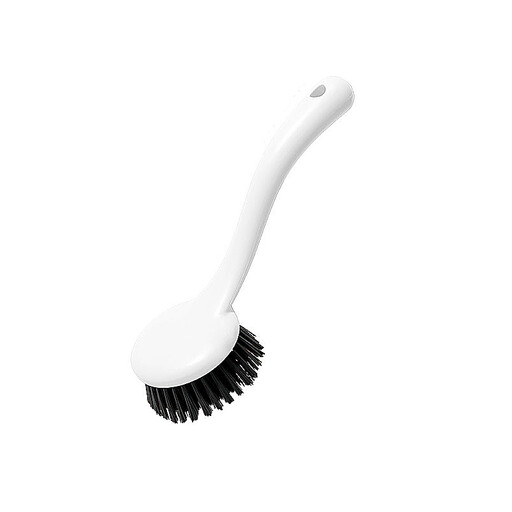
Why it suits this profile: A practical choice for households that regularly clean pans, sinks and other kitchen surfaces.
The length of 22 cm and diameter of 8 cm are stated. The warning about non-stick coatings makes it clear that not every surface is suitable.
PP handle, nylon bristles and a long design that keeps hands further from water and dirt.
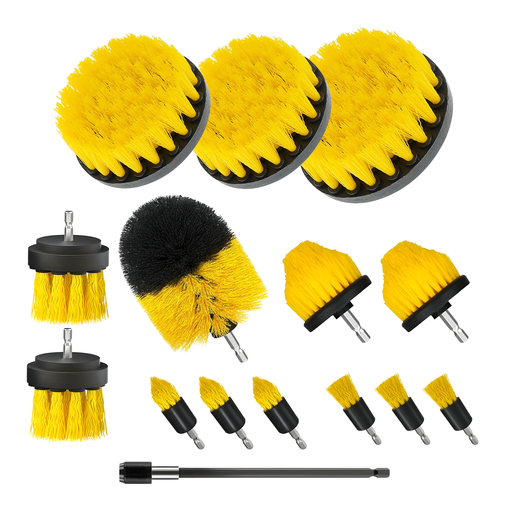
Why it suits this profile: Ideal for car owners and cleaning enthusiasts who want to tackle larger surfaces, grout, tiles or wheel rims with a cordless drill.
The set includes seven brush head sizes and different hardness levels. The product instructions warn against using hard heads on paintwork or soft leather.
15-piece set, hexagonal connection, extension rod and PP, nylon and stainless steel components according to the product description.
We’ve put together a full, up-to-date list of products that fully meet these strict selection criteria and comply with current European safety regulations.
Rinse the bristles under lukewarm water after use and remove any visible dirt. Only use a mild cleaning agent if the material is suitable for it. Allow the brush to dry completely before storing it. A toilet brush and holder should be cleaned separately on a regular basis.
The lifespan depends on the material, frequency of use and type of dirt. Replace the brush when the bristles become flattened, loose or misshapen. With electric drill brushes, also look out for cracks in the head or a loose connection.
For gaps in furniture, air vents and car interiors, a narrow detailing brush with soft bristles is suitable. For radiators, choose a long radiator brush. For bottles and thermos flasks, a bottle brush with a narrow, flexible head works better than a standard household brush.
