
Vandaag of morgen in huis

Kwaliteit gegarandeerd

Welkomstaanbiedingen ontgrendelen: GRATIS bezorging | Tot 80% korting | Gratis 30 dagen JoyPlus-proefperiode
Download de app
A cleaning brush may seem like a simple household product, but you quickly notice when you have chosen the wrong one. A washing-up brush with bristles that are too soft will not remove baked-on residue. A toilet brush without a proper holder will be left standing wet on the floor. And a grout brush with a head that is too wide will not reach narrow gaps.
If you focus only on colour, price or claims such as “extra strong”, you may end up buying a replacement unnecessarily. Instead, consider the intended use, materials, dimensions and how easily the brush can be cleaned after use.
Hard PP or nylon bristles are practical for tiles, pans and grout, but they are not automatically suitable for every surface. Stiff bristles can scratch glass, polished wood or certain non-stick coatings. Always check what the brush is designed for.
Use a scrubbing brush for robust floors, tiles and outdoor surfaces. For crockery, glassware or delicate materials, a softer washing-up brush is usually the more sensible choice.
A short handle gives you more control when cleaning pots, shoes and small surfaces. A cleaning brush with a long handle keeps your hands further away from water and dirt, making it more convenient for floors, radiators or hard-to-reach areas.
However, a long handle is not always comfortable for precision work. For the rim of a pan or a small gap, a compact pot brush or gap brush may work better.
A brush that stays wet for a long time after use can start to smell unpleasant and wear out more quickly. With a toilet brush in particular, it is important to have a holder with enough space for excess water to drain away. Rinse the brush after use, allow it to drain as much as possible and clean the holder regularly.
Polypropylene (PP) is moisture-resistant and is often used for toilet brushes, grout brushes and sturdy household cleaning brushes. Nylon is flexible and commonly found in washing-up brushes, bottle brushes and pot brushes.
The length and density of the bristles also affect how the brush feels in use. For example, the 37 cm blue toilet brush has 25 mm PP bristles. This is a specific detail suited to scrubbing around the toilet bowl and beneath the rim. For delicate surfaces, you should still follow the product instructions.
Measure the area you want to clean. A 64 cm radiator brush can reach between or behind radiators, while a small 8.5 cm nail brush is mainly suitable for hands and nails. For baby bottles, thermal bottles and vases, narrow brush heads and flexible bristles are more important than a wide scrubbing head.
When choosing a toilet brush, consider:
A smooth plastic handle is easy to rinse. A TPR or rubber grip can provide better control when working with wet hands. When scrubbing vigorously, also consider the connection between the shaft and brush head: looseness or a detachable head makes it harder to apply force.
Use cleaning products according to the instructions on the label. Do not combine products unless you are certain it is safe to do so. Also check whether the brush is resistant to the product you intend to use, as stated in the product description.
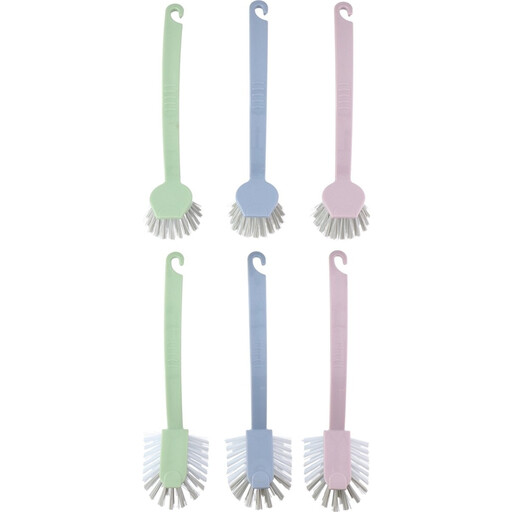
Why it suits this profile: A simple 28 cm washing-up brush for everyday kitchen use, with no assembly or complicated components.
The length and plastic material are clearly specified. This means you do not have to rely on vague claims about size or durability.
Plastic construction, ergonomic design according to the product description and one brush per pack.
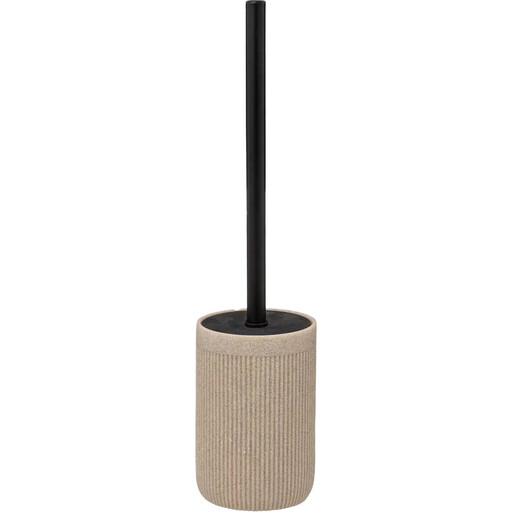
Why it suits this profile: This toilet brush with holder is ideal for anyone who values both functionality and the choice of materials, as well as keeping the bathroom looking neat.
The holder is included in the set and the dimensions are specified: 9 x 9 x 40 cm. This prevents you from ending up with a loose brush and no suitable place to store it.
Stainless steel handle, PP brush and freestanding design according to the product details.
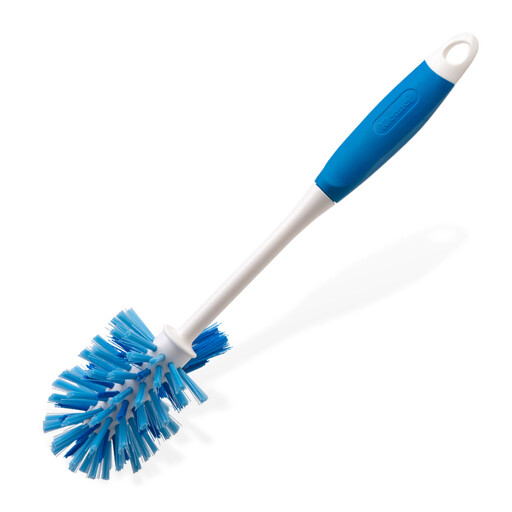
Why it suits this profile: The long handle and wide head are designed for floors, tiles, grout, patios and other sturdy surfaces.
The product details explicitly state a length of 36 cm, 29 mm bristles and a TPR grip. They also warn against using it on delicate surfaces.
Stiff PP bristles, non-slip TPR handle and suitability for indoor and outdoor use according to the description.

Why it suits this profile: This bottle brush is designed for baby bottles, water bottles, thermal bottles, vases and other narrow containers.
The brush is specifically designed for narrow openings. The product description also mentions a stand, as well as instructions for rinsing and air-drying it.
Flexible bristles, a low weight of 0.04 kg and an included stand for storage and drying.
Use a separate brush for each area of the home. A toilet brush does not belong in the kitchen, and a nail brush should not be used for grout or bathroom fittings. Rinse the bristles after use, remove any visible dirt and store the brush somewhere dry and well ventilated.
Replace a cleaning brush when the bristles start falling out, remain bent or the brush head comes loose. With a toilet brush, it is also advisable to replace the holder if it becomes damaged or can no longer drain properly. In households with young children, check that small parts remain out of reach.
We have compiled a complete, up-to-date list of products that fully meet these strict selection criteria and the applicable European safety regulations.
A grout brush with narrow, sturdy bristles is suitable for tile grout and gaps. Check the width of the head and start by applying light pressure to unfamiliar surfaces. A wide scrubbing brush can remove dirt, but it will not reach narrow grout lines as effectively.
Rinse the bottle brush with warm water and a mild washing-up liquid immediately after use. Allow it to air-dry completely, preferably upright or in the included stand. Check regularly for loose bristles and replace the brush if there are visible signs of wear.
Its lifespan depends on how it is used, the pressure applied, cleaning products and drying conditions. A brush used for washing up every day will generally wear out faster than a radiator brush used occasionally to remove dry dust. Do not rely solely on the calendar: replace the brush as soon as the bristles become misshapen, come loose or no longer clean effectively.
