
Vandaag of morgen in huis

Kwaliteit gegarandeerd

Welkomstaanbiedingen ontgrendelen: GRATIS bezorging | Tot 80% korting | Gratis 30 dagen JoyPlus-proefperiode
Download de app
A cleaning brush may seem like a simple product, but choosing the wrong one can lead to scratches, a half-finished job or unnecessary effort. A soft brush for a tiled floor may not clean the grout thoroughly, while stiff bristles can damage car paint, glass or delicate plastic surfaces.
The right cleaning brush depends on three things: the surface, the cleaning power you need and how you plan to use the brush. This applies to households, car owners, car detailers and anyone looking to clean hard-to-reach places.
Floors, radiators, car paint and grout don’t all need the same brush. A scrubbing brush with stiff bristles may be suitable for patio tiles, but too harsh for painted surfaces. Always check the product description to see what the brush is designed for.
A long handle may seem convenient, but one that’s too long or flimsy can make the brush harder to control. Reach matters when cleaning a radiator, while cleaning a car calls for precision. As well as length, consider the weight, handle and strength of the joint.
Words such as “scratch-free” or “professional” mean little without information about the material, bristle structure and correct use. Some brands say in their product descriptions that soft fibres are suitable for delicate surfaces, but that doesn’t mean every surface is safe in all conditions. Sand, grit and too much pressure can still cause scratches.
Stiff bristles are often practical for tiles, grout, concrete floors and outdoor areas. For dashboards, glass, car paint and polished surfaces, a soft cleaning brush or microfibre accessory is a better choice.
Check the material too:
If you’re buying a set with several brush heads, check that the stiffness of each head is clearly indicated. Don’t use stiff versions on leather, glass or car paint.
A long-handled cleaning brush is handy for radiators, high windows, ceilings and floors. Don’t just look at the length: consider the shape of the brush head too. A narrow head fits between radiator fins or into grout lines, while a wide head covers larger surfaces more quickly.
For example, the Dumortier Radiator Brush is 64 cm long, 5 cm wide and weighs 89 grams. This type of radiator brush is ideal for places where reach matters more than a large brush head.
A drill brush set can save time on stubborn dirt. The rotating action takes care of some of the scrubbing for you, but you’ll need to keep it under control. Don’t set the drill to an unnecessarily high speed or press on one spot for too long. Check that the hex shank fits your drill or cordless screwdriver.
A pressure washer is suitable for larger outdoor surfaces, patios and vehicles. However, the water pressure may be too high for delicate paintwork, sealant joints or loose parts. Start at a distance and use a lower setting. When washing a car, it’s best to rinse off loose dirt with water and shampoo first.

Why it suits this user: A practical double-ended brush for everyday jobs in the kitchen, bathroom, garage and on tiles. Handy if you’re looking for one affordable, all-purpose option.
The double-ended design means you don’t need a separate brush for every small household job. Just make sure you match the brush to the surface.
Plastic construction, comfortable handle and suitable for a range of household surfaces.
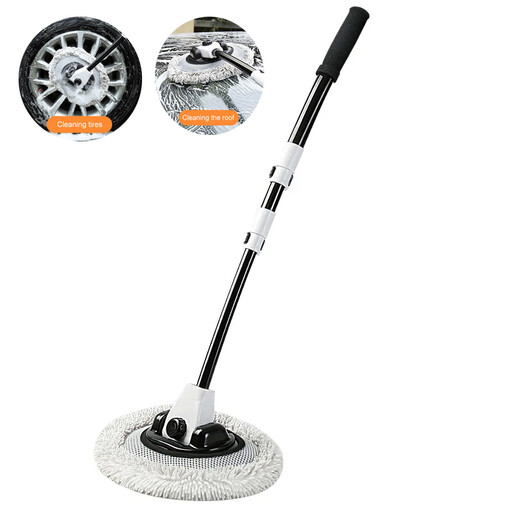
Why it suits this user: Ideal for car owners who regularly wash their car’s exterior and want more reach than a standard sponge offers.
The adjustable aluminium handle and detachable head make it easier to store and reach the areas you need to clean. Rinse off sand first to help prevent damage.
Chenille head, handle bent at 15°, adjustable angle and three-piece telescopic handle.
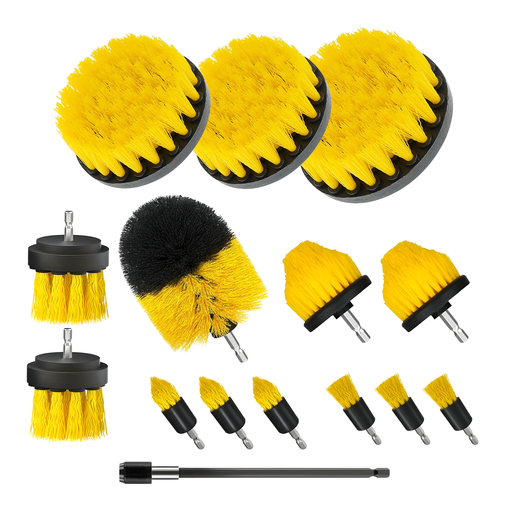
Why it suits this user: For anyone who wants to clean vehicles, tiles, bathrooms or garage floors more often and more thoroughly using a cordless drill.
The set includes a range of nylon brushes, so you can match the stiffness to the surface instead of using one stiff head everywhere.
Hex-shank fitting, several head sizes and an extension for hard-to-reach places.
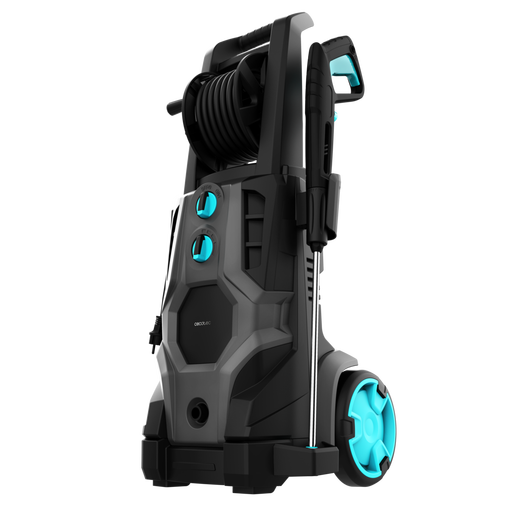
Why it suits this user: For patios, balconies, garden furniture and other outdoor surfaces where scrubbing by hand would take a long time.
The machine has an adjustable foam bottle and a trigger with automatic start-stop. Use the pressure carefully on delicate materials.
3200 watts of power, stated pressure of up to 225 bar, water flow of 540 litres per hour and a 14-metre working range.
We’ve put together a complete, up-to-date list of products that meet these strict selection criteria and the applicable European safety regulations.
An interior car brush usually has soft, flexible bristles and a compact shape. This makes it suitable for cleaning air vents, seams, dashboards and centre consoles. Remove sand and hard particles first, as they can cause scratches when rubbed across the surface.
Its lifespan depends on how often you use it, the cleaning products you use and the surface you clean. A brush used for daily scrubbing will wear out more quickly than a soft dusting brush. Rinsing it, letting it dry thoroughly and keeping it out of direct sunlight will help the plastic and fibres last longer.
No. Check the stiffness of each brush head and adjust the rotation speed to suit the surface. Use soft nylon heads on delicate materials and stiff versions only on durable surfaces such as grout, sturdy plastic or concrete. Always switch off the drill before changing or cleaning a brush head.
