
Vandaag of morgen in huis

Kwaliteit gegarandeerd

Welkomstaanbiedingen ontgrendelen: GRATIS bezorging | Tot 80% korting | Gratis 30 dagen JoyPlus-proefperiode
Download de app
A cleaning brush may seem like a simple household product, but the wrong brush can quickly become awkward to use. A handle that is too short means dirty hands, bristles that are too stiff can damage surfaces, and a brush that dries poorly will start to smell unpleasant more quickly.
For Dutch households, three pitfalls are particularly important:
The right choice therefore depends on the task. Consider a washing-up brush for everyday dishes, a pot brush for baked-on residue, a toilet brush for the toilet bowl or a soft brush for the car interior.
The bristles determine how much pressure you can use. Nylon and PP bristles are suitable for many household cleaning tasks, but stiff bristles are not automatically suitable for every surface.
With a grout brush, a narrow head is more important than a large brushing surface. A clothes brush needs soft bristles that pick up dust, fluff and hair without pulling harshly across the fibres.
A long-handled cleaning brush is useful when you want to keep your distance from water, dirt or cleaning products. The JORDAN&JUDY long-handled brush, for example, is 22 cm long and has a brush head with a diameter of 8 cm. This size is suitable for pots, pans, sinks and larger surfaces.
A short handle, on the other hand, gives you greater control for precision work. For taps, edges and small gaps, a compact brush for hard-to-reach places may work better than a large kitchen brush.
When buying, check:
Rinse a cleaning brush thoroughly after use and allow it to dry completely. A holder should be able to drain away water. This is particularly important for a toilet brush with holder: a closed, wet base is less practical than a holder that allows the brush to drip dry.
With a bottle brush, it is important that both the handle and brush head can dry properly. The product information for the 5Five brush states that it is dishwasher-safe. For other models, always check the product’s own care instructions and do not use boiling water or harsh products unless this is expressly permitted.
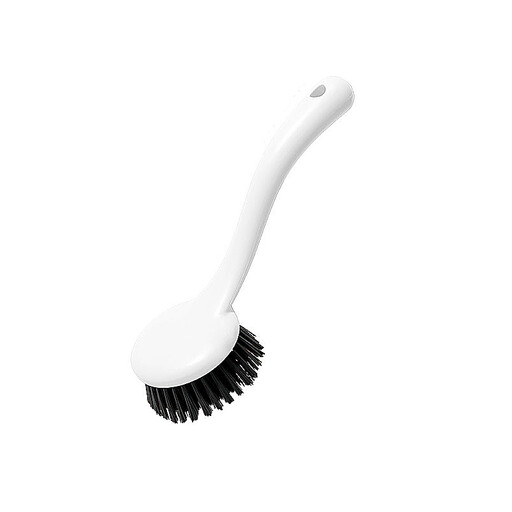
Why it suits this profile: The 22 cm handle is practical for everyday washing-up, scrubbing pots and cleaning the sink.
The product specifications clearly state the materials, dimensions and care instructions. Do note the warning: do not use it on surfaces that may scratch, such as some non-stick coatings.
PP handle, nylon bristles and a wide 8 cm head. Rinse after use and leave to dry in a well-ventilated place.

Why it suits this profile: Parents get several tools for baby bottles, teats, straws, teething rings and breast pump parts in one set.
The set includes a bottle brush, teat brush and straw brush, so narrow components do not have to be cleaned with one large brush.
Food-grade silicone, BPA-free plastic, foldable drying rack and storage box. According to the product information, the silicone parts can be boiled for sterilisation.
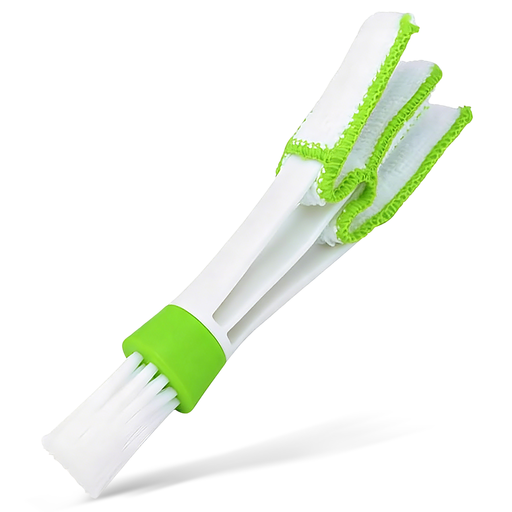
Why it suits this profile: Drivers can tackle air vents, dashboard gaps, keyboards and blinds with one compact brush.
The double, angled head is designed for gaps. The removable microfibre cover can be rinsed; allowing it to dry completely prevents damp smells.
Measures 16 × 6 × 2,5 cm, with a removable, washable head and a combination of microfibre and PP bristles.
We have put together a complete, up-to-date list of products that fully meet these strict selection criteria and the applicable European safety regulations.
This depends on use, pressure and care. Replace the brush when the bristles come loose, bend or lose their shape. Rinsing and drying it completely after every use helps keep the brush usable for longer.
This is not recommended. Use separate brushes for food contact, sanitaryware, the toilet and the car. Label them or store them separately to prevent mix-ups. A brush that has been used for the toilet should not be used in the kitchen.
The price mainly depends on the material, number of parts, shape and intended use. A basic washing-up brush is generally cheaper than a 7-in-1 baby bottle brush set or a set for several cleaning tasks. So do not compare the price alone: also consider the included parts, care instructions and whether replacements are available.
