
Vandaag of morgen in huis

Kwaliteit gegarandeerd

Welkomstaanbiedingen ontgrendelen: GRATIS bezorging | Tot 80% korting | Gratis 30 dagen JoyPlus-proefperiode
Download de app
A cleaning brush might seem like a simple household item, but choosing the wrong one can quickly become frustrating. A brush that’s too soft will barely shift caked-on dirt. One that’s too hard can damage delicate surfaces. An awkward handle, poor drainage, or unclear material information can also mean you end up having to buy another one.
For households, cleaning enthusiasts, and professional cleaners alike, the choice isn’t just about price or appearance. Instead, focus on the intended use, the dimensions, the type of bristles, and how easy the brush is to clean and dry after use.
A stiff cleaning brush is suitable for things like tiled floors, grout, or a patio, but it’s not automatically right for glass, varnished wood, or delicate coatings. Rigid plastic or wire bristles can cause scratches. Always check what the product description says the brush is designed for.
For pans and crockery, a washing-up brush with nylon bristles is usually more practical. For the toilet, choose a separate toilet brush. Use a grout brush or crevice brush for narrow gaps and edges, rather than a wide floor brush.
A long handle sounds handy, but the shape and grip are just as important. A cleaning brush with a long handle can help with floors and hard-to-reach spots, but a handle that’s too long or slippery gives you less control. For a radiator brush, a length of 64 cm, for example, is functional for getting between or behind radiators. For pots and pans, a shorter handle often offers more precision.
Also pay attention to the diameter of the brush head. A wide head cleans larger surfaces more quickly, while a narrow head fits better into corners and crevices.
Terms like “extra strong”, “professional”, or “long-lasting” mean little without concrete specifications. Instead, look for verifiable details such as PP or nylon bristles, the length of the bristles, the handle material, and the dimensions.
If a brand claims a certain cleaning performance, treat this as information from the brand itself. According to a brand’s own research, a product might offer a certain level of dirt removal, but that’s no universal guarantee for every surface or cleaning method.
The choice of bristles depends on the dirt and the surface:
A set with different types of bristles can be practical if you carry out both light and intensive cleaning tasks. Just check what each brush is intended for.
A comfortable grip helps with prolonged scrubbing. A TPR handle can, according to the product description, offer extra grip, even when your hand or the handle is damp. A short handle generally gives you more direct control with pots, pans, and sinks. A long handle, on the other hand, reduces the need to bend down for floors and hard-to-reach places.
The right length therefore depends on the task. A brush of 22 to 28 cm is suitable for kitchen work. For floors or radiators, a version of 36 to 64 cm may be more appropriate.
Rinse the brush thoroughly after use and remove any food residue, hair, and cleaning product. Allow the bristles to dry completely in a well-ventilated area. A holder or stand can help with water drainage, especially for a toilet brush or bottle brush.
Replace the brush when the bristles are bent, coming loose, or no longer making proper contact with the surface. Use cleaning products according to the label and avoid prolonged exposure to heat, naked flames, or substances that are not suitable for the material.
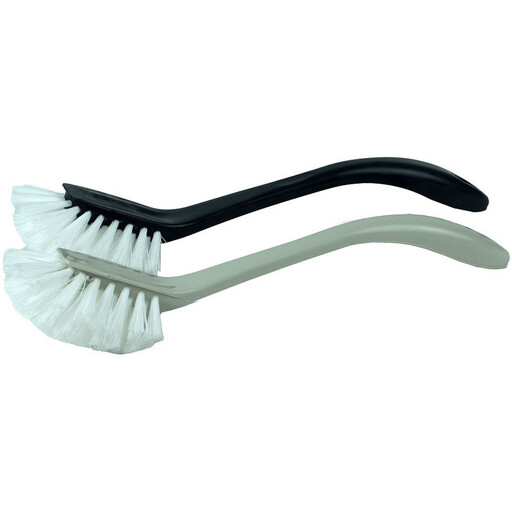
Why this fits the profile: A straightforward choice for daily washing-up and cleaning plates, pans, and kitchen surfaces.
The product description mentions an ergonomic handle and easy rinsing, so you’re not relying solely on colour or marketing language.
Plastic construction, suitable for daily kitchen work and supplied as a single piece.
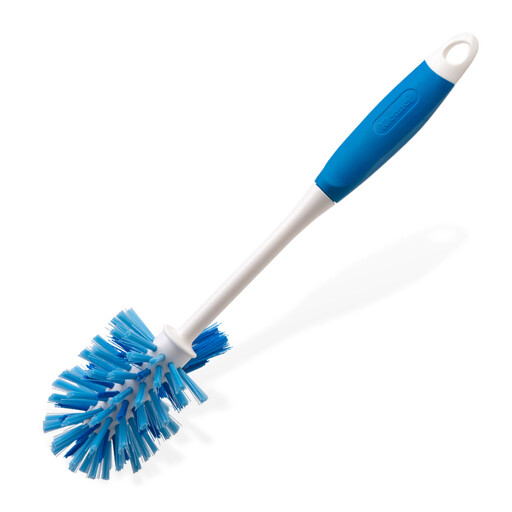
Why this fits the profile: For anyone who wants to tackle floors, grout, patios, and outdoor surfaces with one sturdy brush.
The 36 cm length, 29 mm bristle length, and TPR handle are all clearly stated. This makes the choice verifiable.
Stiff PP bristles, a wide head, and a plastic construction that, according to the product information, is resistant to moisture and chemicals.
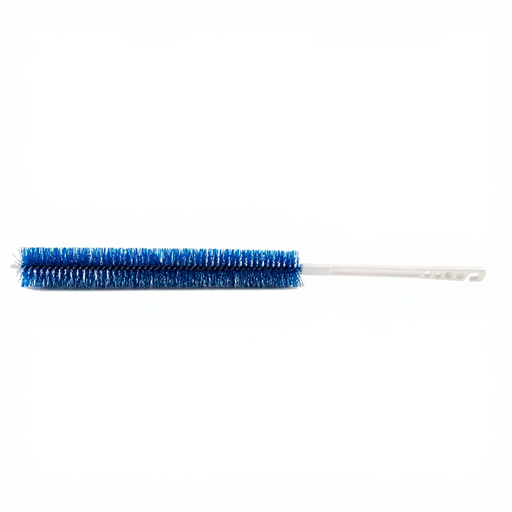
Why this fits the profile: Designed for radiators, narrow spaces, and areas where a standard brush can’t reach deep enough.
The 64 cm length and 5 cm width make the application clearer than a general brush without dimensions.
Long hard plastic design and a low product weight of 89 grams according to the product data.

Why this fits the profile: Handy for bottles, flasks, vases, and other containers with a narrow opening.
The product description mentions flexible bristles and a stand, so cleaning and drying don’t get overlooked.
Lightweight design at 0.04 kg with flexible bristles and an included flat stand.
We’ve put together a full, up-to-date list of products that fully meet these strict selection criteria and comply with current European safety regulations.
A grout brush with firm, narrow bristles is suitable for tile grout and edges. A crevice brush works better for very narrow gaps, around taps, or along window frames. If in doubt, test first on a small, inconspicuous area and check that the bristles don’t cause scratches.
The lifespan depends on frequency of use, pressure, cleaning product, and storage. Rinse the brush after every use, let it dry thoroughly, and replace it as soon as the bristles are bent, coming loose, or heavily worn. There’s no fixed replacement date that applies to every brush.
A brush set can be practical if you carry out different tasks, such as washing up, cleaning grout, and cleaning bottles. Do compare the number of brushes, the material, and the specific applications. A set with parts you won’t use isn’t automatically better value than a single, well-suited brush.
