
Vandaag of morgen in huis

Kwaliteit gegarandeerd

Welkomstaanbiedingen ontgrendelen: GRATIS bezorging | Tot 80% korting | Gratis 30 dagen JoyPlus-proefperiode
Download de app
A robot vacuum that gets stuck on door thresholds, a cordless stick vacuum whose battery runs out too quickly, or a carpet cleaner with tanks that are too small – you often only notice the wrong choice after you’ve bought it. That’s why, when comparing cleaning appliances, you shouldn’t just look at high suction power or a long list of features. The layout of your home, the type of dirt you deal with, and the storage space you have available are just as important.
This guide helps households, pet owners, busy consumers, and small maintenance businesses make a more targeted choice.
A figure like 8,150 Pa or 60,000 Pa sounds impressive, but it doesn’t automatically tell you how well an appliance will perform on your floor. Also look at the brush, airflow, filter, and the type of use. For removing pet hair, an anti-tangle brush is at least as relevant as the stated power.
With a cordless stick vacuum, you also need to check whether the stated run time applies to the lowest setting. The battery life in the most powerful mode can be significantly shorter.
A robot vacuum with an all-in-one station can empty dust, wash the mop, or use warm air for drying. However, water tanks, filters, brushes, and dust bags still need to be checked regularly. For the JONR T5 Pro, the product information states, for example, that the dirty water tank must be emptied regularly and the dust bag replaced when the app prompts you.
Even with a stain cleaner that has a self-cleaning function, it remains important to rinse hoses, attachments, and tanks after use.
A steam cleaner is usable on hard, heat-resistant surfaces, but steam isn’t automatically suitable for untreated wood, silk, velvet, or certain plastics. According to the usage information for the MONSGA steam cleaner, you should test sensitive materials on an inconspicuous area first. A window cleaning robot, on the other hand, is designed for smooth glass and requires a safety cord during use.
So always check the permitted surfaces and safety instructions, rather than just looking at the number of accessories.
For hard floors and crumbs, stable suction performance is important. On carpet, the floor brush also matters. If you have a pet, it’s a good idea to look for:
Pa values are only useful when you compare products under similar conditions. Manufacturer claims about, for example, a certain pick-up rate or less hair wrap should be read as claims from the brand, not as a general guarantee for every home.
A cordless stick vacuum is practical for daily use, but the maximum battery life often applies to a lower suction setting. So check:
A corded model provides a constant power supply. According to the product description, the ochama 2-in-1 stick vacuum has a 4.5-metre cord, a 0.5-litre dust reservoir, and a washable filter. This can be handy in smaller homes where you don’t want to charge a battery.
With a wet-dry vacuum, carpet cleaner, or steam mop, the tanks and maintenance are decisive. A larger clean water tank means less frequent refilling, but usually also a heavier appliance. Pay attention to the difference between clean and dirty water, the length of the hose and cable, and how you dry the appliance after use.
A steam mop works with heat and water, but not every surface can tolerate that. With an appliance that has a small tank, like the ROUNY 2-in-1 steam mop with a 250 ml tank, the reach is suitable for shorter cleaning sessions. The product information states a heat-up time of around 25 seconds and two steam settings.
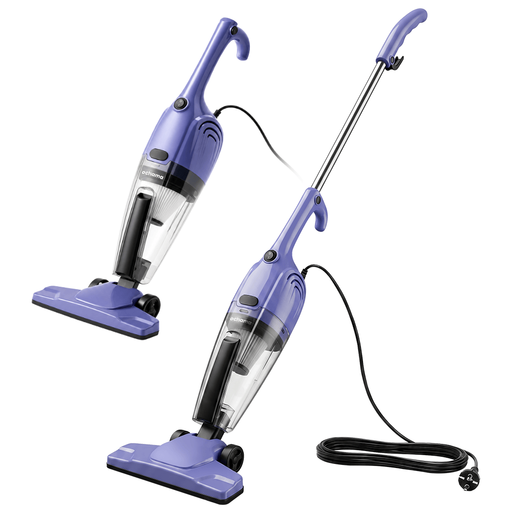
Why this fits the profile: This corded model combines a stick and hand-held mode and is suitable for smaller spaces, furniture, and everyday crumbs.
The constant power supply prevents you from having to wait for a flat battery during a cleaning session. The filter is washable, but must be completely dry before you put it back.
550 W motor according to the product information, 0.5-litre dust reservoir, multiple settings, and a 4.5-metre cord.

Why this fits the profile: For busy households that want to automate vacuuming and mopping as much as possible, this model offers an extensive station and app control.
The product information mentions automatic dust disposal, mop washing at 75 °C, warm air drying, and LiDAR mapping. Do check the space required around the station beforehand.
20,000 Pa stated suction power, TruEdge edge cleaning, anti-tangle features, and a station with multiple automatic tasks.
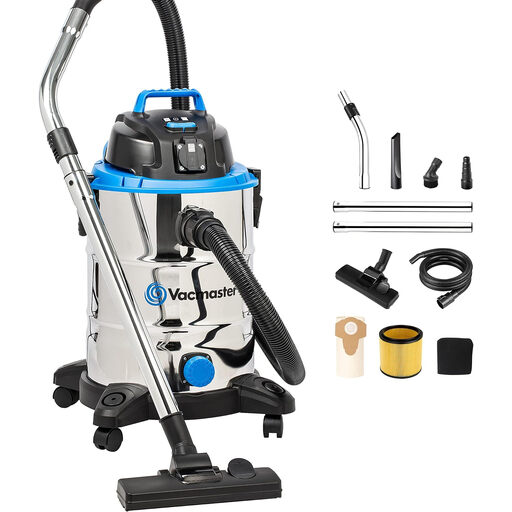
Why this fits the profile: This model is aimed at workshops, garages, and small maintenance businesses where dry debris, liquids, and dust from power tools come together.
The 30-litre tank reduces the need for frequent emptying during larger jobs. For wet and dry use, different filters are required according to the product information; switch them correctly.
1,500 W motor, blower function, stainless steel tank, and integrated 240 V power socket for tools.
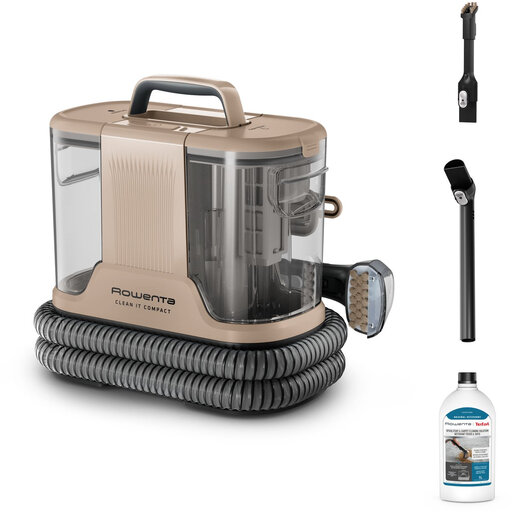
Why this fits the profile: A compact appliance for sofas, carpets, mattresses, car seats, and localised stains after an accident with food or pets.
The separate clean and dirty water tanks help prevent used water from being redistributed. The self-cleaning accessory simplifies maintenance, but rinsing is still advisable.
Stated suction power up to 11.5 kPa, a 1.5-litre clean water tank, and various nozzles for textiles and tight spots.
For windows, there are window cleaning robots with vacuum adhesion and water misting. Use them only on suitable smooth surfaces, connect the appliance to the mains, and always attach the safety cord. For a swimming pool, a pool robot with multiple cleaning modes can be more practical than manual brushing. Check the maximum water depth, filter capacity, and charging time.
If you mainly want to tackle grout, kitchen edges, or hard floors, you could consider a steam cleaner or steam mop. The 1000 W steam cleaner with a 400 ml tank and nine attachments is aimed at upholstery and car interiors, among other things. For larger cleaning sessions, MONSGA mentions a 1.6-litre tank and multiple steam settings. Only add liquids that the manual permits; for the MONSGA model mentioned, only clean water is recommended.
A vacuum cleaner with a mopping function is mainly suitable for hard floors. For deeper textile cleaning, you’re better off with a carpet cleaner or stain cleaner. These appliances complement each other and don’t fully replace one another.
We’ve put together a full, up-to-date list of products that fully meet these strict selection criteria and comply with current European safety regulations.
For daily hair on hard floors and carpets, a robot vacuum or stick vacuum with an anti-tangle brush is practical. For stains on sofas, carpets, or car seats, a compact stain cleaner is a better fit. Don’t just look at the stated suction power, but also at the brush design, filter maintenance, and reservoir capacity.
The lifespan depends on use, maintenance, and the availability of filters, brushes, batteries, and hoses. Empty reservoirs on time, let washed filters dry completely, and remove hair from brushes. For appliances with a battery, correct charging and storage according to the manual is important.
In addition to the purchase price, dust bags, filters, cleaning products, mop cloths, and electricity can add up. A station without a dust bag can limit replacement costs, while a model with a disposable bag can be more hygienic when emptying. So compare the consumables and maintenance intervals before you order.
