
Teacher who does most of the storytelling
Wants to keep a clear recording without changing lots of settings during the lesson. Positioning the recorder close to the speaker matters more than claims about recording from a distance.


If the storyteller is the focus, place the recorder close to their voice. If you also want to capture responses from the class, test in advance whether they can be heard clearly from the chosen position. Then compare storage, power and controls: a recording format cannot fix echo or excessive distance. If voices can be identified, the school must decide on the purpose and an appropriate UK GDPR legal basis, and inform those involved, as the Dutch Data Protection Authority explains.
Wants to keep a clear recording without changing lots of settings during the lesson. Positioning the recorder close to the speaker matters more than claims about recording from a distance.
Wants to hear questions and responses from different parts of the classroom too. A test recording from the planned position helps you judge whether the voices are clear.
Wants to organise access, sharing and retention if voices can be identified. The Dutch Data Protection Authority considers identifiable audio recordings to be personal data.
Choose this when: you want to get started without a separate memory card and mainly want to listen back to the story.
Trade-off: built-in memory makes preparation easier, but it doesn’t guarantee that distant voices will sound clear.
Choose this when: you can position the recorder near the storyteller and may want to connect an external microphone.
Trade-off: check the memory card and power requirements in advance; a recording format won’t prevent echo.
Choose this when: voices from different directions matter and you can test the setup in the classroom.
Trade-off: unwanted classroom noise may be picked up too. Test whether both the storyteller and contributions from the group are clear.
First, decide which voices matter most in the recording. Then consider storage, power and how identifiable voices will be managed.
| What to consider | What to look for when buying | Who should give this more weight? |
|---|---|---|
| Clarity of the storyteller’s voice | Test the distance and positioning in the actual classroom; check whether you need a suitable external microphone. | If I’m doing most of the storytelling, I want my voice to stay clear from the chosen position. Around 33% of consumers prioritise the storyteller’s clarity. |
| Responses from the class | Make a test recording from the planned position and listen to voices from different seats. | If questions and responses matter, I want to hear what pupils say from their seats. Around 27% of consumers give capturing classroom responses top priority. |
| Managing identifiable voices | Discuss the purpose, UK GDPR legal basis, access and retention period with the school in advance. | If identifiable voices are being recorded, I want to know in advance who can access the files and how they’ll be managed. Around 20% of consumers prioritise this. |
| Recording the whole session | Check storage, power and controls; make sure you have a suitable card if the model records to one. | If I want to keep the full story, I want to check before the lesson that storage and power are ready. Around 20% of consumers prioritise uninterrupted recording. |
A recording format and microphone placement solve different problems. Shure explains that a microphone can’t correct the acoustics of a room.
First decide which voices should be the focus, then make a test recording in the planned position in the classroom.
The Zoom H1essential and Tascam DR-05XP record to memory cards; Speech Processing Solutions says the Philips VoiceTracer DVT4115 has built-in memory.
Before the lesson, check that the card, power supply and controls are right for your chosen recorder, then play back a short test recording.
If your model records to a card, you’ll need to have a suitable memory card ready. Depending on the recorder, you may also need to arrange a power supply or batteries.
Identifiable voices are personal data. Sharing and keeping a recording therefore requires careful consideration of its purpose and how it will be managed.
Agree with the school in advance who will have access, how the recording will be used and when it will be deleted. The Dutch Data Protection Authority explains the privacy rules for schools.
The DVT4115 is worth comparing if built-in memory and operation without a separate memory card are important to you.
The H1essential is a compact stereo recorder worth comparing if you can choose where to record and may want to connect an external microphone.
The DR-05XP is a portable recorder worth comparing if speakers from several directions contribute to the story.
These voice recorders from Joybuy are selected for recording a storytelling session. When comparing them, look at storage, controls and any transcription features.
 No image available
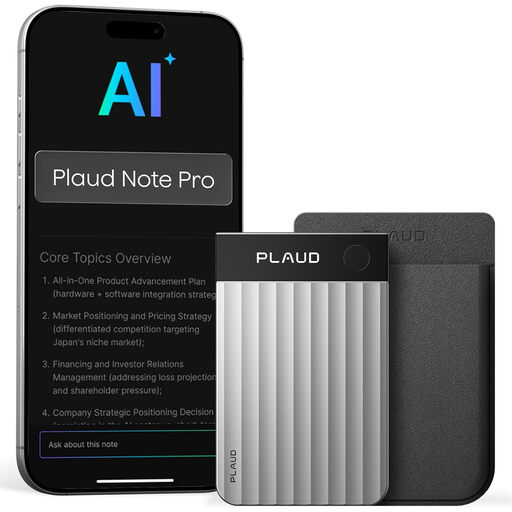
An option if you’d also like to turn a recording into text later.
The product information lists 32 GB of built-in storage, transcription and summaries.
 No image available
A good fit if you want to combine portable recording with transcription and summaries.
The product information lists 64 GB of storage and transcription and summarising features.
 No image available
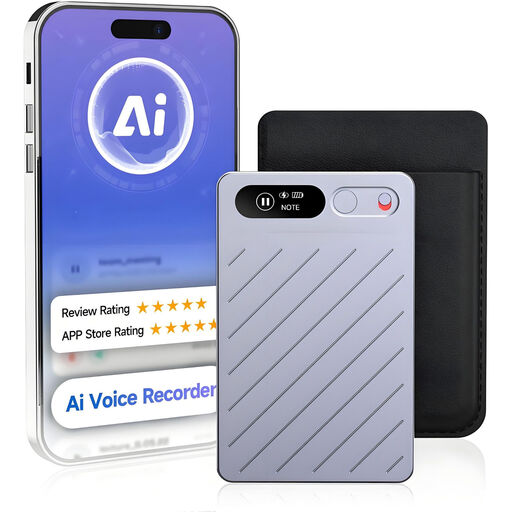
A compact option if you’d also like to have a recording transcribed and summarised.
The product information lists 64 GB of internal storage, with transcription and summaries in 118 languages.
 No image available
For anyone who wants to start recording at the touch of a button and transfer files later.
The product information lists MP3 and WAV recording and USB-C file transfer.
 No image available
An option if built-in storage and simple controls matter to you.
The product information lists WAV recording, up to 22 hours of continuous recording, a weight of 18 g and included headphones.
No. Consent isn’t automatically the only possible UK GDPR legal basis. If voices can be identified, the recording contains personal data. The school must decide on an appropriate purpose and legal basis, and inform pupils and parents about how the data will be processed. The Dutch Data Protection Authority explains that consent must meet specific requirements if the school relies on it.
You can’t tell from microphone specifications alone. Distance and echo affect clarity, so make a test recording from the planned position and listen to the main speaker as well as contributions from different seats.
Check that the recorder has enough storage and power to record the session. The Zoom H1essential and Tascam DR-05XP need a suitable memory card; according to Speech Processing Solutions, the Philips VoiceTracer DVT4115 has built-in memory. Make a short test recording too, then play it back.
The Dutch Data Protection Authority explains that the UK GDPR doesn’t set a specific general retention period. The school must decide how long the recording needs to be kept for its intended purpose; having plenty of storage isn’t a reason to keep files indefinitely.
Check whether the version you’ve chosen needs a memory card or a specific power supply, and whether these are included. Also check the warranty and returns terms that apply to the specific offer.