
Stationary storyteller
You mainly want to record your own voice clearly and can stay close to a directional microphone. Audio-Technica describes the ATR2100x-USB as a cardioid microphone for a focused set-up.


First, choose a microphone to suit the voices you want to capture: a directional microphone close to a stationary storyteller, a clip-on microphone for someone who moves around, or a recorder that picks up voices from around the device. Then check the connection and what you need to record. If pupils’ voices can be recognised, agree the purpose, GDPR lawful basis and file management arrangements in advance.
You mainly want to record your own voice clearly and can stay close to a directional microphone. Audio-Technica describes the ATR2100x-USB as a cardioid microphone for a focused set-up.
You want to capture pupils’ responses as well as the story. The right set-up depends on which speakers need to be heard and the arrangements for recording identifiable voices. RØDE and Tascam describe different ways to record more than one voice.
You want to move around while telling the story, so you’re looking for a microphone that can be attached to the speaker. RØDE says the Wireless Micro Camera Kit comes with two clip-on transmitters.
First decide which voices you want to capture. Then choose a suitable microphone set-up and, finally, check how to start and manage the recording.
| What to consider | What to look for when buying | Who is this important for? |
|---|---|---|
| Clear storytelling audio | Check the microphone’s pickup pattern and whether the storyteller can stay close enough to it. | If I’m mainly telling the story, I want to keep my voice close to the microphone without picking up too much unnecessary classroom noise. Around 33% of consumers put clear audio from the main storyteller first. |
| Pupils’ responses | Decide who needs to speak and whether they can each wear a transmitter or sit around a recorder. | When pupils respond during the story, I want to know which voices really need to be on the recording. Around 27% of consumers prioritise capturing multiple speakers. |
| Freedom to move | Check whether the microphone moves with the storyteller and whether the receiver is compatible with your phone or camera. | If I walk around the classroom while telling the story, I don’t want to rely on a microphone that stays in one place. Around 20% of consumers give freedom of movement top priority. |
| Recording independently and managing files | Check the storage and power requirements, and agree where recordings will be kept and when they’ll be deleted. | If I want to record without a connected phone or computer, I also want to know in advance how to manage the files securely. Around 20% of consumers prioritise recording independently and managing files. |
A directional microphone is designed for a nearby speaker. It won’t automatically pick up pupils sitting around the classroom just as clearly.
Make a test recording from the intended position and decide in advance which voices you want to capture.
RØDE describes differences in the receivers included. According to RØDE, the Camera Kit includes a camera receiver and a USB-C smartphone receiver, so check the full model name and what’s included in the set.
Before buying, compare the exact version with the connection on your recording device.
The Zoom H1essential manual sets out separate steps for storage and power.
Check the manual for the exact model and test that recording and playback work before the lesson.
According to the Dutch Data Protection Authority, audio recordings in which someone can be identified are personal data. The school must therefore carefully agree how such files will be processed and handled.
Discuss the purpose, lawful basis, who will have access and when the recording will be deleted with the school in advance.
The Wireless Micro Camera Kit is suited to a storyteller on the move or two designated speakers who can each wear a transmitter.
The H1essential is a portable recorder with built-in X/Y microphones for recording independently.
The DR-05XP is a portable recorder with built-in stereo microphones, suited to a set-up where you want to capture sound from several directions.
The ATR2100x-USB is suited to a stationary storyteller who stays close to the microphone and records to a computer via USB.
The MV88+ Video Kit is designed for recording with a smartphone set up in a fixed position.
This selection includes clip-on microphones for a storyteller who moves around or stays close to the microphone, as well as portable recorders for recording independently. Check the connection and included accessories for each version.
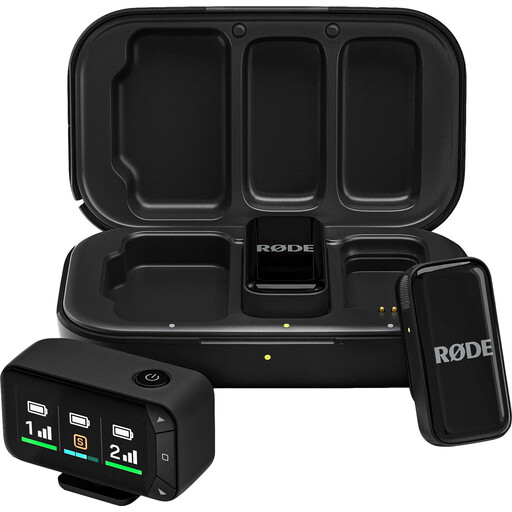 No image available
Suited to a storyteller on the move or two designated speakers, each wearing a transmitter.
The product name lists two microphones, a camera receiver, a smartphone receiver, a charging case and USB-C.
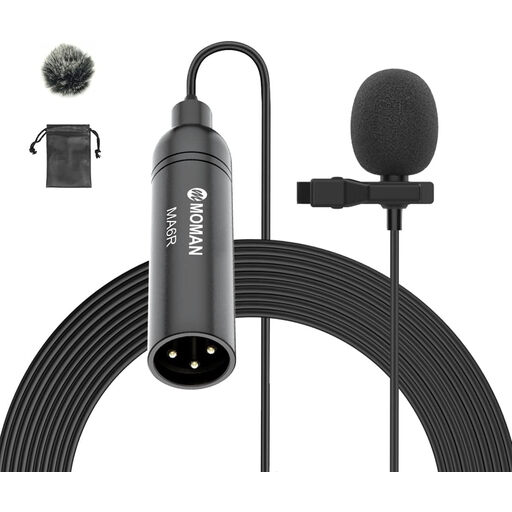 No image available
A clip-on microphone may suit a storyteller who wants to wear the microphone close by. Check that its connection is compatible with your recording device.
The product name lists a 6 m cable, a 3.5 mm connection and an omnidirectional clip-on microphone.
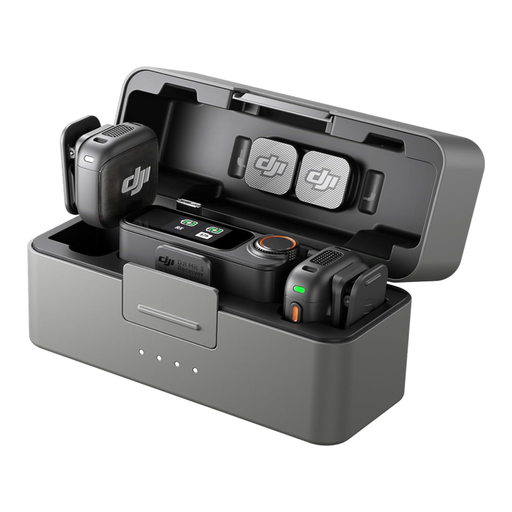 No image available
The two transmitters listed make this suitable for a set-up with two designated speakers. Check that the receiver connects to your recording device.
The product name lists two transmitters, one receiver and a charging case.
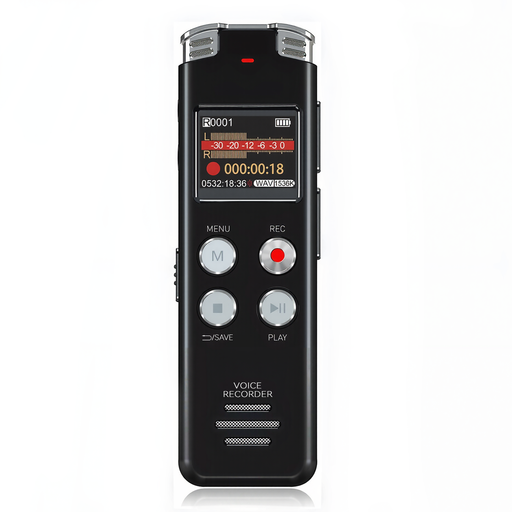 No image available
A portable recorder may suit you if you want to record independently. Check how you’ll store and manage files afterwards.
The product name lists 128 GB of storage and an LCD screen.
 No image available
A wireless lavalier microphone may suit a storyteller on the move. Check the connection and what’s included for use with your recording device.
The product name lists a range of 100 m and a battery life of 20 hours. The description mentions TF card recording; according to the product information, the TF card is not included.
First decide which speakers you want to capture. Two clip-on transmitters may suit two designated speakers; a recorder positioned appropriately is another option for capturing sound from several directions. Listen back to a short test recording before the session.
It depends on the model: check the storage and power requirements in the manual. The Zoom H1essential manual explains how to insert a microSD card and power the device. Also test beforehand that recording and playback work.
The school must assess the privacy rules and the circumstances in which the data will be processed. According to the Dutch Data Protection Authority, identifiable audio recordings are personal data, and processing them requires a GDPR lawful basis. Consent is one possible lawful basis, but it isn’t automatically the only one. Assess the recording, internal use and publication according to their individual purposes and circumstances.
The Dutch Data Protection Authority states that the GDPR does not set one general retention period for personal data. Personal data must not be kept for longer than necessary, so set a period that suits the purpose of the recording.