
Recording someone who is moving as they read
You want to capture their voice clearly while they move around. Choose a connection that works with your recording device and check how the microphone attaches to clothing.


First, decide where the person reading the poem will be and what you’ll be recording on. A clip-on microphone stays close to someone who’s moving, while a handheld or stand-mounted microphone suits a fixed speaking position. If you also want to capture the atmosphere of the classroom, a separate stereo recorder is another option; recording from further away can make the words harder to understand because of reverberation. Check the connection and make a test recording from the intended position.
You want to capture their voice clearly while they move around. Choose a connection that works with your recording device and check how the microphone attaches to clothing.
You can position a handheld or stand-mounted microphone close to each reader and want to make sure the words are easy to understand.
You want to capture reactions or the feel of the room as well as the poem, and can try different positions for a separate recorder.
The key decision is whether the microphone should follow the reader, stay at a fixed speaking position or also pick up sound from around the classroom.
| What to consider | What should you look for? | Who is this important for? |
|---|---|---|
| Movement and clarity | Check how the clip-on microphone attaches and make a test recording where the poem will be read. | If the reader moves around the classroom, I want to keep the microphone close to their voice. Around 40% of consumers prioritise freedom of movement and clarity. |
| Fixed speaking position | Check that a handheld or stand-mounted microphone can be positioned close enough to the reader and works with your recording device. | When readers stay in one place, I want to be able to position and pass the microphone around easily. Around 30% of consumers mainly opt for a fixed microphone setup. |
| The poem and classroom atmosphere | Decide whether the voice or background sound matters most; test the distance and listen back to the recording. | If I also want to capture reactions and the atmosphere of the classroom, I’m happy for the voice to sound less direct. Around 20% of consumers prioritise capturing the feel of the room. |
| Connection | Check that the exact plug or receiver works with your recording device and see what’s included in the set. | If I’m using a device I already own, I want to make sure the connection will work beforehand. Around 10% of consumers let the device connection determine their first choice. |
Greater distance can mean reflected sound makes up a larger part of the recording. Shure explains that a microphone cannot effectively separate the desired direct voice from reverberation being recorded at the same time.
Decide whether the voice or the classroom atmosphere matters most. Test the microphone in the intended position and listen back to check that the words are easy to follow.
If a recording is hard to understand, you may need to spend extra time recording it again or editing it.
Microphones and receivers can have different connections. A model that doesn’t work with your recording device won’t suit your planned setup.
Check the full model variant, your device’s connection and the contents of the box before choosing.
Depending on your setup, you may need a different cable, receiver or attachment.
Recording or level-control features won’t automatically change the balance between the direct voice and sound reflected around the room.
First, decide where the microphone can go and make a test recording there. Only then compare recording features.
These examples suit different recording setups. The models and features mentioned don’t necessarily apply to every product from each brand.
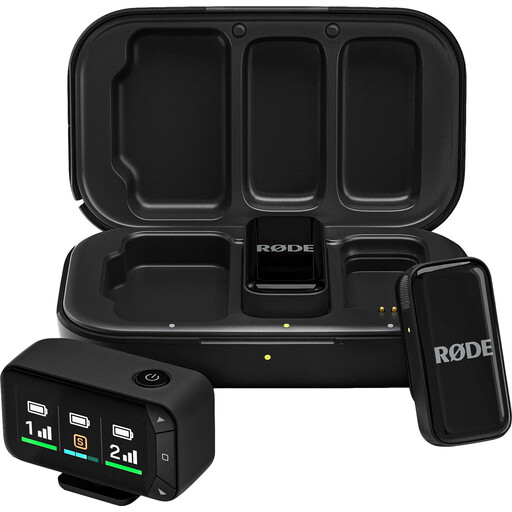
The Wireless Micro is a set with two clip-on transmitters for recording with a smartphone.
The ATR2100x-USB is a dynamic handheld microphone for a fixed speaking position, with USB and XLR outputs.
The XS Lav USB-C is a wired clip-on microphone for a reader and a compatible mobile device or computer.
The H1essential is a separate recorder for anyone who wants to record without relying on a phone or capture stereo sound.
The MV88+ Video Kit is a mobile microphone with adjustable stereo imaging for use with a compatible phone setup.
These product picks focus mainly on clip-on microphones for readers who move around. Check the connection and number of transmitters for each model to make sure they suit your recording setup.
 No image available
The clip-on transmitters suit a reader who moves around; check that the USB-C smartphone receiver works with your device.
The set description lists two microphones, a camera receiver, a USB-C smartphone receiver and a charging case.
 No image available
This clip-on microphone is designed for mobile recording of a reader who moves around. Check that your device works with the USB-C receiver.
The product description states that OTG is required for Android.
 No image available
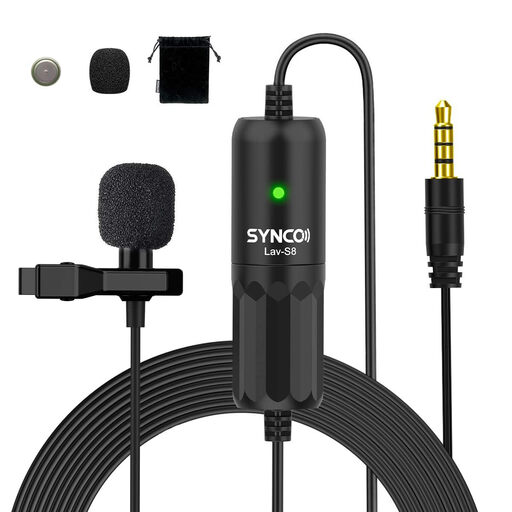
A wired clip-on microphone could be a good fit if the cable can be routed neatly around the speaking position.
The product information lists a 3.5 mm connection and an omnidirectional pickup pattern. Check that your device supports this connection.
 No image available
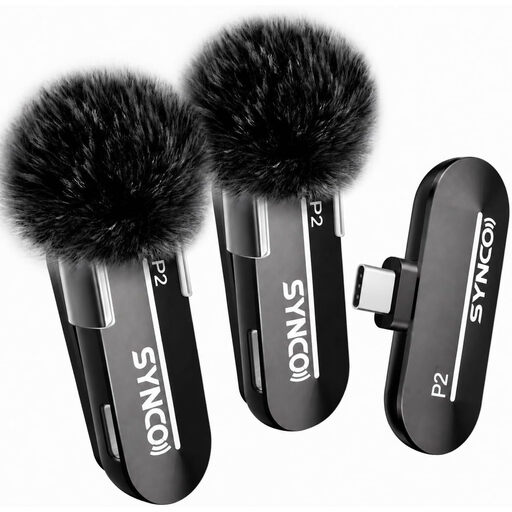
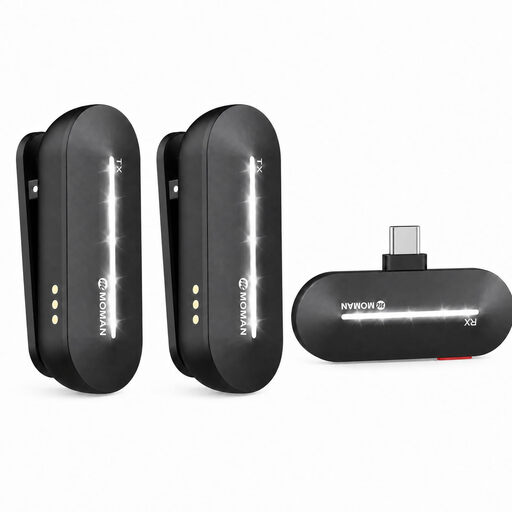
This set could be useful if two readers need a microphone at the same time. Check that the receiver’s connection works with your device.
The product name specifies USB-C and 2TX+1RX.
 No image available
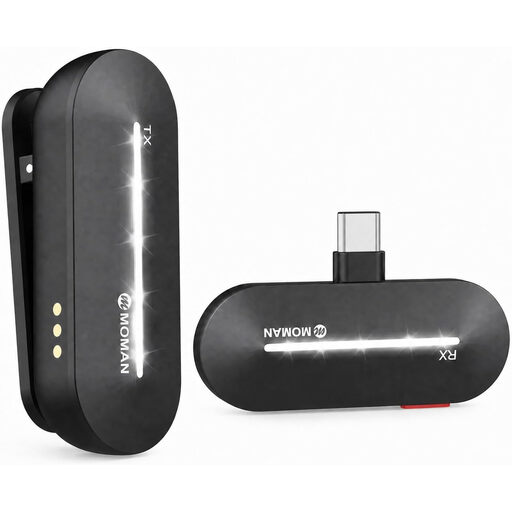
This clip-on microphone could suit one reader who moves around. Check that the USB-C receiver is compatible with your recording device.
The product name specifies USB-C and 1TX+1RX.
Start close to the reader and listen back to a test recording made from the actual speaking position. Shure explains that a microphone cannot effectively separate reverberation recorded at the same time as the voice.
No, check your device and the exact version of the microphone. The standard RØDE Wireless Micro has a USB-C or Lightning smartphone receiver; the Wireless Micro Camera Kit is a different set. The Sennheiser XS Lav USB-C has a USB-C plug.
Check the power, connection, recording destination and available storage, then make a short test recording and listen back to it. Zoom says the H1essential records to a card and lets you listen back through its built-in speaker. If you’re recording pupils, also follow your school’s policy.
The school must consider the purpose of the recording and the privacy rules that apply to recording and any sharing. The Dutch Data Protection Authority says schools must inform pupils and parents about the processing of personal data. The Authority says that identifiable images require consent from pupils aged 16 or over, or from parents when pupils are younger; this specific rule for images is not automatically the same as the rule for every audio-only recording. Ask the school what legal basis and arrangements apply.
First, check the rights to the text you’re using. The Dutch government says that copyright-protected texts by others cannot be used without permission; assess a recording for a specific educational context separately.