
Teacher with a fixed recording spot
You want pupils to record their introductions one at a time at a computer and need a setup that’s quick to get ready. Podcast in de Klas describes podcasts made by pupils with a teacher’s guidance.


Choose a microphone setup based on how your pupils will speak: one at a time from a fixed position, taking turns with a handheld microphone, or all together using a suitable multi-channel setup. Keep the microphone close to whoever is speaking, and make a test recording in the classroom; a microphone placed further away won’t eliminate echo. Also check that the connections, accessories and software are compatible with the school’s equipment.
You want pupils to record their introductions one at a time at a computer and need a setup that’s quick to get ready. Podcast in de Klas describes podcasts made by pupils with a teacher’s guidance.
Your pupils take turns speaking, and you can keep the handheld microphone close to whoever is speaking. A handheld microphone with USB and XLR connections is one possible setup for this way of recording.
You want to record several pupils at once or work around the classroom without a fixed computer. In that case, choose a complete recording setup, including the number of inputs and the software you’ll need.
Suitable when: pupils record individually at a school computer and a quick connection is important.
Consider: the speaker needs to stay close to the microphone; one microphone placed further away won’t automatically capture the voices of a whole class clearly.
Suitable when: pupils take turns speaking and you can hold the microphone close to each speaker.
Consider: pay attention to the microphone’s distance and position while recording; USB and XLR each require a compatible connection.
Suitable when: you regularly record one voice at close range and want to keep the option of an XLR setup.
Consider: check that the stand or boom arm and the rest of your equipment are compatible with your chosen microphone; processing won’t remove echo or compensate for a large distance from the speaker.
Suitable when: pupils need to speak at the same time, or recording independently without a computer is important.
Consider: multiple USB microphones require suitable software, ports and enough power; a portable recorder still needs to be positioned close to the speakers.
| What to consider | What to look for when buying | Who is this important for? |
|---|---|---|
| Clear speech in the classroom | Make a test recording from the intended speaking distance and listen back using headphones. | If I’m recording in a noisy room, I want to keep the speaker close to the microphone; around 33% of consumers give clear speech top priority. |
| Quick to connect | Check the school computer’s port, the cable supplied and whether the recording app lets you select the microphone as an input. | For short introductions, I want to spend as little lesson time as possible connecting and setting things up; around 27% of consumers prioritise a quick computer setup. |
| Several voices at once | Work out how many people will speak at the same time and check the number of microphone inputs and USB ports required, as well as software compatibility. | For a group introduction, I want to record several voices at once; around 20% of consumers put this capability first. |
| Recording without a fixed computer | Check whether standalone recording is needed and how you’ll save and listen back to the files. | If the recording location changes from lesson to lesson, I don’t want to rely on having a computer next to the speaker; around 20% of consumers prioritise mobile recording. |
The distance from the speaker and the balance between their voice and the room noise will still affect the recording. A product claim about noise processing is no substitute for testing it where pupils will be speaking.
Start with a test recording, keeping the speaker close to the microphone, and listen back to it.
A single microphone is not the same as a recording setup with several separate inputs. Multiple USB microphones also require compatible connections and software.
Before buying, decide how many pupils will speak at the same time and check that the computer and recording software support your chosen setup.
The stand, cable or headphones supplied can vary between versions and affect how much of the setup you can use straight away.
Compare what’s included with the exact version you’re considering, and check what the school already has.
The ATR2100x-USB is a dynamic handheld microphone with USB and XLR connections, suited to recording speakers one at a time.
The PodMic USB is a dynamic USB/XLR microphone for a fixed recording spot.
The MV7+ is a dynamic USB-C/XLR podcast microphone for close-range speech, with settings adjusted through software.
The SoloCast 2 is a USB condenser microphone for a fixed computer setup.
The H1essential is a portable recorder with built-in microphones that can also be used as a USB microphone.
These Joybuy picks include wireless microphones for speakers who take turns and a fixed USB setup. For each product, check that its connection and software are compatible with your equipment and recording location.
 No image available
The two transmitters may suit pupils taking turns to speak; check that the receiver connects to the device you’re recording with.
The product information states that up to four transmitters can connect to one receiver.
 No image available
The two-microphone set may suit a recording with two speakers; check which receiver is compatible with the computer, camera or phone you’re using.
The product name lists a camera receiver, smartphone receiver and charging case. For use with a computer, the product information specifies an available USB-C port.
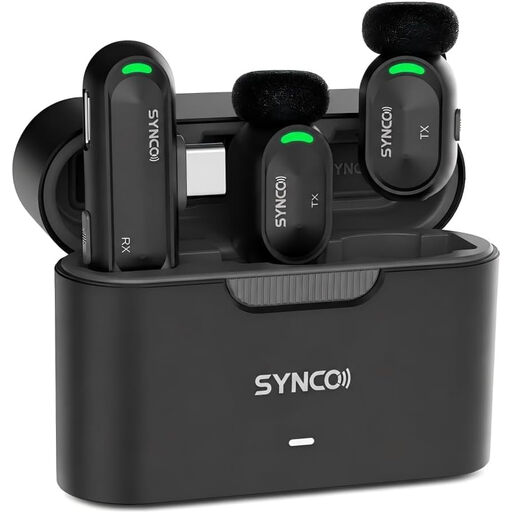 No image available
This clip-on microphone may suit a pupil recording close to the speaker using a compatible Android device.
The product information lists USB-C and OTG support as requirements for use with Android.
 No image available
This wireless microphone may suit a pupil making a mobile recording; check the connections on the device you want to use.
For Android, the product information specifies USB-C with OTG enabled. Compatibility with other devices depends on the connection and version specified.
 No image available
This USB microphone may suit a fixed computer setup where one pupil speaks close to the microphone.
The product information lists a headphone socket, mute button and boom arm stand with accessories.
Don’t rely on this if you want to record clear voices from different distances. Move the speaker closer to the microphone or reposition the microphone for each speaker, then listen to a test recording; a microphone can’t eliminate echo in the classroom.
Not without checking the software and connections. RØDE describes recording with several of its own compatible USB microphones using RØDE Connect and notes that you’ll need enough USB ports and, if using a hub, sufficient power. This doesn’t confirm compatibility with just any microphones.
Select the connected microphone as the recording input, test it from the actual speaking distance and listen back to the recording. Shure explains that a stand can also reduce handling noise caused by holding the microphone.
Check which cable, stand, headphones or recording equipment your setup still needs. For a consumer purchase, ACM ConsuWijzer says that statutory protection applies against the seller for as long as the product lasts as long as can reasonably be expected; any manufacturer’s warranty is separate. This explanation does not establish rights for a school buying as a business.
An identifiable audio recording is personal data. The Dutch Data Protection Authority states that a school must identify an appropriate GDPR legal basis before processing personal data and inform pupils and parents; consent is one possible legal basis, but it is not automatically the right basis for every recording. Treat recording and publishing publicly as separate purposes, and agree the approach with the school’s privacy lead.