If you’re recording the intro in one fixed spot, a wired lapel microphone is a straightforward choice, as long as its connector is compatible with your device. For two speakers or more freedom to move around, a wireless set with two transmitters is more practical. If you want to record without a phone, a standalone recorder with a lapel microphone may be a better fit. Check what’s included and how it connects to your device, then make a test recording: an omnidirectional microphone or noise-reduction feature won’t necessarily remove classroom noise.
Who is this guide for?
Recording in a lively classroom
You want to record a short, clear voice intro, while accepting that some classroom noise may be audible. Where you position the microphone, choosing a quieter time to record and making a test recording all matter. Shure recommends positioning a worn microphone at about chest-pocket level.
Two presenters recording an intro together
You want to capture two voices at once, so check that your chosen version really includes two transmitters and find out how it records each voice. RØDE and Saramonic describe sets with two microphones or transmitters, but check the channel configuration and included contents for the specific version.
Recording on the move
You switch between recording locations or devices, so connection type, freedom of movement and recording workflow are key considerations. Product specifications from RØDE, Saramonic, Zoom and BOYA show a range of connections and recording set-ups. Choose a version that works with the device you use.
What should you look for?
Wired lapel microphone
A good fit if: one speaker stays close to a compatible phone or recorder and the cable won’t get in the way.
Bear in mind: the cable limits your freedom to move around. Check that the analogue TRRS connection works with your device and recording app.
Wireless set with two transmitters
A good fit if: two presenters are speaking at once or moving around during the recording.
Bear in mind: the receiver must be compatible with your device and all components need to be charged. Noise processing doesn’t guarantee that other voices will be removed.
Lapel microphone with a standalone recorder
A good fit if: you want to record without a phone connected and can transfer the audio files later.
Bear in mind: you’ll need a plan for power, storage and file transfers. A recorder with one microphone won’t automatically record two speakers separately.
| What to consider |
What to look for |
Who is this important for? |
| Clear speech amid classroom noise |
Test the microphone where you plan to use it and listen for clothing rustle. Position a worn microphone at about chest-pocket level. |
If I’m recording in a lively classroom, I want the voice to be clear without expecting the microphone to filter out all classroom noise. Around 33% of consumers say clear speech is their top priority. |
| Two speakers at once |
Check how many transmitters are included and whether voices are saved separately or combined into one channel. |
For an intro recorded together, I want to capture both voices and know in advance how I can edit them later. Around 27% of consumers say recording two speakers at once is their top priority. |
| Connection to your device |
Check the exact device, input, any required adapter and support from the recording app. |
If I want to use my existing phone or recorder, the microphone needs to work with it. A matching plug alone doesn’t prove compatibility. Around 20% of consumers say device compatibility is their top priority. |
| Recording independently |
Check whether a microphone is included and how storage, power and file transfers are handled. |
If I’d rather not record with a phone, I want to capture files independently and transfer them later. Around 20% of consumers say recording independently is their top priority. |
Common pitfalls
-
Assuming noise reduction means silence
A noise-reduction feature or omnidirectional microphone won’t guarantee that classroom voices disappear. Microphone placement and your surroundings will still affect the recording.
Make a test recording in the same classroom before recording the final intro, then listen back to it. Finding a quieter time to record or making another recording will take extra time.
-
Assuming a matching plug proves compatibility
TRRS, TRS, USB-C and Lightning are different connections. A microphone with a matching plug won’t necessarily work with every device or recording app.
Check your exact device, input and adapter support, and test the recording app before you record. You may need a compatible adapter or a different receiver version.
-
Assuming two microphones mean two separate audio tracks
The RØDE SC6 combines the sound from two connected microphones into one channel. That’s different from having two separately editable tracks.
Before buying, check how the adapter and recording app handle the channels if you want to edit the voices separately.
-
Treating different product versions as the same set
The BOYA BY-M1 and BY-M1S differ in several ways, including battery use. The name of a wireless product range also doesn’t confirm on its own which components are in a particular pack.
Compare the full model name and the contents of the pack. Choosing the wrong version or missing a component may mean you need to buy something else.
Brands to consider
RØDE
RØDE offers the wired TRRS smartLav+ lapel microphone and the Wireless Micro, a smartphone-focused set with two clip-on transmitters.
- According to the official product specifications, the smartLav+ has a 1.2 m cable.
- The Wireless Micro is available with USB-C or Lightning; choose the connection that suits your phone. These are differences between models, not the result of an independent sound comparison.
Shure
The MVL is a wired, omnidirectional lapel microphone for compatible mobile devices.
- Shure specifies a 3.5 mm TRRS plug, clip and windscreen.
- Check that your device has a suitable connection or supports a compatible CTIA adapter.
Saramonic
The Blink500 B2+ is a wireless set with several connection options for receivers and monitoring.
- The manufacturer lists USB-C, Lightning, 3.5 mm TRS and a headphone output, among other features.
- Check the exact pack contents and your device’s connection. Claims about noise reduction have not been independently verified for classroom use.
BOYA
The BY-M1 is a wired lapel microphone with switchable settings for cameras and smartphones.
- BOYA specifies a 6 m cable and an LR44 battery for the BY-M1.
- Don’t confuse this version with the battery-free BY-M1S.
Zoom
The F2 combines a standalone field recorder with an included lapel microphone.
- Zoom specifies mono WAV recording, microSD storage and file transfer via USB.
- Bluetooth features are exclusive to the F2-BT and shouldn’t be attributed to the standard F2.
SYNCO
According to the manufacturer, the G4 is a compact wireless set with two transmitters and receivers for different devices.
- The manufacturer describes several receivers as part of one set.
- Check which receivers and other components are actually included in the version you choose.
Joybuy products
These product picks focus on wireless recording, including sets for two microphones and versions with different receivers. Before use, check that the included receiver is compatible with your recording device.
 Image unavailable
DJI Mic Mini 2S (2 TX + 1 RX + Charging Case)
This set with two transmitters is an option for recording two speakers wirelessly at the same time.
The product title lists 2 TX, 1 RX and a charging case. Check that the receiver is compatible with your recording device.
View at Joybuy
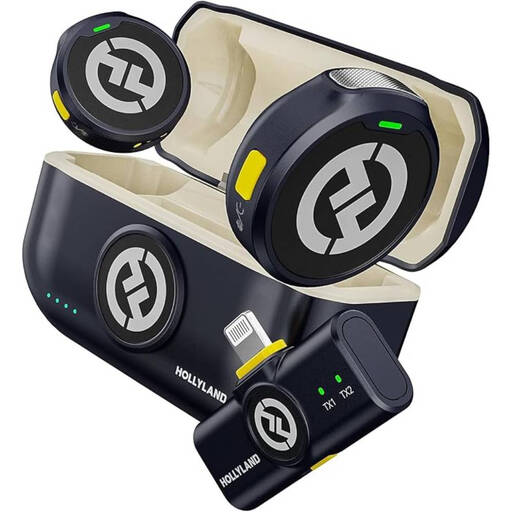 Image unavailable
Lark M2 Wireless Lavalier Microphone System
This wireless lavalier microphone is an option if you’re looking for a microphone without a cable connection.
The product title lists 48 kHz/24-bit audio and a transmitter weight of 9 g. Check which receiver is included and whether it connects to your device.
View at Joybuy
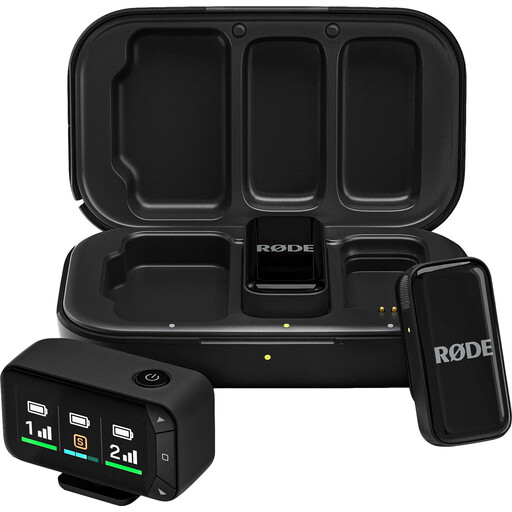 Image unavailable
RØDE Wireless Micro Camera Kit
This version is an option if you want to record wirelessly with a camera or compatible USB-C device.
The product description lists two transmitters, a camera receiver, a USB-C smartphone receiver and a charging case. Check that the connections are compatible with your recording device.
View at Joybuy
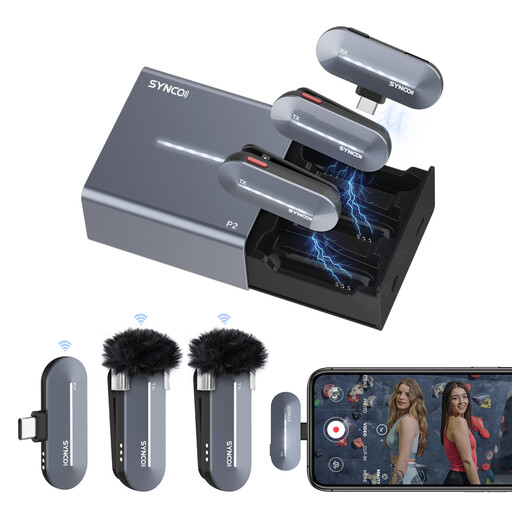 Image unavailable
SYNCO P2ST Wireless Lavalier Microphone, USB-C, Dual Mic, 2.4 GHz
The version with two microphones is an option if you want to record two voices with a compatible USB-C device.
The product title lists USB-C, Dual Mic, 2.4 GHz and a charging case. Check how your recording app handles the channels.
View at Joybuy
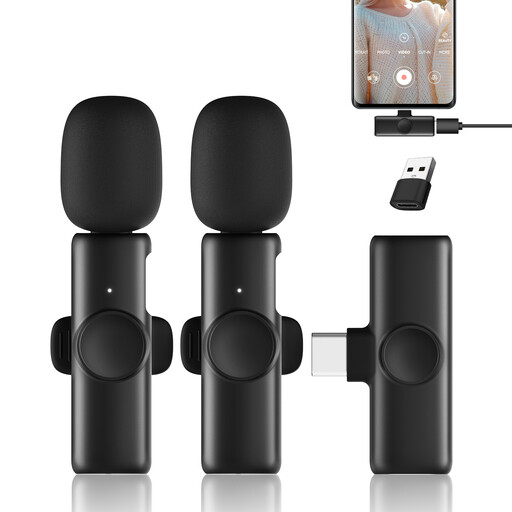 Image unavailable
Moman MS1X(C) Wireless Lavalier Microphone, USB-C, 2 TX + 1 RX
This version is an option for two speakers using a compatible USB-C phone.
The product title lists 2.4 GHz, 2 TX and 1 RX. Check that it’s fully compatible with your device and recording app.
View at Joybuy
Frequently asked questions
Where should you attach a lapel microphone for a classroom recording?
Shure recommends attaching a worn lapel microphone at about chest-pocket level. Make sure clothing or jewellery won’t knock against the microphone, then do a short listening test where you plan to record.
Can you record with two wired smartLav+ microphones through one phone?
The RØDE SC6 lets you connect two compatible smartLav+ microphones to a suitable TRRS device. The adapter combines both signals into one channel. Also check that your phone and recording app support the microphone input.
What extra items and purchase terms should you check?
Depending on your chosen set-up, you may need a suitable adapter, a second microphone or a memory card. According to the Dutch government, when you buy online from a business in the Netherlands, you will often have a 14-day cooling-off period. Consumer purchases are covered by a legal guarantee, with no fixed general guarantee period. Check the terms that apply to your specific purchase.
Can a school record and share identifiable pupils’ voices without permission?
First, consider the privacy rules that apply to the purpose and circumstances of the recording. The Dutch Data Protection Authority treats identifiable audio recordings as personal data; processing them requires a lawful basis under the GDPR, and schools must inform pupils and parents. Before recording or publishing anything, discuss with the school who will be recorded, for what purpose and which lawful basis applies.


