
Interview team with two speakers
You want to capture both the storyteller’s memories and the pupil’s questions. Look for sets with two transmitters or two clip-on microphones. RØDE and Saramonic both describe setups designed for two people.


Choose based on who needs to be heard and what you’re recording on. A wired clip-on microphone works well for one speaker if the connection is compatible, while a set with two transmitters can give the storyteller and interviewer a microphone each. A recorder with a clip-on microphone is an alternative if you don’t want to use a phone to record. Check what’s included and the connections, then make a test recording in the classroom. Manufacturer features don’t guarantee that background noise will disappear.
You want to capture both the storyteller’s memories and the pupil’s questions. Look for sets with two transmitters or two clip-on microphones. RØDE and Saramonic both describe setups designed for two people.
You want to position the microphone close to the storyteller’s mouth and connect it to an existing recording device. RØDE recommends positioning a lavalier microphone around 20–30 cm from the mouth. Also check that the input and any adapter are compatible.
You want to record a long conversation without using a phone to make the recording. According to Zoom, the Zoom F2 is a body-worn recorder with a clip-on microphone included and microSD storage.
Suitable when: the storyteller is the main person wearing a microphone and your recording device has a compatible input.
Bear in mind: the cable and any adapter; the interviewer won’t automatically have their own microphone.
Suitable when: both the storyteller and interviewer need to wear a microphone or move around during the conversation.
Bear in mind: the receiver, connection, power and connection to the recording device; check that the set you choose really includes two transmitters.
Suitable when: both speakers need to wear a separate microphone on their clothing.
Bear in mind: the exact model; for the Saramonic Blink500 ProX, the manufacturer specifies transmitter storage for the B2R, but not the B2.
Suitable when: you want to record one storyteller for a long time without using a phone to make the recording.
Bear in mind: the recorder, power, memory card and file management; you’ll need a separate recording setup for the interviewer.
| What to consider | What should you check? | Who is this important for? |
|---|---|---|
| Clear speech | Check the clip’s position and make sure clothing doesn’t rub against the microphone. Listen to a test recording. | When I record a story in a classroom, I want to hear the storyteller clearly and minimise clothing noise. Around 31% of consumers prioritise clear speech. |
| Two voices | Check that the version you choose actually includes two transmitters or two separate lavalier microphones, along with the necessary receiver. | When both the storyteller and interviewer need to be heard, I want to be able to give each of them a microphone. Around 25% of consumers prioritise this option. |
| Connection | Check the exact recording device, plug type, any adapters and the cables included. | When I want to use my existing phone, camera or recorder, I want to know in advance whether the connection is compatible. Around 25% of consumers put compatibility first. |
| Long recording | Check that the power supply and storage suit the planned conversation length, and make a test recording in advance. | When I want to record a long life story without interruptions, I also want to make sure the power and storage are sorted. Around 19% of consumers prioritise recording time. |
The option to pair two transmitters doesn’t automatically tell you how many are included in the pack you choose.
Check the contents of the exact version you plan to order.
The Shure MVL uses a 3.5 mm TRRS plug. Shure notes that a compatible CTIA adapter may be required for suitable phones.
Check the connection on your recording device and make a test recording before the interview.
A manufacturer feature doesn’t prove that other conversations in a classroom will disappear from the recording. Clothing rubbing against the microphone can also create noise.
Choose a quiet spot, attach the microphone where fabric won’t rub against it, and listen to a short test recording.
The MVL is a wired clip-on microphone for one speaker and a compatible mobile recording device.
The Wireless ME Dual is a wireless set with two transmitters for conversations where both speakers wear a microphone.
The Mic Mini is a compact wireless option. If both speakers will wear microphones, check the version and configuration.
The Blink500 ProX B2/B2R series is worth considering if you want two separate clip-on microphones.
The F2 combines a body-worn recorder with a clip-on microphone for one speaker.
These products include wireless interview microphones and a wired clip-on microphone; some sets are designed for two speakers. Check the connection and contents of the exact version before ordering.
 No image available
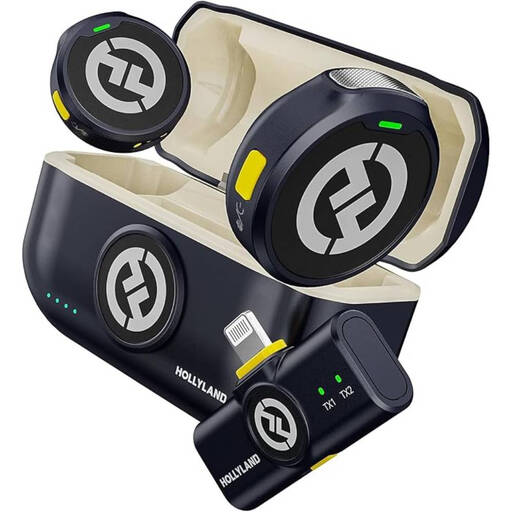
A wireless lavalier option if you want the speaker to wear a microphone close by.
The product title lists 48 kHz/24-bit audio, a 9 g transmitter and a transmission range of 300 m. Check that the set and connection are compatible with your recording device.
 No image available
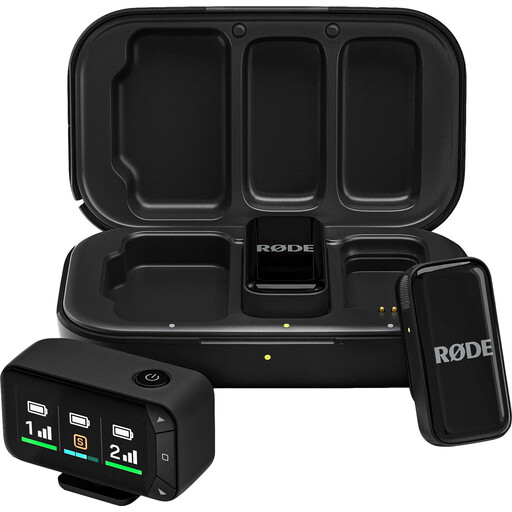
A wireless option for interviews; the product description lists two transmitters with built-in microphones and clips.
The set description lists a camera receiver, a USB-C smartphone receiver and a charging case. Check which receiver is compatible with your recording device.
 No image available
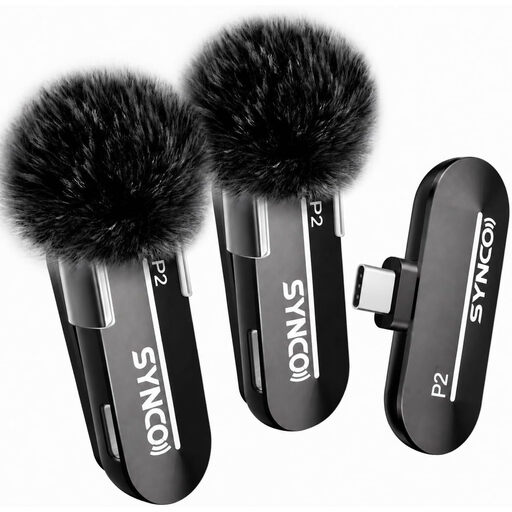
A wireless option for interviews if your recording device supports the USB-C connection listed.
The product information lists audio monitoring and charging while in use via the receiver. Check that these connections are compatible with your setup.
 No image available
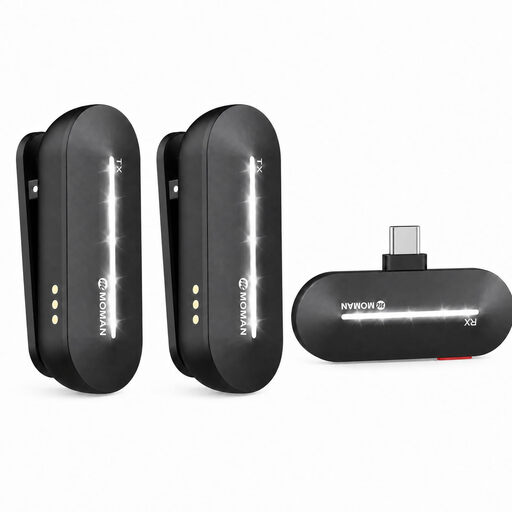
The two-transmitter configuration suits an interview where both the storyteller and interviewer wear a microphone.
The product title lists USB-C and a range of 150 m. Check that the receiver connects to the recording device you plan to use.
 No image available
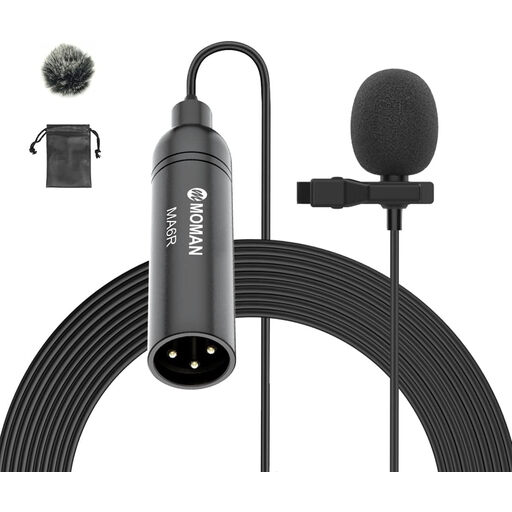
A wired option for giving one storyteller a microphone close to their mouth.
The product title lists a 6 m cable, a 3.5 mm connection and an omnidirectional microphone. Check that the input on your recording device is compatible.
Attach the microphone to clothing close to the mouth, where fabric won’t rub against it. RØDE gives around 20–30 cm as a general positioning guideline. Make a short test recording with both speakers in the classroom where you’ll be recording.
Not if you want to give both speakers their own wearable microphone. Check whether the version you choose includes two transmitters or two lavalier microphones; the contents of the pack determine what you actually get.
Check whether your chosen setup requires an adapter, memory card or suitable power supply. Requirements vary by product, so make sure they’re right for your recording device and planned conversation length.
According to the Dutch Data Protection Authority, an identifiable audio recording is personal data. If a school processes it, it must have an applicable lawful basis under the GDPR and inform the people concerned, among other requirements. Consent is one possible lawful basis, but it isn’t automatically the only one. The Dutch Data Protection Authority also states that personal data must not be kept for longer than necessary for the specified purpose. Whether a particular interview can be published depends on its purpose, the people involved, the lawful basis and the agreements made.
If you buy a faulty product as a consumer in the Netherlands, you can contact the seller. The Dutch government explains that there is no fixed statutory guarantee period; any manufacturer’s guarantee applies alongside your statutory rights.