
Pupils interviewing someone
You want to record both your questions and the answers clearly. A two-microphone set-up is a good place to start. Speaking History recommends using two microphones when both speakers need to be heard clearly.


If you want to record both the pupil interviewer and interviewee clearly, start with a two-microphone set and check that the receiver and recording app work with your phone. A portable recorder is an alternative if you want to record without a phone and keep a master file. Place it close to the speakers and listen back to a test recording before the interview.
You want to record both your questions and the answers clearly. A two-microphone set-up is a good place to start. Speaking History recommends using two microphones when both speakers need to be heard clearly.
You’re looking for equipment pupils can connect, test and use again, with storage and battery power in mind. The Oral History Society highlights sufficient storage and battery life as important considerations for school recordings.
You want to keep the original audio file so you can listen back to it or edit it later. Speaking History describes a master file as the original file in the highest quality available, intended for long-term storage.
Best if: you want to record both questions and answers clearly and have a compatible phone and recording app.
Bear in mind: the receiver, app and charged transmitters; check the connection with a test recording.
Best if: you want to record without a phone or save a master file directly to the recorder.
Bear in mind: built-in microphones won’t automatically be close to both speakers; also consider storage and power.
Best if: one speaker is the main focus and you can position the microphone close enough to them.
Bear in mind: the interviewer may be recorded less clearly; keep cables safely out of walkways.
| What to consider | What should you check? | Who is this most relevant to? |
|---|---|---|
| Both voices clearly audible | Check whether the set includes two microphones and whether both can be positioned close to the speakers. | If I want to keep both questions and answers, I look for one microphone per person. Around 33% of consumers say recording both voices is their main requirement. |
| Speech amid classroom noise | Consider the distance from the speaker and listen back to a test recording in the intended space. | If there may be background noise, I want to be able to judge whether the voices are easy to follow. Around 27% of consumers prioritise speech clarity amid classroom noise. |
| Connecting and getting started | Check the phone port, receiver, app, power and available storage; test the complete set-up in advance. | If pupils will use the equipment during a lesson, I want to make sure in advance that recording is actually under way. Around 20% of consumers prioritise easy connection and set-up. |
| Recording and saving without a phone | Compare the recording format, storage medium and power supply; place the recorder close to the speakers. | If I want to listen back to or archive interviews later, I want a master file saved directly to the recorder. Around 20% of consumers prioritise recording and saving without a phone. |
A microphone positioned close to one person may not pick up the other voice as clearly. Speaking History recommends using two microphones where possible if both the interviewer and interviewee need to be heard clearly.
Before buying, decide whether each person needs their own microphone.
A microphone can also pick up noise from the classroom. BOYA also warns that a high noise-reduction setting may affect the natural sound of voices slightly.
Choose a quiet spot if possible and compare test recordings made with different settings.
A physical connector that fits doesn’t necessarily mean the recording app will use the external audio signal. Receivers and versions can differ.
Check the version you’ve chosen, the phone port and the app together by making a short test recording.
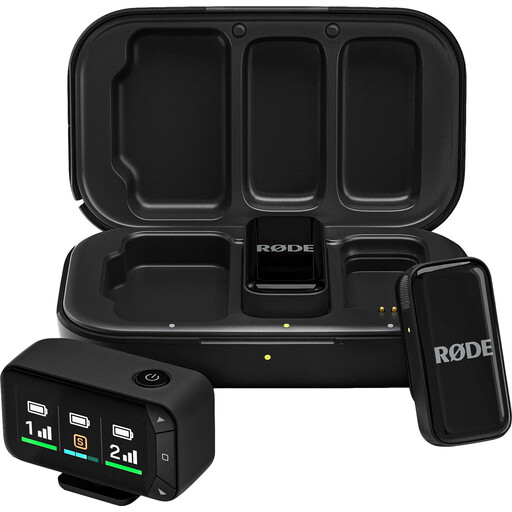
The Wireless Micro is a set with two clip-on transmitters and a receiver for recording with a smartphone.
The H1essential is a portable stereo recorder for recording without a phone, with the option to connect an external microphone.
The DR-05XP is a standalone recorder with built-in microphones and an input for an external microphone.
The mini 2 range is worth comparing if you’re looking for a small clip-on microphone for mobile recording.
These product picks focus on wireless clip-on microphones for two speakers using a phone, and portable recorders for recording without a phone.
 No image available
This set is designed for two-person conversations using a USB-C smartphone.
The product name lists two microphones and a camera and smartphone receiver. For smartphone use, the USB-C version is important; check that your recording app accepts USB audio.
 No image available
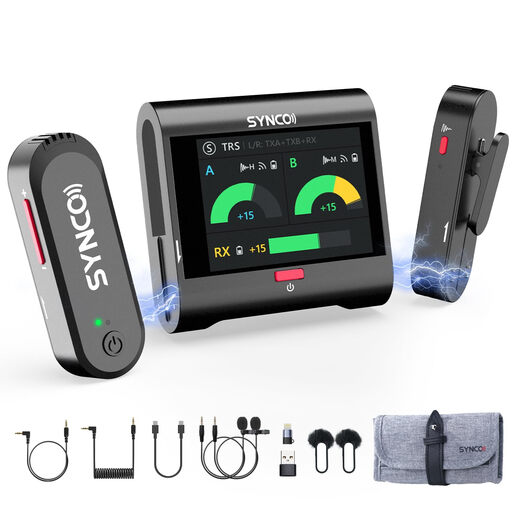
This set is designed to record two people at the same time.
The product description lists two transmitters, TRS, TRRS and USB-C outputs, and a headphone socket for monitoring. Check which output works with your recording device.
 No image available
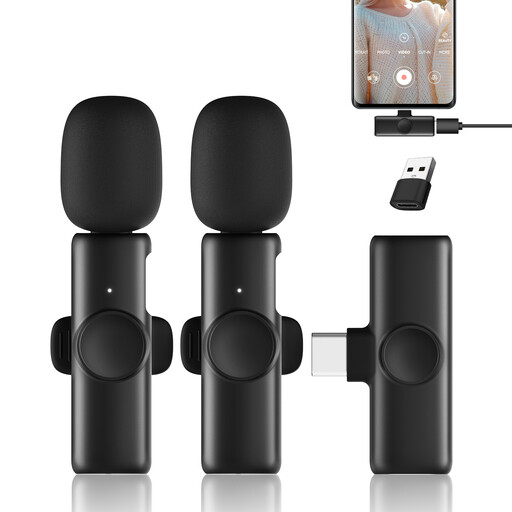
This version is designed for recording with a compatible USB-C Android phone.
The product name lists two transmitters and one receiver. The description states up to eight hours of battery life per transmitter; check phone compatibility before use.
 No image available
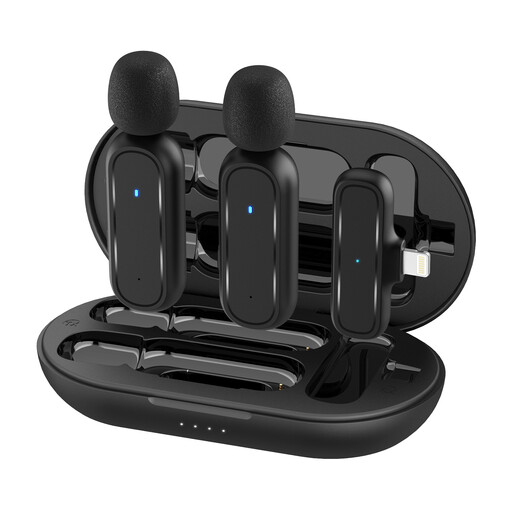
The description lists use with Type-C smartphones and computers.
The product name lists one transmitter and one receiver. Check what’s included in the kit if you want to mic up both people separately.
 No image available
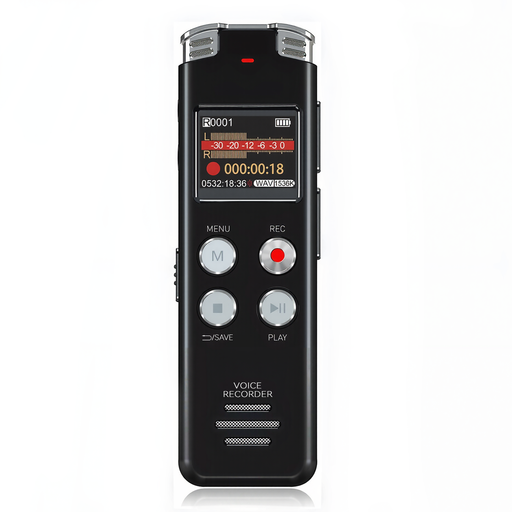
This recorder is designed for recording without a phone and saving audio files.
The description lists WAV and MP3 recording, 128 GB of storage and up to 35 hours of recording time. It mentions one dynamic microphone; consider placement when recording a conversation between two people.
Make a short recording with both speakers and listen back to it. Before you start, check that the correct microphone is being used and that there’s enough battery power and storage space.
No. That recording feature alone won’t automatically make voices clear. Zoom specifies 32-bit float recording for the H1essential, and Tascam for the DR-05XP, but the distance between the speaker and microphone still matters.
Check which receiver, batteries and storage media are included with the version you’ve chosen, and who the seller is. The Dutch Government states that consumers have a 14-day cooling-off period for many online purchases; check the terms that apply to the specific purchase.
No. Don’t assume that recording or publishing is unrestricted. If the school processes personal data that can identify someone, it must first establish an appropriate GDPR legal basis and inform pupils and parents, according to the Dutch Data Protection Authority. Separate consent information for identifiable images does not amount to a general consent rule for every audio interview.