
One person recording on their own phone
You want to record one travel story and mainly need to check which plug or receiver works with your phone and recording app. Shure and RØDE explain the connection options available.


For one speaker in a fixed position, a wired lapel microphone may be enough, provided its plug fits your recording device. For narrators on the move or two pupils speaking at the same time, a wireless set is a more practical choice. Check the receiver, the number of transmitters and whether it works with your recording app. Before recording identifiable pupil voices, also consider the school’s purpose, access arrangements and privacy policies.
You want to record one travel story and mainly need to check which plug or receiver works with your phone and recording app. Shure and RØDE explain the connection options available.
You want to record both voices without having to keep passing one microphone around. Check how many transmitters the set includes; RØDE and DJI describe wireless sets that can work with two transmitters.
You want to record travel stories. If pupil voices are identifiable, you’ll also need to consider the purpose, access arrangements and applicable privacy rules. The Dutch Data Protection Authority explains that identifiable audio recordings may constitute personal data and outlines privacy rules for schools.
Suitable if: the narrator stays in one place and the microphone plugs directly into the recording device.
Bear in mind: the cable limits freedom of movement; TRS and TRRS aren’t interchangeable without checking compatibility.
Suitable if: one narrator moves around and the receiver can connect to your chosen recording device.
Bear in mind: check the battery and what’s included in the box; one transmitter won’t automatically record two separate voices.
Suitable if: two pupils are interviewing each other or both need their own microphone at the same time.
Bear in mind: there are more components to charge and manage; check that the exact set includes two transmitters and the right receiver.
| What to consider | What should you check? | Who is this important for? |
|---|---|---|
| Connection and recording app | Compare the plug or receiver with your device’s input, and check that the recording app accepts external audio. | If you want to use your phone, the connection and app need to work together; around 33% of consumers put compatibility at the top of their buying priorities. |
| Two voices at once | Check how many transmitters are included and whether the receiver supports two transmitters. | If two pupils are interviewing each other, you’ll want them both to be able to wear their own microphone; around 25% of consumers prioritise recording two voices at once. |
| Clarity amid classroom noise | Check that you can position the microphone close to the speaker’s mouth, then listen back to a short test recording. | If a story is being recorded amid classroom noise, you’ll want to check that the narrator is easy to understand; around 25% of consumers prioritise clear speech. |
| Freedom of movement and battery life | Check whether a cable gets in the narrator’s way or, if using a wireless set, how long the transmitter and receiver last. | If the narrator walks around while telling the story, you won’t want a cable running to the recording device; around 17% of consumers put freedom of movement first. |
The Shure MVL has a 3.5 mm TRRS plug, while the RØDE Lavalier GO uses 3.5 mm TRS. So, a plug that looks like it fits won’t necessarily work with every device.
Compare the exact plug with the microphone input on your recording device and test your chosen app. You may need a suitable adapter.
According to RØDE, the Wireless Micro Camera Kit includes a camera receiver and a USB-C smartphone receiver; the standard Wireless Micro has one receiver. They are different versions.
Check the full model name, connections and components included with the version you’ve chosen.
DJI states the maximum range for an open environment without obstacles or interference. This doesn’t tell you how the set will perform in a classroom.
Before an important recording, make a test recording in the place where you plan to record the travel diary.
Identifiable audio recordings may constitute personal data. The Dutch Data Protection Authority outlines schools’ obligations when processing personal data and explaining how it is used.
Make sure your recording and sharing plans follow the school’s privacy policies. Don’t assume that the rules for identifiable photos automatically apply in the same way to every audio diary.
The wired MVL is designed for use with a suitable 3.5 mm TRRS phone connection or an appropriate adapter.
The Lavalier GO is designed for a compatible TRS microphone input; the Wireless Micro is a wireless option for smartphone recordings.
The Mic Mini is a wireless clip-on microphone; the contents of the set may vary by version.
The manufacturer describes the Blink500 B2+ as having two wireless transmitters and connection options including 3.5 mm TRS, USB-C and Lightning.
This selection includes wired options for one speaker in a fixed position, as well as wireless sets for conversations or narrators on the move. For each version, check the number of transmitters, the receiver and the connection to your recording device.
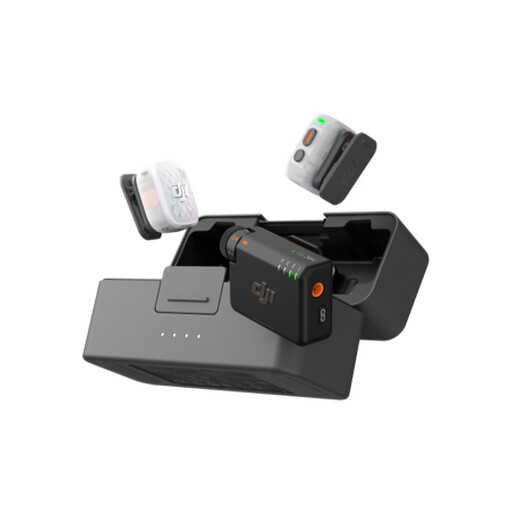 No image available
This set is suited to a recording where two pupils speak at the same time.
Version: 2 TX + 1 RX with charging case.
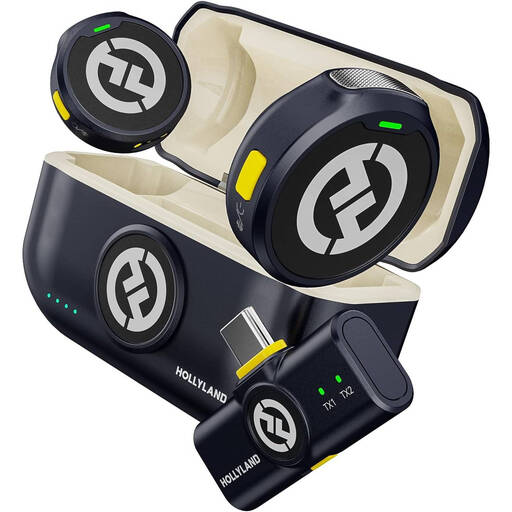 No image available
This USB-C version may suit a setup with a compatible USB-C recording device.
Check that the recording app accepts external audio and how many transmitters are included with this version.
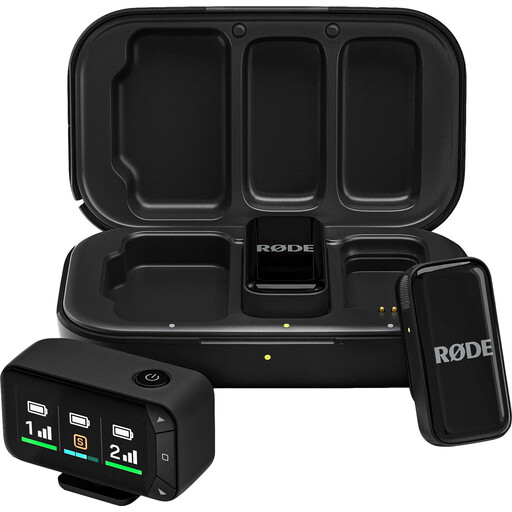 No image available
This version may suit a recording with two speakers and a connection to a camera or USB-C smartphone.
According to the product information, the set includes two transmitters and camera and USB-C receivers. This is the Camera Kit, not the standard Wireless Micro.
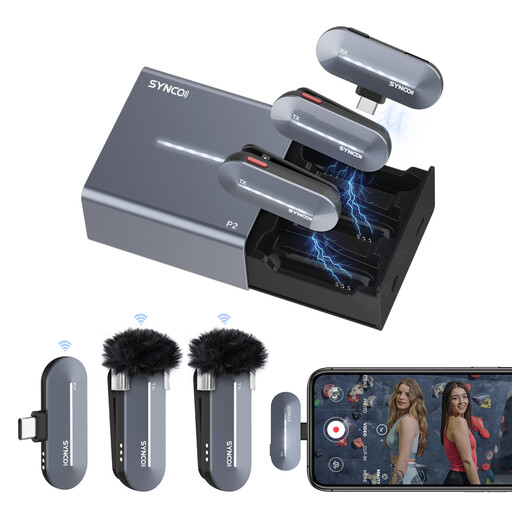 No image available
The version with two microphones may suit a conversation between two pupils.
The product name lists Dual Mic, USB-C, 2.4GHz and a charging case. Check that the connection works with your recording device and app.
 No image available
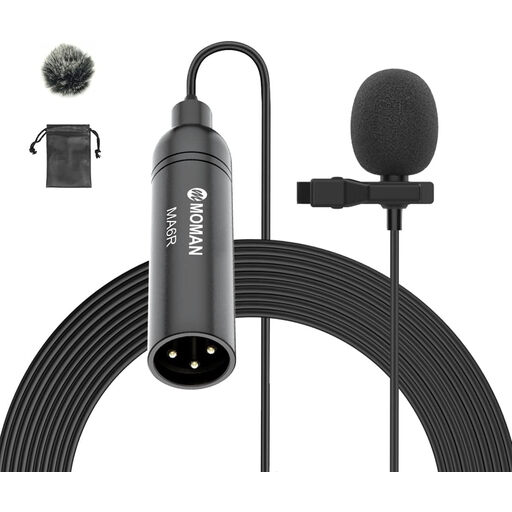
This wired version may suit one speaker recording in a fixed position.
The product name lists a 6 m cable, a 3.5 mm connection and an omnidirectional clip-on microphone. Check the connection on your phone or recorder; a cable may limit freedom of movement.
No, it depends on the connections on the microphone and phone. The Shure MVL uses 3.5 mm TRRS and the RØDE Lavalier GO uses 3.5 mm TRS. Also check whether you need an adapter and whether the recording app accepts external audio.
Don’t assume that noise cancellation will completely remove other voices or leave every word untouched. Clip the microphone close to the mouth and listen to a test recording made where you plan to record.
Before recording or sharing identifiable pupil voices, the school must consider the applicable GDPR rules. The Dutch Data Protection Authority says identifiable audio recordings may constitute personal data and that a lawful basis is needed to collect and use personal data. Inform pupils and parents in line with the rules that apply to the situation.
Position the microphone close to the mouth and make sure clothing or hair doesn’t cover it. RØDE gives this positioning advice for the Wireless Micro. Then make a short test recording to check how the voice sounds.