Which setup is right for you?

Interviewer with two speakers

If both the interviewer and the other person will be speaking, look for two transmitters and a receiver that works with your recording device. DJI says the Mic Mini receiver can pair with two transmitters; RØDE describes the Wireless Micro Camera Kit as having two clip-on transmitters.

Presenter recording a solo introduction

For a short introduction spoken by one person, a wired microphone can be a practical choice if the recorder is nearby and the input is compatible. The RØDE smartLav+ and Shure MVL both use a 3.5 mm TRRS connection.

Mobile creator in a busy classroom

If you want to move around while recording, consider a wireless option. Keep the microphone close to the intended speaker and check the sound with a test recording in the place where you’ll be filming.

What to consider when choosing

Wired for one speaker

Choose this when: one person is speaking, the recorder is nearby and the connection is compatible.

Bear in mind: the cable limits how far you can move. One microphone clipped to one collar does not give you a setup with two separately miked speakers.

Wireless for one speaker

Choose this when: the presenter needs more freedom to move during the introduction.

Bear in mind: check the receiver, charge the components and pair them in advance. Stated battery life depends on the test conditions.

Wireless with two transmitters

Choose this when: both the interviewer and the other person need their own microphone.

Bear in mind: check that the version you choose actually includes two transmitters and a compatible receiver.

What to consider What should you check? Who is this important for?
Recording two voices Check whether the set includes two transmitters, a compatible receiver and a connection for your recording device. If I want to record both my question and the answer, I want each speaker to have their own microphone. This is the top priority for around 36% of consumers who want to record two voices.
Connecting to your device Compare the exact model of your phone, camera or recorder with the microphone input, receiver and any adapter you may need. If I want to use my existing device, the microphone needs to connect to it. This is the top priority for around 29% of consumers who prioritise compatibility.
Clear speech Check how the microphone attaches and which audio settings are available. Listen back to a test recording made where you’ll be filming. If background noise in the classroom might make voices harder to hear, I want to know how my setup sounds in advance. Around 21% of consumers say clarity is their main consideration.
Simplicity or freedom to move Compare the cable length with the distance to the recorder, or check the receiver and charging requirements if you’re choosing a wireless option. If I’m staying close to the recorder, I want a simple setup; if I’m moving around, freedom of movement matters more. Around 14% of consumers prioritise simplicity or mobility.

Common buying mistakes

  • Buying a TRRS microphone without checking the input

    A 3.5 mm plug doesn’t guarantee that a microphone will work with your phone, camera or recorder. Shure says a suitable CTIA adapter may be needed for devices without a compatible input.

    Check the connections on both the microphone and your recording device, and test in advance that your recording app is using the external microphone.

  • Mistaking a standalone transmitter for a complete interview set

    For two speakers, the set contents, number of transmitters and receiver all need to suit your recording setup.

    Check each of these details in the description of the exact version before placing your order.

  • Expecting noise reduction to make a busy classroom quiet

    A feature described by the manufacturer doesn’t prove how clear a recording will sound in your classroom.

    Attach the microphone to the intended speaker and compare a test recording on location, with and without the available setting.

  • Accidentally recording identifiable bystanders

    According to the Dutch Data Protection Authority, an audio recording in which someone is identifiable may contain personal data. Processing it requires an applicable legal basis under the GDPR.

    Agree in advance who will take part, how the recording will be used and whether it will be shared. For school use, follow the privacy policy and keep bystanders out of the recording unless their participation has been agreed.

Brands to compare

RØDE

RØDE offers both the wired smartLav+ and wireless options, including a Camera Kit with two clip-on transmitters.

  • The smartLav+ has a 1.2 m cable; the Camera Kit is described as including two clip-on transmitters and receiver options.
  • The wired microphone and wireless kit are separate purchases. Check which receiver comes with the version you choose.

Shure

The wired MVL is designed for uses including interviews with mobile devices that have a compatible TRRS input.

  • Shure says the MVL comes with a clip and windscreen.
  • A suitable CTIA adapter may be needed for a device without a compatible 3.5 mm input. The MVL is not a set with two transmitters.

DJI

The Mic Mini range includes wireless microphone options for recording one or more speakers.

  • DJI describes two levels of noise reduction and says the Mic Mini receiver can pair with two transmitters.
  • Check the contents and compatibility of each version. Stated battery life applies under the specified test conditions.

Hollyland

The LARK M2 range includes wireless clip-on microphones with mobile USB-C, Lightning and camera versions.

  • The manufacturer describes features including a lightweight transmitter and noise reduction.
  • The receiver and battery life vary by version. A camera set and a mobile set do not offer the same connection options.

Joybuy products

These Joybuy products are wireless microphones for interviews, including sets with two transmitters and USB-C versions. Check that each model’s connection and contents suit your recording device and the number of speakers.
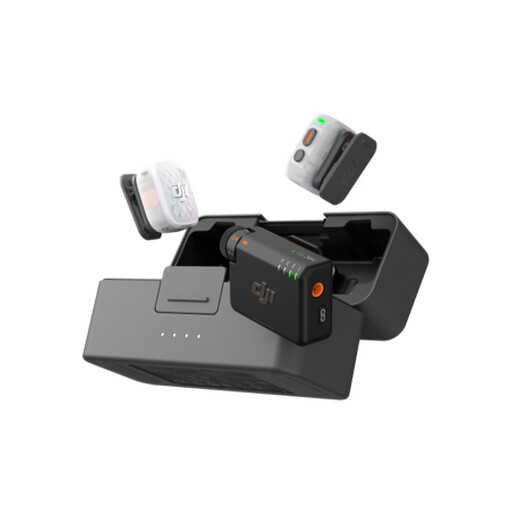
DJI Mic Mini 2S with two transmitters, one receiver and charging case

DJI Mic Mini 2S (2 TX + 1 RX + Charging Case)

The two transmitters make this a good fit for an interview setup where both speakers wear their own microphone.

The product description mentions two levels of noise reduction and compatibility with cameras, smartphones and PCs. Check that the receiver is compatible with your recording device.

View at Joybuy
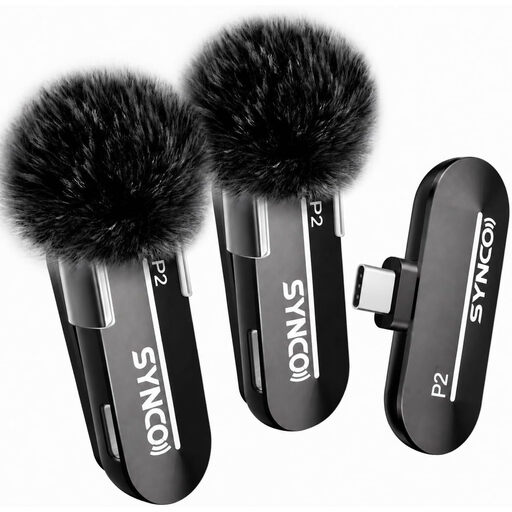
SYNCO P2XT wireless USB-C microphone

SYNCO P2XT USB-C Wireless Microphone

This version is worth comparing if you’re looking for a wireless interview microphone and record using a compatible USB-C device.

The product description mentions USB-C, noise reduction and monitoring while recording. Check compatibility with your device.

View at Joybuy
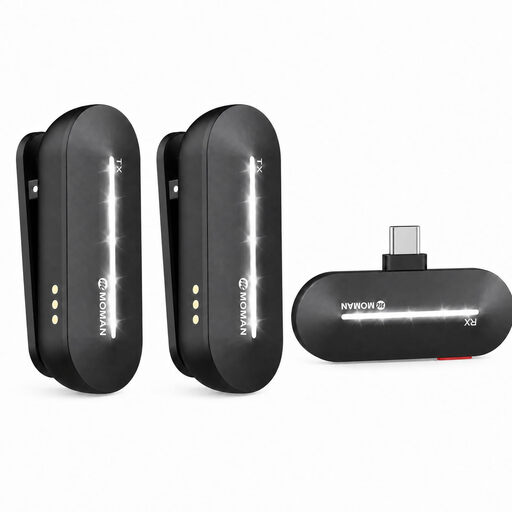
Moman M1CXT wireless lavalier microphone with USB-C and two transmitters

Moman M1CXT Wireless Lavalier Microphone, USB-C, 2TX+1RX, 150m Range

The version with two transmitters is designed for a setup where each of the two speakers wears their own microphone.

The product name lists USB-C, 2TX+1RX and a range of 150 m. Check that the USB-C connection is compatible with your recording device.

View at Joybuy
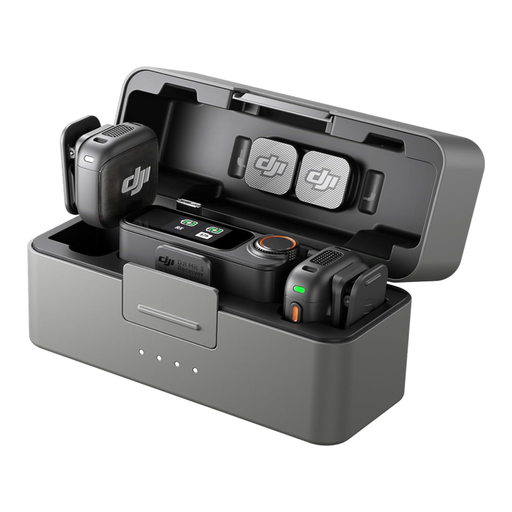
DJI Mic 3 with two transmitters, one receiver and charging case

DJI Mic 3 (2 TX + 1 RX + Charging Case)

The two listed transmitters suit an interview introduction where both the interviewer and the other person are speaking.

The product name lists two transmitters, one receiver and a charging case. The description mentions compatibility with cameras, smartphones and PCs; check which connection works with your device.

View at Joybuy
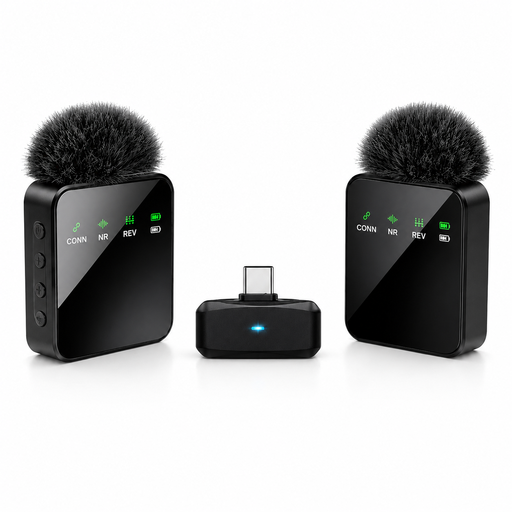
Verbex ST5 wireless dual microphone with Type-C interface

Verbex ST5 Dual-Mic Type-C

The product description lists interviews and a dual-microphone setup as possible uses.

The description mentions a Type-C interface and a battery life of 3–6 hours. Check that the connection and included components are compatible with your recording device.

View at Joybuy

Frequently asked questions

Will a lapel microphone work with any phone?

No. Check that the connection is compatible with your phone. The RØDE smartLav+ and Shure MVL have a 3.5 mm TRRS plug; Shure says a suitable CTIA adapter is needed for devices without a compatible input. Also test that your recording app is using the external microphone.

How should you prepare the microphone for a short recording?

Attach the microphone to the intended speaker and make a test recording where you’ll be filming. If you’re using a wireless microphone, check in advance that the transmitter and receiver are paired and charged. Listen back to make sure clothing or background noise isn’t interfering with the introduction.

What happens if the microphone develops a fault early on?

For consumer purchases in the Netherlands, statutory warranty applies alongside any manufacturer’s warranty. According to ACM ConsuWijzer, the seller must resolve an issue free of charge if a product develops a fault sooner than expected under normal use. There is no single fixed warranty period that applies to every microphone.

Can a school record and publish an identifiable interview introduction?

An audio recording in which someone is identifiable may contain personal data, and processing it requires an applicable legal basis under the GDPR. Consent is one possible legal basis, but it isn’t automatically the only one. For creating and publishing identifiable images of pupils, the Dutch Data Protection Authority sets out specific consent rules: from the age of 16, the school asks the pupil for consent; for children under 16, it asks a parent. Agree the purpose and intended distribution in advance, and follow the school’s privacy policy.

Do I need a licence for a wireless microphone in the Netherlands?

According to the Dutch Inspectorate for Digital Infrastructure, a licence is usually not required, but the equipment must use the correct frequency band. Check the frequency of the specific set and, where relevant, the location. Without this information, it isn’t possible to give a definitive answer about a particular version.
