Which recording set-up is right for you?

Pupil interviewing one person

You want to record a local witness clearly without a complicated set-up. A microphone placed close to the interviewee and a phone with a suitable connection may be enough; RØDE describes the smartLav+ as a lavalier microphone for smartphones.

Group recording the whole conversation

You want to be able to listen back to both the questions and the answers, so you’re considering a set-up with two microphones or transmitters and a shared recording device. RØDE describes a Wireless Micro Camera Kit with two transmitters; the receiver you choose must be compatible with the recording device.

Teacher managing recordings

You want to record consistently, transfer files and agree how to handle identifiable voices and how long to keep recordings. The Dutch Data Protection Authority classifies identifiable audio recordings as personal data; the school must establish an appropriate GDPR legal basis for processing them.

What should you look for in a microphone for classroom interviews?

Wired lavalier microphone with a phone

A good fit if: the interviewee does most of the talking and you can attach the microphone close to them.

Bear in mind: the interviewer may sound quieter; the plug must be compatible with your phone or adapter.

Two wireless clip-on microphones

A good fit if: both the interviewer and interviewee can wear a transmitter and you need to hear both voices.

Bear in mind: the kit and receiver must be compatible with your recording device; RØDE Wireless Micro transmitters do not make an internal backup recording.

Standalone recorder

A good fit if: you want to record without a phone and can place the recorder close to the speakers.

Bear in mind: built-in microphones won’t automatically overcome distance and echo; check the memory card and power supply.

What to consider What should you check? Who is this most important for?
Clear speech in a reverberant room Decide who will do most of the talking, place the microphone close to them and make a test recording in the classroom. If the witness does most of the talking, I want to be able to hear their words clearly when I listen back, even in a reverberant room. Around 36% of consumers give clear speech from one interviewee their top priority.
Recording both people in the conversation Check that the set includes two transmitters and a receiver that is compatible with your recording device. If I want to keep both the questions and the answers, I look for a set-up where both speakers can wear a microphone. Around 29% of consumers prioritise recording both voices.
Connecting to your existing equipment Check whether TRRS, TRS or USB-C is compatible with the port and recording app on your phone or camera; test the set-up. If I want to use my existing phone or camera, I want to know in advance whether the microphone will actually record on it. For around 21% of consumers, compatibility with existing equipment is their main buying concern.
Recording without a phone Check the storage medium, power supply, playback and file transfer. If I’d rather keep my recording workflow separate from my phone, I look at the recorder’s storage and power supply. Around 14% of consumers put standalone recording at the top of their list.

Common mistakes when buying a microphone for interviews

  • Expecting a recorder in the middle of the classroom to capture every voice clearly

    You’ll still hear distance and echo, even if the recorder supports advanced recording formats. Shure explains that a microphone can’t separate direct speech from echo after the recording has been made.

    Test the chosen position during a typical lesson. If the words aren’t clear when you listen back, see if a microphone closer to the speaker would work better.

  • Confusing two transmitters with two standalone recording devices

    According to RØDE, Wireless Micro transmitters do not store recordings internally. The audio must be recorded on a connected device.

    Check which receiver is included in the exact kit and where the audio file will be stored.

    You’ll still need a compatible recording device to connect to.

  • Assuming all 3.5 mm plugs are interchangeable

    The RØDE smartLav+ uses TRRS. For connecting it to the TRS input on a Wireless GO II transmitter, RØDE specifies a TRRS-to-TRS adapter.

    Before buying, check the plug, input and adapter for the exact combination you’ll be using.

    You may need a suitable adapter.

  • Only preparing the recorder itself

    The Zoom H1essential needs a suitable memory card. The Dutch product page checked for this article says that the card and AAA batteries are not included.

    Check what’s in the box, then test a recording and file transfer before the interview.

    A suitable memory card and power supply may need to be bought separately.

Brands to consider

RØDE

The smartLav+ is a wired lavalier microphone, while the Wireless Micro Camera Kit is a set with two transmitters for compatible phones or cameras. They’re designed for different recording set-ups.

  • According to RØDE, the smartLav+ has a 3.5 mm TRRS connection and a 1.2 m cable. The Camera Kit includes two transmitters and different receivers.
  • RØDE says that Wireless Micro transmitters don’t make an internal backup recording. Check the exact kit and connection.

Zoom

The H1essential is a standalone recorder with built-in X/Y microphones, a USB microphone function and an input for an external microphone.

  • Zoom describes playback on the device and the option to connect a lavalier microphone.
  • Standalone recording requires a suitable microSD card. Placement still matters in a reverberant classroom.

Tascam

The DR-05XP is a portable recorder with built-in microphones and the option to connect an external microphone.

  • Tascam specifies built-in omnidirectional microphones, a 3.5 mm microphone input and the ability to use it as a microphone via USB-C.
  • A recorder placed at a distance won’t necessarily pick up quiet speech over other classroom noise.

Shure

The MVL is a lavalier microphone for a compatible mobile recording device. It may be worth considering when one interviewee will speak close to the microphone.

  • Shure specifies a 3.5 mm TRRS plug and recommends a suitable CTIA adapter for some devices.
  • The connection doesn’t guarantee compatibility with every phone, and the microphone isn’t a standalone recording device.

Audio-Technica

The ATR3350xiS is a wired lavalier microphone for use with devices including recorders with a suitable 3.5 mm input.

  • The European product specification lists a 3 m cable, an LR44 battery and an on/off switch.
  • Check the input and battery before the interview. The cable specification given applies to the European version described.

Products at Joybuy

This selection includes wireless microphone sets for interviews with one or two transmitters, as well as a portable voice recorder. For each product, check that the receiver, connection and recording device are right for your set-up.

DJI Mic Mini 2S, set with 2 transmitters, 1 receiver and charging case

DJI Mic Mini 2S (2 TX + 1 RX + Charging Case)

The set with two transmitters could work if both the interviewer and interviewee need to wear a microphone.

View at Joybuy
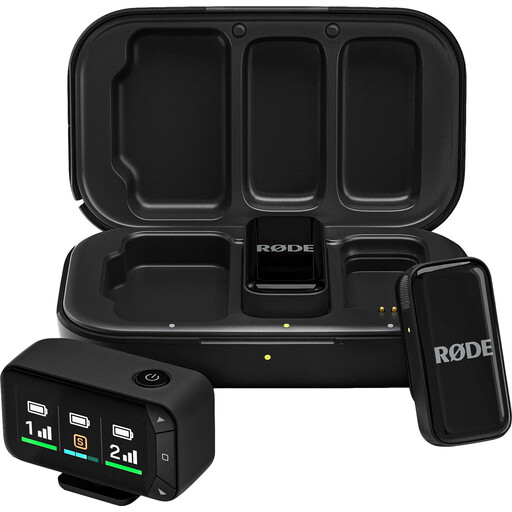
RØDE Wireless Micro Camera Kit with two microphones, camera and smartphone receivers, and charging case

RØDE Wireless Micro Camera Kit (2 microphones, USB-C)

The set with two transmitters could work if you need to record the interviewer and interviewee separately; recording takes place on a connected device.

The product name lists a camera and smartphone receiver, as well as a charging case. According to RØDE, the transmitters don’t store a backup recording internally.

View at Joybuy
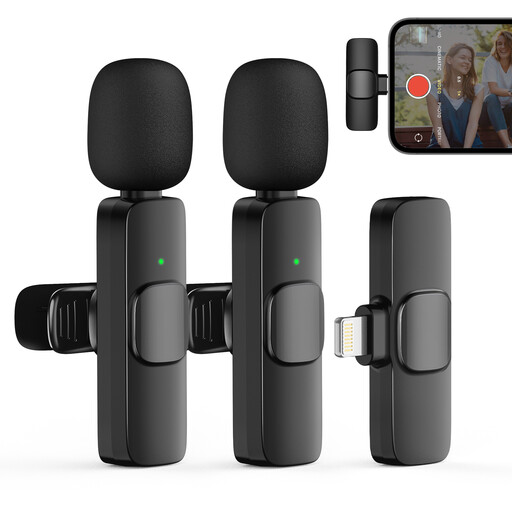
Moman CP1XA wireless lavalier microphone set with two transmitters and one receiver for iPhone

Moman CP1XA (2TX + 1RX), for iPhone

The set with two transmitters could work if both people in the conversation can wear a microphone.

The product name says it’s for use with an iPhone; check your device’s connection and make a test recording.

View at Joybuy
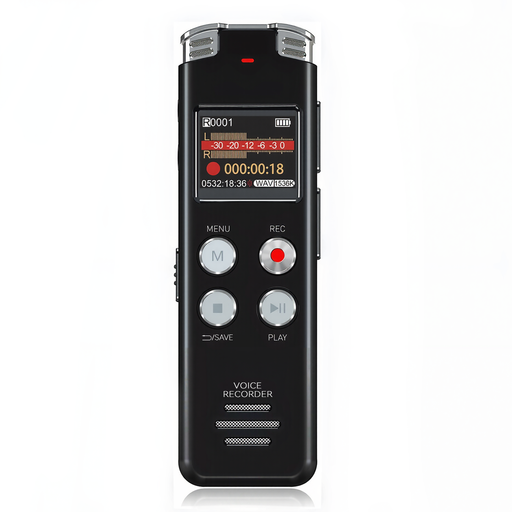
Rexsun L357 portable digital voice recorder with 128 GB

Rexsun L357 digital voice recorder (128 GB)

A portable voice recorder could work if you want to record interviews without a phone and listen back later.

The product name lists 128 GB of storage. Check how to use the recorder and transfer files before you get started.

View at Joybuy
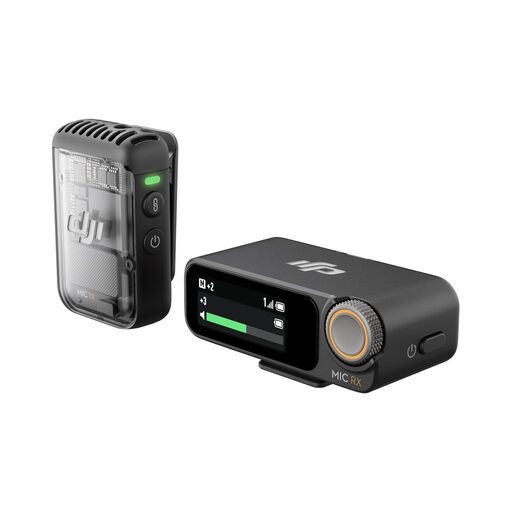
DJI Mic 2 with one transmitter and one receiver

DJI Mic 2 (1 TX + 1 RX)

A set with one transmitter could work if the interviewee is the main speaker and needs to wear a microphone; it won’t give each person in the conversation their own transmitter.

The product name lists internal 32-bit float recording. Check which adapters are included with the kit you choose and whether they’re compatible with your recording device.

View at Joybuy

Frequently asked questions about microphones for classroom interviews

Where should you place a microphone in a reverberant classroom?

Place the microphone close to the speaker whose voice needs to be clear, and make a test recording with both people in the conversation. Shure explains that a microphone can’t separate direct speech from echo after the recording has been made. If you’re using a lavalier microphone, also check that it doesn’t rub against clothing.

Can you connect the RØDE smartLav+ to any phone or wireless transmitter?

No, the connection must be compatible with your recording device. The smartLav+ uses 3.5 mm TRRS; RØDE says that connecting it to a Wireless GO II transmitter with a TRS input requires a TRRS-to-TRS adapter. Also check your phone’s microphone input and recording app.

What should you have ready for a standalone recorder?

Before the interview, check the storage, power supply and file transfer, and make a short test recording. Zoom lists microSD as the storage medium for the H1essential; the Dutch product page checked for this article says that the card and AAA batteries are not included.

What can you do if a microphone breaks too soon during normal use?

For consumer purchases, ACM ConsuWijzer says that statutory consumer rights apply alongside any manufacturer’s warranty. If the product doesn’t meet what you could reasonably expect and the relevant conditions are met, the seller must provide a remedy free of charge. A purchase made on behalf of a school isn’t automatically a consumer purchase.

Can a school record identifiable voices and publish the interviews?

According to the Dutch Data Protection Authority, an identifiable audio recording is personal data. If the school processes this data, it must establish an appropriate GDPR legal basis in advance, inform the people concerned and keep the data for no longer than necessary. Consent is one possible legal basis, but it isn’t automatically the only one. If consent is the chosen legal basis, the Dutch Data Protection Authority says that a child under 16 cannot give valid GDPR consent for this themselves; a parent or guardian must do so. Record the purpose and arrangements for archival use or publication separately with the interviewee.
