First, decide where your voice needs to be heard. A USB computer headset is suitable for updating online participants via a laptop, while speaking to people in the room requires a microphone system that connects to the existing sound system. If you want to move around the classroom, check that the receiver is compatible with the sound system and that the frequency is suitable for your location before choosing a wireless system. Connections and included components are manufacturer specifications, not independent performance tests.
Who is this buying guide for?
Classroom presenter
You want people in the room to hear your project update through the sound system. Check which input is available and whether the headset system’s receiver connects to it. Shure and Samson describe systems with receivers for audio equipment.
Presenter speaking to online participants
You’re delivering the update via a laptop to people joining remotely. A computer headset is a different solution from a microphone for the classroom loudspeakers; Logitech describes the H390 as a USB headset for a computer.
Presenter who wants to move around
You want to walk around during the update, so you need a wireless connection to a computer or a compatible sound system. Shure, Samson and Sennheiser describe wireless systems with different receivers and connections.
What should you look for when buying?
The percentages below relate to consumers choosing a headset microphone for a project update in a Dutch classroom; each row highlights a main reason for buying.
| Consideration |
What to check |
Who is this more important to? |
| Sound for people in the room |
Check the sound system’s input and whether the system includes a compatible receiver. |
I want people in the room to hear my update through the existing sound system. Around 40% of consumers prioritise amplification for people in the classroom. |
| Audio via a laptop |
Check the computer port and select the correct audio input in your presentation software. |
When I’m speaking to online participants, my voice needs to be transmitted via the laptop. Around 30% of consumers give online audio transmission top priority. |
| Freedom to move around |
Choose a receiver for a computer or sound system. For UHF, check the frequency variant and your location too. |
I want to be able to walk around during my presentation without a microphone cable running to the computer. Around 20% of consumers cite freedom to move around as their main reason for buying. |
| Taking turns to speak |
Decide whether speakers will share one microphone or need their own transmitter at the same time; if so, check the number of receiver channels. |
When colleagues are taking turns, I want to know whether the setup will work for us. Around 10% of consumers prioritise speakers taking turns. |
Common buying mistakes
-
Confusing a computer headset with a microphone for the classroom
A headset connected to a computer won’t automatically send audio to the classroom loudspeakers.
Decide in advance whether your voice needs to reach online participants, people in the room or both. Then check which connections and equipment you’ll need.
-
Choosing a UHF system based on the model name alone
Frequency variants differ, and the Dutch Authority for Digital Infrastructure (RDI) says that not every UHF frequency is available in every location in the Netherlands.
Check the full frequency variant and the conditions that apply to transmission power. Use the RDI’s Microphone Bands app to check frequencies for the location where you’ll be using the system.
-
Mistaking a manufacturer’s warranty for the full statutory guarantee
The Netherlands Authority for Consumers and Markets (ACM) explains that there is no fixed time limit for the statutory guarantee in the Netherlands.
Keep your proof of purchase and discuss any faults with the seller. Consider what you could reasonably expect from the product, not just the stated manufacturer’s warranty period.
Brands to compare
Logitech
Computer headsets such as the H390 are designed for project updates delivered via a laptop.
- According to Logitech, the H390 has a USB-A connection, an adjustable microphone and controls on the cable.
- The stated cable length is 1.9 m. This is a wired setup; the specification doesn’t say that the headset connects directly to a classroom sound system.
Shure
The BLX14/PGA31 is a wireless headset system for use with a compatible sound system.
- Shure lists a headset, bodypack transmitter and receiver as included.
- Check the frequency variant on offer and whether the receiver matches the sound system’s connection. Having a receiver included doesn’t prove that the system will work with every school sound system.
Sennheiser
The XSW 1-ME3 system is designed for presenters who want to use a wireless headset with a sound system.
- According to Sennheiser, the system includes a stationary receiver, a bodypack and a headset.
- Frequency variants differ. Read the specifications for the exact variant; details for the BC variant don’t automatically apply to the B variant.
Samson
Samson describes various XPD headset models for use with computers or audio equipment.
- According to Samson, the XPD2 has a USB receiver for Mac and PC. The XPDm receiver has XLR and jack outputs.
- These are different systems. Check the specifications of the model you’ve chosen and the equipment you want to connect the receiver to.
Headsets at Joybuy
This selection includes computer headsets for project updates delivered via a laptop or computer, with both wired and wireless options. A computer headset won’t automatically amplify sound through the classroom loudspeakers.
 No image available
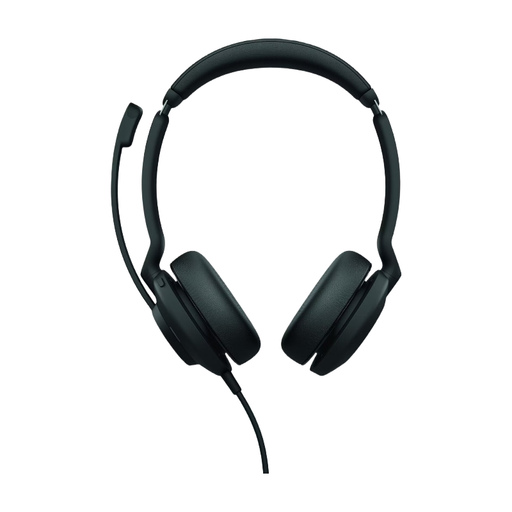
Jabra Evolve2 30 SE
An option for project updates delivered via a computer; check that the connection is compatible with your computer before buying.
View at Joybuy
 No image available
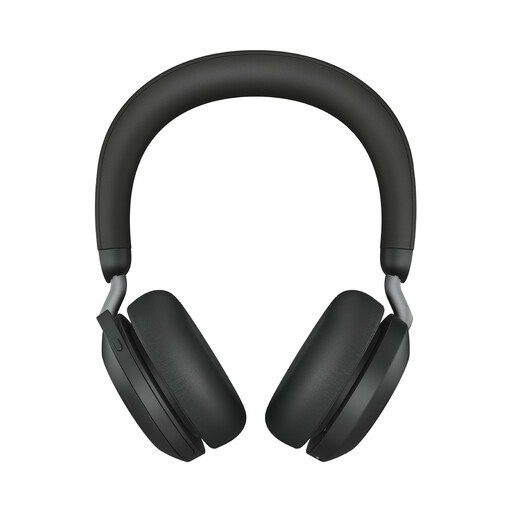
Jabra Evolve2 75 USB-A MS Teams Black
A headset for computer use; check that the USB-A specification and connection you’ve chosen suit your presentation setup.
View at Joybuy
 No image available
Logitech PC 960 USB Wired Headset
A wired USB headset for a project update delivered via a computer; check that the connection is compatible with your computer.
View at Joybuy
 No image available
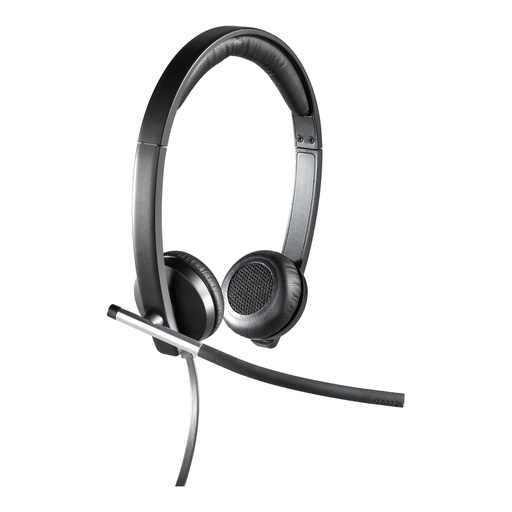
Logitech H650e Stereo Wired
A wired stereo headset for speaking via a computer; check which connection your computer needs before buying.
View at Joybuy
 No image available
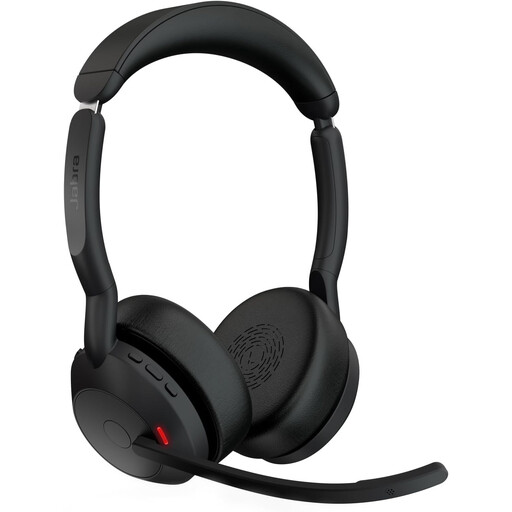
Jabra Evolve2 55 Wireless Stereo Headset
A wireless headset for a project update delivered via a laptop; check how it connects to your computer before buying.
View at Joybuy
Frequently asked questions
Can I use a USB computer headset to amplify my voice for the whole class?
Not simply by connecting it to a laptop. Logitech describes the H390 as a USB computer headset; check separately how the microphone signal will reach the classroom sound system.
How do I connect a wireless headset microphone?
Compare the output on the receiver for the exact model with the input on your computer or sound system. Samson, for example, specifies a USB receiver for the XPD2 and XLR and jack outputs for the XPDm; these models aren’t interchangeable.
Do I need a licence for a wireless headset microphone in the Netherlands?
It depends on the frequency band used. The RDI states that use within the conditions of an applicable licence-exempt band doesn’t require a licence, while some other bands do. Check the frequency variant, permitted power and location of use; available UHF frequencies can vary by location.
Does wireless radio equipment need a CE marking?
According to the RDI, only products with a CE marking may be sold in Europe. Check the product information for the device on offer; the marking alone doesn’t tell you which frequencies can be used at your location.


