Choose a speakerphone based on who will be speaking and the distance between the device and the furthest pupil. A compact tabletop model may suit a small group; if pupils are spread around the classroom, the stated microphone range and placement are important things to check. Manufacturers such as Jabra and HP publish range figures for specific models, but these do not guarantee clear speech in a noisy classroom.
Who is this relevant to?
Teacher with a small discussion group
You want pupils to talk to one another around a table or speak to someone remotely, while making sure quieter voices can be heard too. Jabra states that the Speak2 55 has a microphone range of up to 2.3 metres; you’ll still need to check the distances in your classroom.
Teacher with speakers around the classroom
You want pupils to respond from different seats and need to know whether the setup will work at those distances. HP lists model-specific microphone ranges for the Poly Sync 40 and Sync 60; these manufacturer figures alone don’t tell you how clearly speakers will be heard in your classroom.
Teacher using different devices for lessons
You use different laptops, mobile phones or tablets and want to check before the lesson which connection will work with your device and chosen model. Jabra says the Speak2 55 connects to a computer via USB and to a smartphone or tablet via Bluetooth.
What should you look for when choosing?
Start with the seating plan and the furthest speaker. Then check how well people can take turns with someone joining remotely, and whether the speakerphone connects to your teaching device.
| What to consider |
What should you check? |
Who is this important for? |
| Voices from different seats |
Measure the distance to the furthest speaker and test a quiet voice from there during normal classroom noise. |
If I want pupils to be heard from their own seats, I focus on the furthest chair. Around 36% of consumers prioritise picking up pupils’ voices. |
| Taking turns with someone remotely |
Check whether the exact model supports full-duplex, then try a conversation with people taking turns using your usual calling app. |
If pupils are speaking to someone remotely, I want both sides to be able to respond without the setup favouring one speaker. Around 28% of consumers prioritise smooth turn-taking. |
| Connecting to your teaching device |
Make a note of the available ports and check the full model name to see whether you need USB, Bluetooth or a separate adapter. |
If I use different devices for lessons, I want to know how the speakerphone connects to the chosen device before the lesson starts. Around 22% of consumers prioritise having the right connection. |
| Moving it and powering it |
Check whether there’s a mains socket where you plan to put it. If you’re using battery power, check the talk time stated by the manufacturer for that model. |
If the device will be moved between classrooms, I consider both the power supply and how easy it is to move. Around 14% of consumers give this the highest priority. |
Pitfalls to avoid when choosing
-
Assuming the stated microphone range means everyone in the classroom will be heard clearly
A manufacturer’s figure applies to a specific model, and seating arrangements and classroom noise vary. So a range quoted on paper doesn’t automatically tell you how a pupil will sound from the furthest seat.
Measure the distance to the furthest person you want to hear, then test the device from that spot amid normal classroom noise before using it with the whole group.
-
Mixing up model variants or test rankings
Models can differ in the connections supplied. Test results also apply to the model that was tested: DXOMARK tested the Poly Sync 20, not the Sync 40 or Sync 60.
Compare the full model name, connection and included components. Only use a test result if it applies to exactly the same model.
-
Recording an online classroom discussion without agreeing privacy arrangements
A recording may involve processing pupils’ personal data. The Dutch Data Protection Authority advises schools to assess privacy risks, inform the people involved, and agree how recordings will be stored and deleted.
Agree on recording in advance in line with school policy, and ask the school to assess the specific privacy risks.
Brands to compare
Jabra
The Speak2 55 and Speak2 75 are portable speakerphones for conversations around a table.
- Jabra states that the Speak2 55 and Speak2 75 support full-duplex. For the Speak2 55, Jabra specifies a microphone range of up to 2.3 metres and USB for a computer, plus Bluetooth for a smartphone or tablet.
- A stated range doesn’t prove that every voice will be clear in a busy classroom. Also check that the connection works with the device you’ll actually be using.
HP Poly
The Poly Sync 40 and Sync 60 are worth considering when your discussion group needs more space.
- HP states that the Sync 40 has a microphone range of up to 2.5 metres and the Sync 60 up to 3 metres.
- According to HP, the Sync 40 can run on battery power, while the Sync 60 is mains-powered. These range figures come from the manufacturer and don’t guarantee clear speech in a classroom.
EPOS
EPOS describes the EXPAND 40 as a portable USB-C and Bluetooth speakerphone for group calls.
- EPOS lists three beamforming microphones and support for people speaking at the same time.
- These product specifications don’t prove how well the speakerphone will pick up voices across a full classroom. Test the setup with the calling software you use.
Yamaha
According to Yamaha, the YVC-330 has a standard mode and a SoundCap mode for a defined conversation area.
- Yamaha states that SoundCap has a 1-metre radius and says that two devices can be daisy-chained in standard mode.
- A limited conversation area won’t necessarily suit pupils spread around the classroom. Check current availability in the Netherlands and whether the setup will work for your lesson.
Speakerphones at Joybuy
This selection includes speakerphones for group conversations, from compact tabletop setups to options for larger discussion groups. For each model, check that its connection, placement and any recording or transcription features are suitable for your lesson and school policy.
 No image available
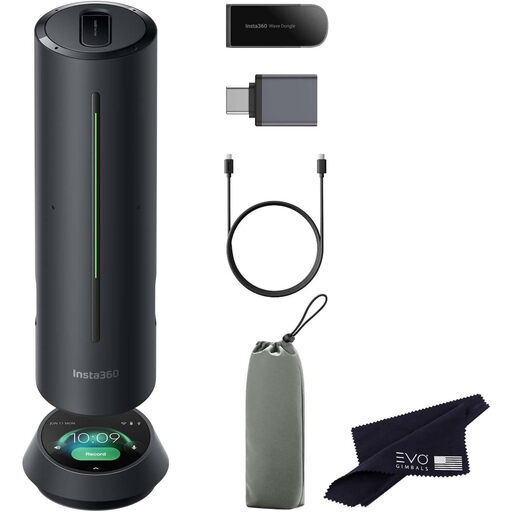
Insta360 Wave AI Conference Speakerphone, Bluetooth, black
The product title describes a Bluetooth conference speakerphone. Before using it, check that the stated transcription and cloud processing comply with your school’s privacy policy.
Joybuy
 No image available
Insta360 Wave AI Conference Speakerphone, Bluetooth, white
An option to consider for a larger discussion group. Check that the stated audio storage complies with your school’s privacy policy before using it.
Joybuy
 No image available
Jabra Speak 510 MS Conference Room Loudspeaker, Bluetooth, USB-A, black
The product title lists Bluetooth and USB-A. Check which connection suits your teaching device and chosen setup.
Joybuy
 No image available
Jabra Speak2 55 MS Teams, dark grey
This model is worth considering for a compact discussion group. Jabra states that it supports full-duplex and has a microphone range of up to 2.3 metres.
According to Jabra, the Speak2 55 connects to a computer via USB and to a smartphone or tablet via Bluetooth. Its stated range doesn’t guarantee clear speech in a noisy classroom.
Joybuy
Frequently asked questions
Where should you place a speakerphone for a discussion group?
Start with the seating plan: decide who needs to be heard, compare the distance to the furthest speaker with the stated range of the exact model, then test the sound from that spot. Manufacturer figures for a specific model don’t guarantee clear speech in a noisy classroom.
Can you make a video call with just a speakerphone?
No. A speakerphone handles the call audio, not the video. You’ll also need a suitable camera and video-calling service. Check which device is selected as the microphone and speaker in your calling app.
Can a school record pupils’ conversations without their permission?
Don’t assume that recording is automatically allowed. The Dutch Data Protection Authority advises schools to assess privacy risks, inform pupils or parents, and agree how recordings will be made, stored and deleted. According to the DPA, whether a DPIA is required for specific data processing depends on the privacy risk and how the data is used.
What should you check about a warranty or an extra service package?
For a consumer purchase in the Netherlands, statutory warranty is separate from any manufacturer’s or extended warranty. According to the Dutch government, the seller must resolve problems with a faulty product. If the school is buying the product, check the contract and service terms separately: the government guidance cited here relates to consumer rights.


