
Classic film enthusiast
You mainly watch films in a darkened room and want to assess the picture settings and aspect ratio of older films.


For classic comedies in a dedicated, darkened room, a home cinema projector is a good choice if picture settings and placement are your priorities. A portable smart projector is better if quick set-up and built-in streaming matter more. Measure the distance needed to achieve your preferred screen size, and check the aspect ratio of your films and playback source. For example, Epson specifies a distance of 2,95–4,77 m for a 100-inch image on the EH-TW7100.
You mainly watch films in a darkened room and want to assess the picture settings and aspect ratio of older films.
You want to check in advance that your preferred image size suits the distance to the screen, and whether the projector can sit off-centre. Epson says the EH-TW7100 has a lens shift function.
You prioritise quick set-up, integrated apps and built-in sound over a permanent installation. Epson describes the EF-61W as a portable smart projector with Google TV and built-in sound.
First, check that the projector can preserve the aspect ratio of your films and that its picture settings suit viewing in a dark room. Then measure the projection distance and consider how you play your films, as well as the light source’s maintenance requirements.
| What to consider | What should you check? | Who is this important for? |
|---|---|---|
| Picture quality for classic films | Check the picture modes and whether the projector preserves the source’s aspect ratio, such as 4:3 without stretching. | I want to watch older films in their original aspect ratio and adjust the settings for a dark room. Around 33% of consumers in this buying guide put film picture quality first. |
| Image size and placement | Measure the lens-to-screen distance for your preferred image size. Also check the zoom and lens shift range of the exact model. | If the projector can’t sit directly in front of the screen, I want to know whether the distance and placement will work in my room. Around 27% of consumers give placement top priority. |
| Playback and sound | Check whether you can play your films through your preferred apps or an external player, and whether the connections and sound options suit your needs. | I want to be able to start a film without too many separate devices, and know in advance how I’ll manage the sound. Around 20% of consumers prioritise ease of playback. |
| Light source and maintenance | Check which type of light source the model uses, the stated lifespan for each mode, and which replacement part is compatible with a lamp model. | I want to know what maintenance to expect for my viewing habits and which part is compatible with the model I choose. Around 20% of consumers put the light source and maintenance first. |
According to Optoma, the HD30LV has a native resolution of 1920 × 1080 and also supports 4K input. These specifications describe different things.
Check the native resolution and supported input signals separately for the exact model.
Your preferred image size depends on the available distance between the lens and the screen. For a 100-inch image, Epson specifies a projection distance of 2,95–4,77 m for the EH-TW7100.
Measure the available space and compare it with the model’s projection table before deciding where to place it.
Optoma lists different maximum lifespans for the HD30LV’s operating modes. BenQ lists a separate replacement lamp for the TH575.
Check the light source, operating mode and exact compatible replacement part for the model you’re considering.
The EH-TW7100 is designed for a permanent set-up, while the EF-61W is made for portable use with integrated streaming.
BenQ positions the W2710 for home cinema use in dark rooms and the TH575i for more versatile use in the living room.
The HD30LV is a Full HD lamp projector that Optoma says is designed for a range of lighting conditions.
The HORIZON 20 Max is an option if you’re looking for optical zoom and lens shift.
This Joybuy selection includes models for film viewing, flexible placement and playback using integrated smart features. Check which features suit your room and films for each model.
 No image available
A good fit if you want to watch films through streaming apps and value picture correction during set-up.
Native 1080p; Whale OS; automatic focus and keystone correction.
The product details specify 60 inches from 1,33 m and built-in stereo speakers.
 No image available
A good fit if you’re looking for a 4K UHD projector and want to direct the image flexibly.
The product details list a triple-colour laser light source and an adjustable gimbal.
Automatic calibration and real-time keystone correction are also listed.
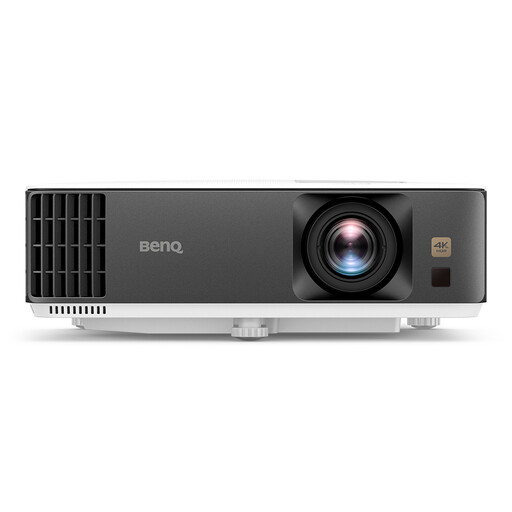 No image available
A good fit if you’re looking for 4K UHD and some flexibility over the projection distance.
The product details list UHD 4K (3840 × 2160), 1,3× zoom and automatic vertical keystone correction.
The stated aspect ratios include 16:9 and 4:3.
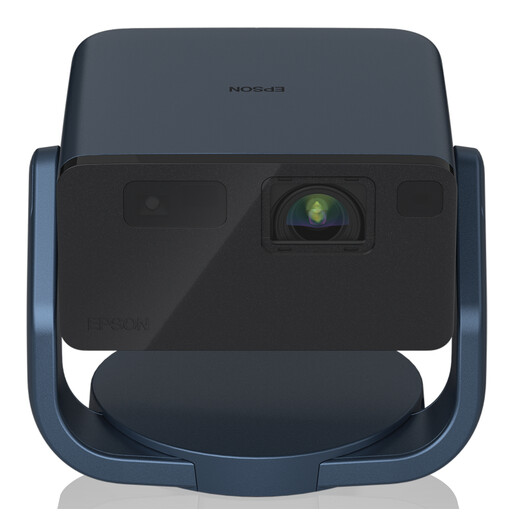 No image available
A good fit if you’re looking for a 1080p projector for home cinema use and want to try different picture modes.
The product details list 3LCD, 1000 ANSI lumens and a throw ratio of 1,00–1,82:1.
Native 1080p; Cinema and Natural colour modes; stated image size of 30–150 inches.
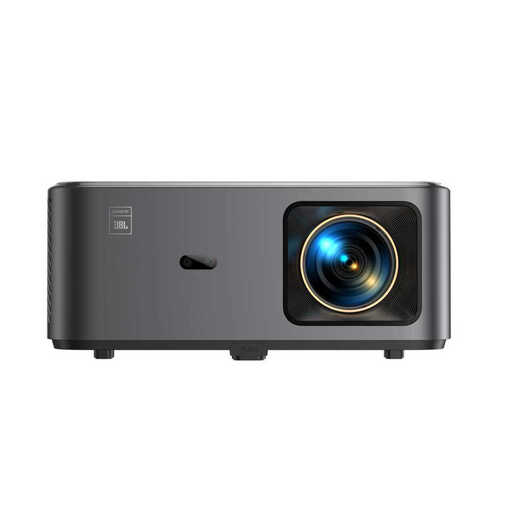 No image available
A good fit if you want to combine built-in streaming and sound with connections for an external player.
The product details list native 1080p, Google TV and two HDMI inputs.
JBL stereo speakers are also listed. 4K support doesn’t mean the native resolution is 4K.
Set your player or projector to preserve the original aspect ratio. Optoma lists a native aspect ratio of 16:9 and support for 4:3 input on the HD30LV. This doesn’t mean 4:3 content will automatically fill the entire 16:9 image.
Measure the available distance between the lens and the screen for your preferred image size. Compare it with the specification for the exact model: Epson specifies 2,95–4,77 m for a 100-inch image on the EH-TW7100. Also check the lens shift range if the projector can’t sit directly in front of the screen.
It depends on the model and its light source. Optoma lists different maximum lifespans for each operating mode of the HD30LV, while Epson describes the EF-61W as an LED model. For a lamp projector, check which replacement part is compatible with the exact model.
For a standard online product purchase, you generally have a statutory cooling-off period of up to 14 days after delivery, although exceptions apply. Your statutory guarantee also depends on what you can reasonably expect from the product under normal use; there isn’t one fixed period that applies to every product. ACM ConsuWijzer explains these rules.