
Anyone who wants to capture a square quickly
You want to take an overall shot almost as soon as you arrive, and know in advance whether a fixed wide-angle lens will suit your position.


If you want to capture a large square quickly without changing lenses, choose a compact camera with a wide angle suited to where you’ll be standing. Ricoh gives the GR IV a 28 mm full-frame equivalent angle of view and a start-up time of around 0.6 seconds. The latter is a manufacturer’s claim, not the result of an independent real-world test. For distant details, a zoom compact offers greater reach, while a mirrorless camera is a better fit if you can attach the lens in advance and want the option of using different lenses later.
You want to take an overall shot almost as soon as you arrive, and know in advance whether a fixed wide-angle lens will suit your position.
You want to switch between the whole square and subjects further away from roughly the same spot, without changing lenses.
You can prepare your camera in advance and consider the option of choosing another lens later worth carrying extra equipment.
Best for: anyone who wants to capture the square and its surroundings quickly with a fixed angle of view.
Keep in mind: you can’t zoom optically, so check that the angle of view is wide enough from where you’ll be standing.
Best for: anyone who wants to photograph both the overall scene and distant details without changing lenses.
Keep in mind: you’ll need to select the zoom setting you want on the spot; the zoom range alone doesn’t tell you how quickly the camera will be ready to use.
Best for: anyone who wants the option of using different lenses later and can prepare the camera in advance.
Keep in mind: the attached lens determines your reach when taking the shot, and preparing the full kit takes extra time.
| What to consider | What to look for when buying | Who should pay particular attention? |
|---|---|---|
| Ready to use quickly | Practise turning the camera on, composing, focusing and taking the shot as one sequence. Don’t treat a manufacturer’s stated start-up time as the time it takes to get a successful photo. | If I want to start taking photos as soon as I arrive, I want to know in advance whether the controls suit the way I work. Around 33% of consumers prioritise having a camera ready to use. |
| Capturing the whole square | Compare the full-frame equivalent focal length at the wide-angle end and check the framing from a similar position. | I want to fit the part of the square I’m interested in into one frame, without cutting off the edges. Around 27% of consumers prioritise a full view of the square. |
| Distant details | Check the optical zoom range and, where relevant, the maximum aperture at both ends. Don’t confuse digital zoom with optical zoom. | If I want to capture details on the other side of the square from where I’m standing, I want to be able to bring them closer optically. Around 20% of consumers prioritise zoom range. |
| Using different lenses later | Check which lens is included in the kit and whether its range suits this shot; the lens determines what you can photograph on the spot. | I’m happy to spend extra time preparing if I want the option of using different lenses later. Around 20% of consumers prioritise lens choice and future use. |
A long telephoto reach won’t help if you can’t fit the edges of the square into the frame from where you’re standing.
First, compare the full-frame equivalent focal length at the wide-angle end. Then consider how much telephoto reach you’ll need for details.
A mirrorless camera is only ready to shoot once it has a suitable lens attached; different kits may include different items.
Check the exact lens and what’s included in the kit you’ve chosen. Consider whether you’ll also need a memory card or spare battery.
Depending on the kit and what you already own, you may need extra equipment such as a lens, memory card or spare battery.
Once the camera has started up, you still need to compose your shot and may need to focus. A pre-set focus distance won’t suit every scene.
Practise the full process using the settings you plan to use on the square.
The Dutch Data Protection Authority distinguishes between private use or sharing with a very limited group and sharing more widely.
Consider the purpose and reach of your publication separately from your camera choice. If in doubt, seek advice before sharing identifiable people more widely.
The GR IV is a fixed wide-angle option for anyone who wants to capture a square quickly from where they’re taking the photo.
The PowerShot G7 X Mark III is a compact camera with built-in zoom, while the EOS R50 kit is a separate option with interchangeable lenses.
The RX100 VII is a compact zoom option for anyone who wants to capture both the whole square and subjects further away.
The X100VI is a fixed-lens alternative for anyone who deliberately chooses a 35 mm full-frame equivalent angle of view.
This selection includes pocket, instant and digital cameras. Check whether each model’s controls and angle of view suit your shot of the square.
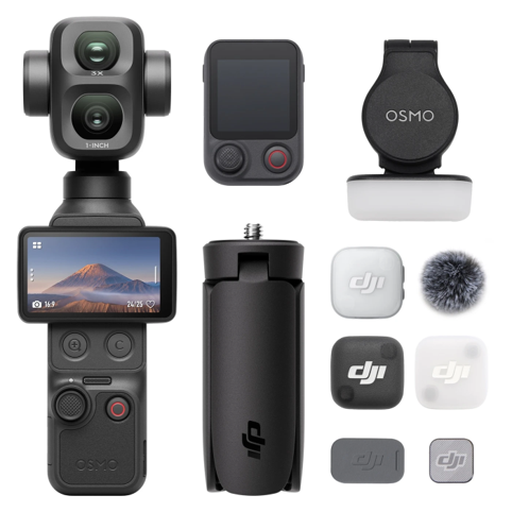 No image available
The product title describes this as a vlog combo; check whether its controls suit the way you work when taking individual shots of a square.
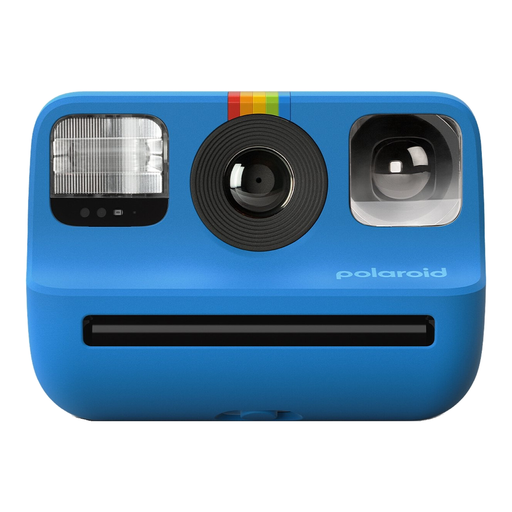 No image available
This instant camera could be a good fit if you want to take photos and print them straight away; bear in mind that it uses Polaroid Go film.
 No image available
The title mentions photography and video; check whether the angle of view and controls are suitable for your shot of the square.
The title lists a 1″ CMOS sensor, 4K/240fps, 3-axis stabilisation, 2× lossless zoom and 107 GB of built-in storage.
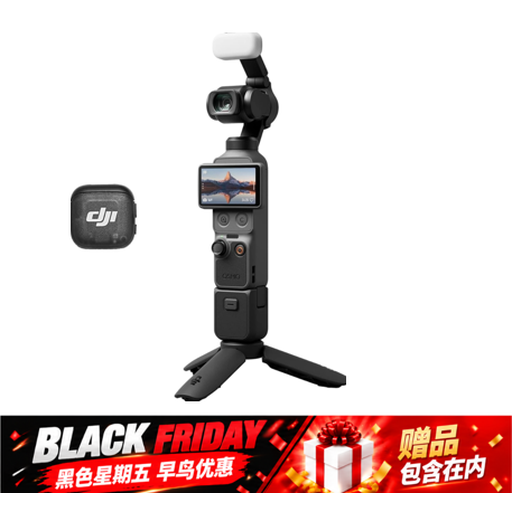 No image available
This combo could be a good fit if you’re looking for a pocket camera with a handle included; check that the kit suits the way you take photos.
The title lists a 1″ CMOS sensor, 4K/240fps, 3-axis stabilisation, 2× lossless zoom, 14-stop dynamic range and 107 GB of built-in storage. The handle has a 1/4″ thread.
 No image available
The product title describes this model as a portable point-and-shoot camera; check whether its controls and zoom suit the distance you’ll be shooting from.
The title lists 4K video, 80MP photos and 18× zoom, but doesn’t specify whether the zoom is optical.
Choose your angle of view and shooting settings in advance, charge the battery and insert a suitable memory card. Practise turning the camera on and focusing too: a stated start-up time doesn’t tell you how long the entire process of taking a photo will take.
No. Image stabilisation won’t freeze people who are walking. In low light, also consider the maximum aperture and bear in mind the shutter speed needed for moving subjects.
Check the battery and memory card, and keep the lens and camera contacts clean in line with the instructions for your chosen model. With a mirrorless camera, the lens you want to use must also be attached; it isn’t automatically included in every kit.
No. When you buy as a consumer in the Netherlands, you’re already entitled to a product that meets reasonable expectations. The Dutch government says there’s no fixed statutory warranty period, and the seller is your point of contact if a product is faulty. Consider any additional paid plan based on what it actually offers.
Not automatically. The Dutch Data Protection Authority distinguishes between private use or sharing with a very limited group and wider sharing or business use. Consider the purpose of the publication before sharing the photo; if in doubt, you can ask for advice about your situation.