
Shared kitchen manager
Wants colleagues to be able to wipe down and clean the parts easily after juicing, so no juice residue is left behind. Manufacturers specify which parts are removable or dishwasher-safe for each model.


Choose a citrus juicer with a removable jug if you want to collect enough juice for several glasses at once. A model with a direct spout is more suitable if colleagues will be juicing one glass at a time. Also check which parts can be removed and how they should be cleaned: wattage alone won’t tell you how much juice a juicer produces or how noisy it is.
Wants colleagues to be able to wipe down and clean the parts easily after juicing, so no juice residue is left behind. Manufacturers specify which parts are removable or dishwasher-safe for each model.
Juices several lemons in a row and wants to collect the juice or switch easily between glasses. A jug and a direct spout call for different ways of working.
Makes small batches in a shared space and considers storage, spills and potential noise. Descriptions such as ‘quiet’ are manufacturers’ claims, not comparative noise measurements.
First decide whether you want to collect juice for several glasses or juice one glass at a time. Then consider cleaning, space and how much pulp you prefer.
| What to consider | What to look for when buying | Who is this important for? |
|---|---|---|
| Cleaning | Check which parts can be removed and which the manual says are dishwasher-safe. For example, the manual states that the base and drive shaft of the Rommelsbacher ZP 40 are not dishwasher-safe. | If I want to hand the juicer over to the next colleague after use, I focus on parts that are easy to clean. For around 33% of consumers, easy cleaning is the top buying priority. |
| Multiple servings | Check the collection capacity and decide where you’ll mix the juice with water. With a direct spout, you’ll need a suitable glass or a separate mixing jug. | When I’m making lemonade for several glasses, I want to be able to juice several lemons in a row and collect the juice. Preparing multiple servings is the top priority for around 27% of consumers. |
| Space and mess | Compare the dimensions with the available worktop space, and check for cord storage and a drip-stop feature. A description such as ‘quiet’ is not a comparable noise measurement. | In a small shared kitchen, I want the juicer to be easy to put away and to minimise spills. Around 20% of consumers prioritise space and potential disruption. |
| Pulp | Check whether the exact model has a pulp selector or adjustable pulp setting; these features are not available on every version. | If colleagues have different preferences, I want to be able to choose how much pulp goes into the juice. This is the top buying priority for around 20% of consumers. |
Manufacturers sometimes state the wattage or describe a model as quiet, but this information doesn’t provide directly comparable measurements of juice yield or noise levels.
Compare the way the juicer works and the features that matter to you. If noise or juice yield is a deciding factor, look for an independent measurement taken under comparable conditions.
The stated capacity is for collected juice; you’ll need to add other ingredients to make lemonade.
Before choosing a collection capacity, work out how many lemons you’ll juice in each batch and where you’ll mix the lemonade.
According to the manual, the jug, sieve and cones of the Rommelsbacher ZP 40 are dishwasher-safe, but the base and drive shaft are not.
Check the manual for the exact model and agree how the juicer should be cleaned after use in your shared kitchen.
The Netherlands Nutrition Centre points out that fruit juice naturally contains sugar and recommends water, tea or coffee without sugar as everyday drinks.
Make lemonade to taste with water, and don’t assume that fresh juice on its own makes a healthier everyday drink.
According to Philips Netherlands, the Philips HR2738/00, HR2744/40 and HR2752/90 models have different ways of collecting and pouring juice.
Braun describes the CitrusQuick 3 CJ3050BK as a model with a direct spout and press-to-start operation.
Princess describes the 201853 as having a pressing arm and a cone for large and small citrus fruits.
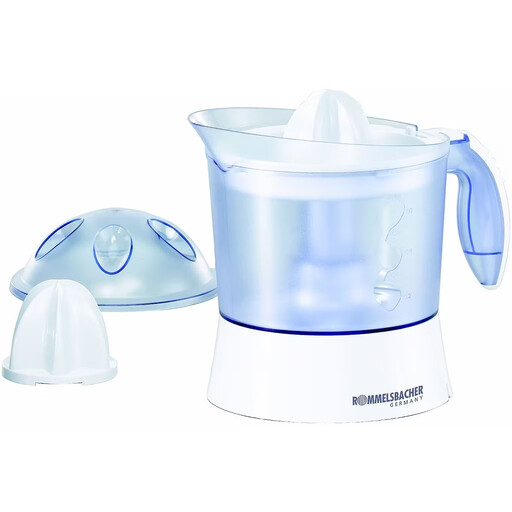
According to Rommelsbacher, the ZP 40 has a removable 1-litre jug, two pressing cones and an adjustable pulp setting.
The VitaPress MCP3000N is an example of a citrus juicer with automatic press-to-start operation and a removable 0.8-litre jug, according to Bosch Netherlands.
These products are suitable for juicing citrus fruit for one or more servings in a shared kitchen. Focus on the collection capacity, cleaning and any usage limitations of the specific model.
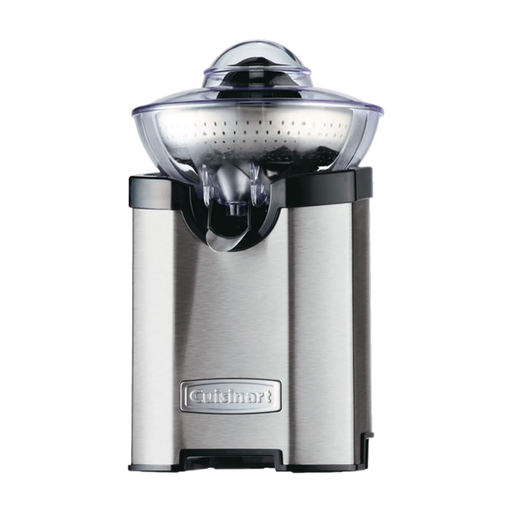 No image available
The 1-litre collection jug is useful if you want to collect juice for several glasses.
Power: 100 W. The product description lists a wide spout, anti-drip system and removable dishwasher-safe parts.
Dimensions: 29 × 17 × 17 cm.
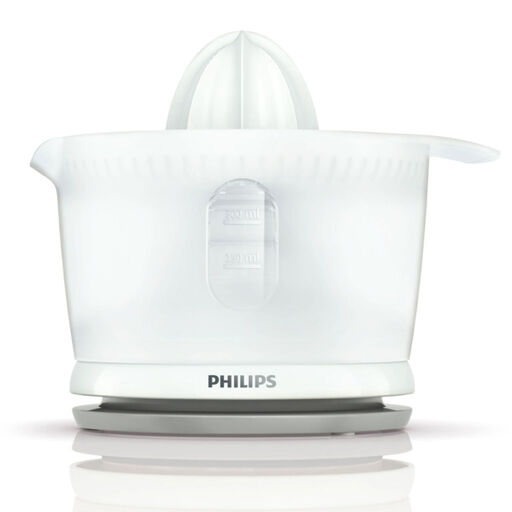 No image available
The 500 ml collection jug suits smaller batches; cord storage can be handy if you put the juicer away after use.
Power: 25 W. The product description lists removable dishwasher-safe parts and a drip-free spout.
The product description states that the juicer should not be used continuously for more than 10 minutes.
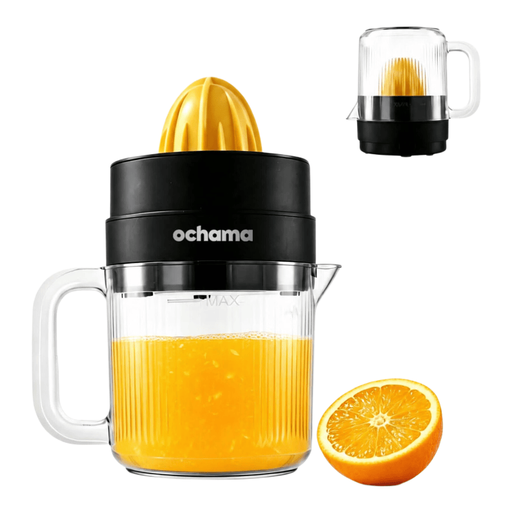 No image available
The product name states a capacity of 1.4 litres, which may be useful if you want to collect juice for several servings.
Power: 30 W. The product information lists pulp separation and removable parts for cleaning.
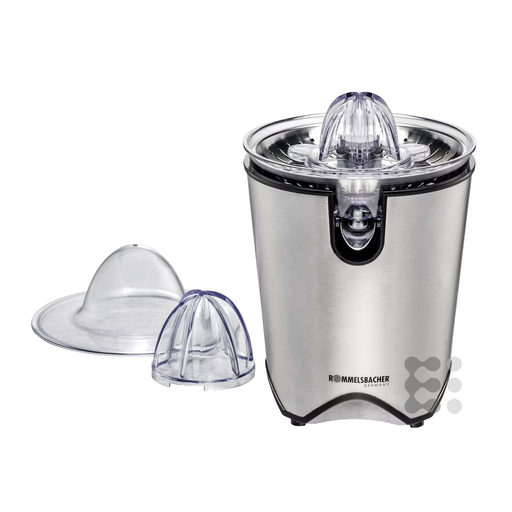 No image available
The 0.60-litre juice container is worth considering if you want to collect juice for several servings in a row.
The product description lists automatic on/off operation, an anti-drip spout and removable dishwasher-safe parts.
Dimensions: 17,5 × 16 × 25,5 cm.
 No image available
According to Rommelsbacher, the removable 1-litre jug is suitable for collecting juice for several glasses.
According to the manufacturer, the model has two pressing cones and an adjustable pulp setting. The manual states that the jug, sieve and cones are dishwasher-safe, but the base and drive shaft are not.
It varies by model and part. The Rommelsbacher ZP 40 manual lists the jug, sieve, cones and lid as dishwasher-safe, but not the base and drive shaft. Check the manual for the exact model before putting parts in the dishwasher or immersing them in water.
The Netherlands Nutrition Centre recommends keeping freshly squeezed lemon juice in the fridge for 3–7 days and says freezing is also an option. This advice applies to lemon juice, not automatically to lemonade that has already been mixed or juice that has been left on the worktop.
For consumer purchases, the Government of the Netherlands does not specify a fixed statutory warranty period: you are entitled to a product that meets reasonable expectations, and the retailer is your point of contact if there is a problem. Check separately which terms apply if an employer buys the citrus juicer for business use; the consumer guidance mentioned does not establish the rights that apply to such a business purchase.
According to the Netherlands Food and Consumer Product Safety Authority (NVWA), a CE mark is required for electrical products covered by the applicable rules. For mains-powered electrical equipment, the NVWA gives a range of 50–1000 V AC for the Low Voltage Directive. Check the marking and product information for the model on offer; a CE mark does not tell you whether the juicer is quiet or suitable for intensive office use.
Not solely because colleagues are making lemonade for their own use. The NVWA describes the requirement as applying to businesses that produce or trade in food. If the office is going to produce or trade in the drink as a food product, you’ll need to assess which requirements apply to that activity.