
Anyone who wants to make one quick glass
You want to make a glass of juice during a short break, then put the juicer away with ease. Philips lists a 0.5-litre jug and cord storage for the HR2738/00.


For a quick glass in the afternoon, choose a compact citrus juicer with a collection jug if you want to pour the juice afterwards. If you’d rather squeeze straight into your glass, look for a model with a direct spout and drip-stop. If you juice more often or for several people, compare a larger jug or a lever-operated press, and always check the manual to see which parts are safe to clean.
You want to make a glass of juice during a short break, then put the juicer away with ease. Philips lists a 0.5-litre jug and cord storage for the HR2738/00.
You juice regularly and want to know in advance which removable parts are dishwasher-safe and how many parts you’ll need to clean. Tristar describes the removable parts of the CP-3002 and CP-3006 as dishwasher-safe.
You want to collect juice for others at the same time, so you’re comparing jug capacity with a spout that lets you switch glasses. According to the manufacturer, the Tristar CP-3006 has a removable 1.2-litre jug.
First decide how you want to collect the juice: straight into a glass or in a jug. Then check which parts can be removed and how the exact model should be cleaned, according to its manual.
| What to consider | What should you check? | Who is this most important for? |
|---|---|---|
| One quick glass | Choose between a direct spout and a collection jug. If you choose a spout, check whether it has a drip-stop. | If I want to make one quick glass during my afternoon break, I want to avoid pouring the juice from one container to another. Around 37% of consumers prioritise making one glass quickly. |
| Less washing-up | Check which parts are removable and which can go in the dishwasher according to the manual. | After juicing, I don’t want to wash lots of separate parts by hand. Around 27% of consumers make minimal washing-up their top priority. |
| Less pressure by hand | Check whether the model has a pressing arm or lever, and whether it suits the way you’ll use it. | If I’m juicing several fruit halves one after another, I don’t want to press down hard on the fruit every time. Around 18% of consumers prioritise needing less hand pressure when juicing. |
| Several glasses | Compare the stated jug capacity and decide whether you’d rather collect the juice or switch glasses under a spout. | If I’m making juice for more than one person, I want enough room to collect it or to be able to switch glasses easily. Around 9% of consumers mainly choose a juicer for making several glasses at once. |
| Adjusting the pulp | Look for a pulp selector in the specifications for the full model number. | If I want to choose how much pulp is in my juice, I look for an adjustable selector. Around 9% of consumers make that choice their top priority. |
A stated electrical power rating isn’t a comparative measure of how much juice different juicers extract from the same oranges.
First choose the controls, collection method and cleaning routine that suit your needs. Treat claims about juice yield as statements from the manufacturer, not as the results of a comparison test.
Manufacturers’ information about dishwasher-safe parts applies to removable components, not automatically to the electrical base.
Check the cleaning instructions for the exact model and only remove parts designed to come off.
Cleaning the juicer in a way that isn’t covered by the manual could mean extra hand-washing or damage to the parts.
According to the Dutch government, the retailer must provide a solution if a product is faulty. A manufacturer’s warranty doesn’t replace your statutory rights.
Check what any paid-for warranty covers in addition, and keep your proof of purchase.
The range in the Netherlands includes compact juicers, models with a pulp selector and versions that dispense juice directly into a glass.
The CP-3002 is designed for lever-operated juicing with a direct spout; the CP-3006 has a removable jug.
The 201851 Master is an electric citrus juicer with a pressing arm and direct dispensing.
The range includes models from the CitrusQuick line and the MPZ 9.
The CJF11RDEU is an electric citrus juicer with a direct spout.
This selection includes compact juicers with a collection jug, models with a direct spout, and options with adjustable pulp or greater collection capacity.
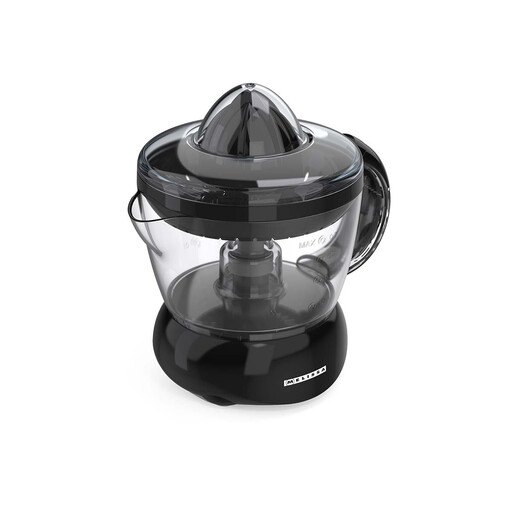 Image unavailable
The 0.7-litre collection jug is handy if you want to collect the juice before pouring it.
The product information lists two directions of rotation, interchangeable juicing cones including a large cone for oranges, and dishwasher-safe parts. The design is described as compact and has a dust cover for storage.
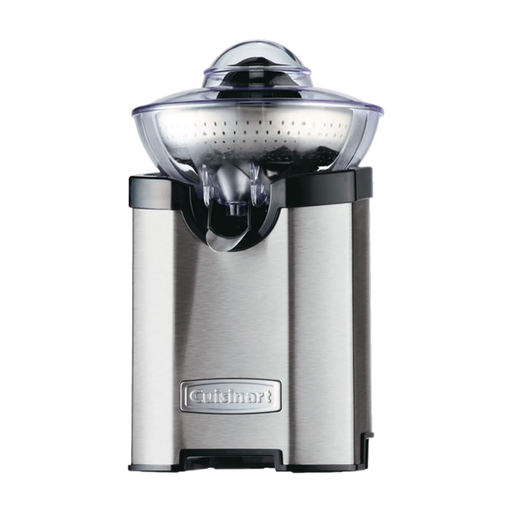 Image unavailable
The direct spout with a drip-stop system is designed for anyone who wants the juice to flow straight into a glass.
The product information lists a 1-litre juice reservoir, a wide spout and dishwasher-safe removable parts. The model is suitable for oranges and other citrus fruit.
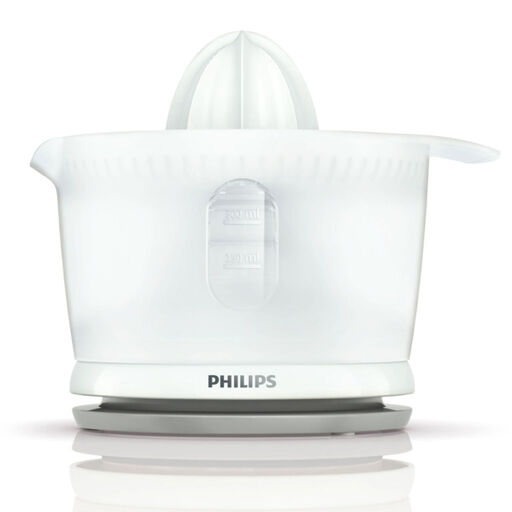 Image unavailable
The 500 ml collection jug and compact design suit anyone making a small amount of juice and wanting to put the juicer away afterwards.
Philips lists a drip-free spout, cord storage and automatic activation when you press the fruit down. The removable parts are described as dishwasher-safe.
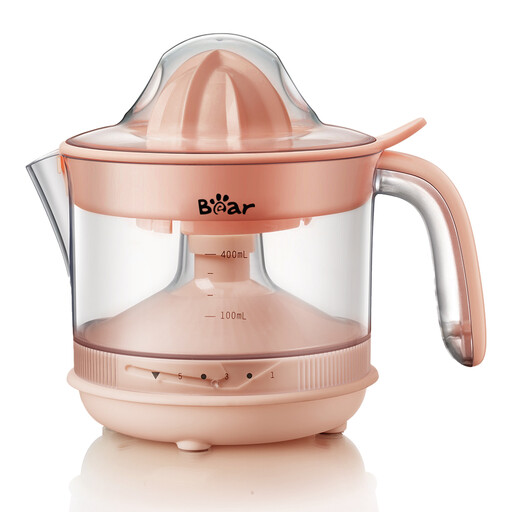 Image unavailable
The five adjustable pulp settings are useful if you want to control how much pulp is in your juice.
The product information lists a 110 mm feed opening for whole oranges and removable parts for cleaning.
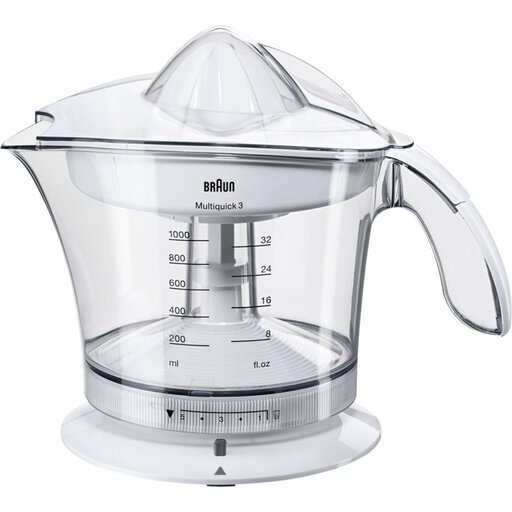 Image unavailable
According to the product information, the juicer starts when you press the fruit down and stops when you lift it.
The information lists two-way rotation and dishwasher-safe parts. Follow the manual to check which parts can go in the dishwasher.
Only take apart the removable parts designed to come off, and follow the manual for dishwasher use. Tristar describes the removable parts of the CP-3002 and CP-3006 as dishwasher-safe; that doesn’t mean the electrical base can go in the dishwasher.
No. A stated power rating isn’t a like-for-like measurement of juice yield. The manufacturer’s figures for different juicers aren’t based on independently measured yields, so compare the controls, collection method and cleaning requirements too.
Report a faulty product to the retailer. According to the Dutch government, your statutory rights apply alongside any manufacturer’s warranty, and there’s no fixed statutory warranty period. What you can expect depends, among other things, on the product and normal use.
Electrical equipment covered by the relevant EU rules must carry the required CE marking. Parts that come into contact with food must comply with the applicable Dutch and European materials regulations. Check the product documentation for the specific model. CE marking isn’t proof of an independently tested juice yield.