For the occasional small amount of lemon or lime juice for dressing, a juicer with a suitably sized cone and easy-to-clean parts is a sensible place to start; you don’t necessarily need a large jug or lever. Choose a collection jug if you want to measure the juice, adjustable pulp control if you want to control how much pulp goes in, or direct pouring if you’d rather avoid transferring the juice. Before buying, check the features of the exact model and the relevant product safety and food-contact information.
Who is this buying guide for?
Making dressing now and then
You squeeze a lemon or lime when you have guests and want a juicer that suits the fruit you’re using and is easy to clean afterwards. The Voedingscentrum uses lemon juice in a salad dressing recipe and lime juice in a lime dressing recipe.
Controlling how much pulp goes in
You want to adjust the texture of your dressing, so you’re checking whether the exact model has adjustable pulp control. Braun lists five pulp settings for the CJ3000WH.
Juicing for several dishes
You may be juicing several pieces of fruit in a row and comparing direct pouring with a collection jug or lever. What’s most convenient will also depend on how much juice you need.
What should you look for when buying?
| What to consider |
What should you check? |
Who should pay extra attention? |
| Juicing small amounts |
Check that the cone suits the lemons or limes you use, and how the juice is collected. |
If I only need juice for a dressing, I want a suitably sized juicer without an unnecessarily large collection jug. Around 40% of consumers prioritise small portions. |
| Cleaning |
Check which parts can be removed and whether the manual says they are dishwasher-safe. |
After cooking, I want to be able to clean the parts that have come into contact with juice and pulp quickly. Around 31% of consumers say ease of cleaning is their top priority. |
| Pulp in the dressing |
Check whether the model you’re considering has an adjustable pulp strainer; remove any pips separately if needed. |
If I want to control the texture of my dressing, I check the pulp settings for the exact model. Around 15% of consumers put this choice first. |
| Juicing several pieces in a row and pouring |
Decide whether you want to pour the juice straight into a glass or collect it first; also consider the space available. |
When I’m juicing for several dishes, I want to collect the juice easily without unnecessary transferring. Around 14% of consumers prioritise juicing continuously and pouring with ease. |
Common pitfalls
-
Assuming very similar model names mean the appliances are the same
Features can vary between models: Braun lists pulp settings for the CJ3000WH and direct pouring for the separate CJ3050BK.
Compare the full model number with the product page for the exact model you want to buy.
-
Choosing based only on wattage or a claim about juice yield
Wattage alone doesn’t provide a reliable basis for comparing how much juice different juicers extract from lemons or limes.
First, choose a suitable cone, the collection method you want and parts that are easy to clean.
-
Mistaking an available product page for confirmation that the item is in stock
Bosch says the MCP3000N is no longer available, so a product page alone doesn’t confirm that this specific model is for sale.
Check availability and the exact model before buying. Don’t assume the features apply to another version without checking.
Brands and models for reference
Philips
The Daily Collection HR2738/00 has a collection jug, making it an option if you want to collect the juice first.
- Philips lists a 0.5-litre jug, 25 W and autoreverse for this model.
- These stated features do not provide an independent comparison of juice yield or suitability for every type of lime.
Braun
The CJ3000WH and CJ3050BK have different features, so don’t treat them as the same model.
- Braun lists five pulp settings for the CJ3000WH and direct pouring with an anti-drip system for the CJ3050BK.
- Check the full model number to make sure you know which features belong to the model you’ve chosen.
Princess
The 201853 is a lever press for those who value how the juicer operates and collects juice.
- Princess lists a pressing arm, a cone for large and small citrus fruits, and removable dishwasher-safe parts.
- The lever’s suitability for an occasional small portion has not been independently established.
Bosch
The MCP3000N is an example of a citrus juicer with a collection jug, not a recommendation for current availability.
- Bosch lists a removable 0.8-litre jug and dishwasher-safe parts for the MCP3000N.
- Bosch says this specific model is no longer available; check other models separately.
Joybuy products
These products are suited to making lemon and lime juice for dressing, with different options for collecting juice, separating pulp and cleaning.
 No image available
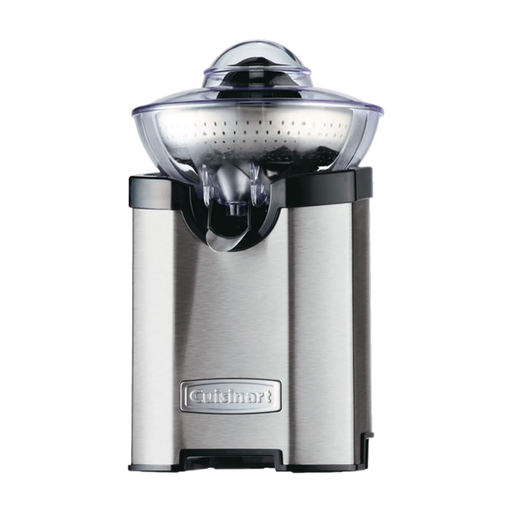
Cuisinart CCJ210E citrus juicer, 100 W
An option for collecting lemon or lime juice and cleaning the removable parts after use.
The product description lists a juice reservoir, an anti-drip system and removable dishwasher-safe parts. The stated power is 100 W.
View at Joybuy
 No image available
Bear CZJ-A04B1 citrus juicer
An option if you want to adjust the amount of pulp while juicing.
The product description lists five pulp settings, removable parts and a 110 mm filling opening.
View at Joybuy
 No image available
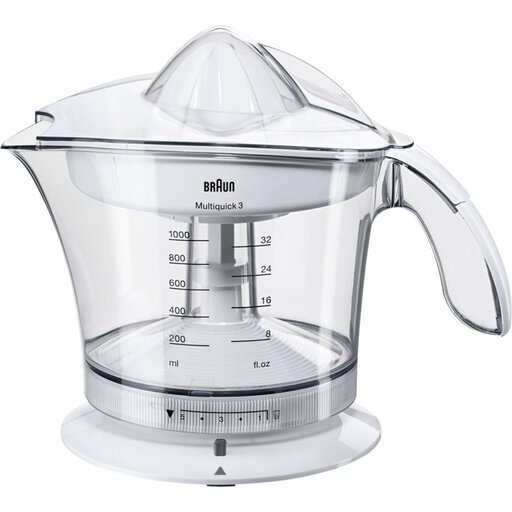
Braun MPZ9 Citrusquick 1
An option if you want to collect and measure juice for dressing.
The product description mentions lemons and limes, a measuring scale on the jug, start-stop control and two-way rotation. According to the description, parts are dishwasher-safe as stated in the manual.
View at Joybuy
 No image available
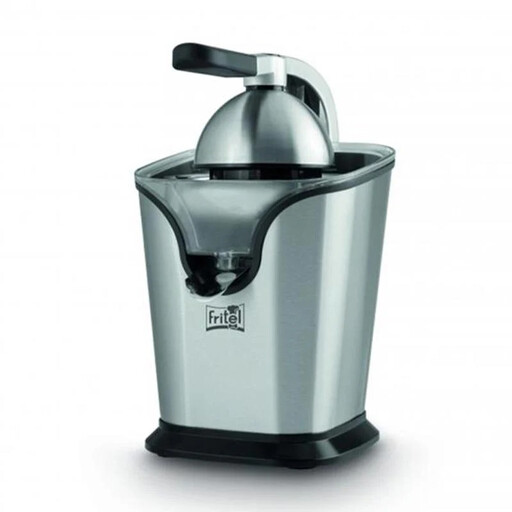
FRITEL CP 4177 citrus juicer, 100 W
An option for juicing lemons or limes with a model that, according to the product description, has a small cone for these fruits.
The description lists a pressing arm, two interchangeable cones, a drip stop and removable dishwasher-safe parts.
View at Joybuy
 No image available
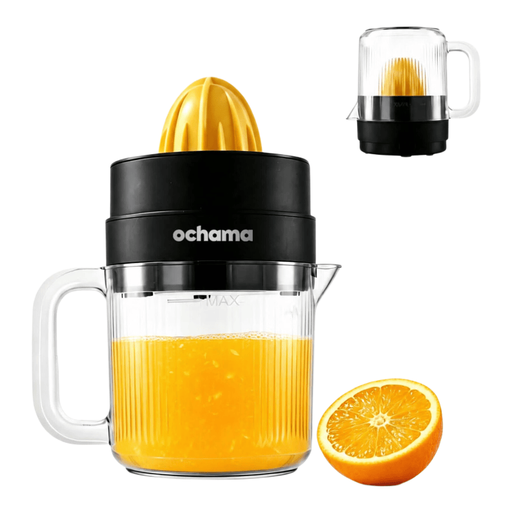
ochama electric citrus juicer, 1.4 L, 30 W
An option if you want to separate the juice from the pulp as you press.
The product name lists pulp separation, a capacity of 1.4 L and a power rating of 30 W. The product description mentions removable parts.
View at Joybuy
Frequently asked questions
How much juice do I need for dressing?
It depends on the recipe. For example, a Voedingscentrum recipe for four portions uses two tablespoons of lemon juice; this is not a general portion guideline or a minimum capacity requirement for a citrus juicer.
How do I clean a citrus juicer after use?
Check the manual for the exact model and clean the parts that have come into contact with juice and pulp. Manufacturers list removable dishwasher-safe parts for models including the Princess 201853 and Bosch MCP3000N; that doesn’t mean the motor base or parts from other models can go in the dishwasher.
What requirements apply to an electric citrus juicer?
The relevant product safety requirements and the required CE marking apply to electrical appliances on the Dutch market, according to the Dutch government. The NVWA also sets out the Dutch requirements for materials that come into contact with food. Check the information for the specific model; a general product page does not automatically confirm that an individual item complies.
Am I always entitled to just two years’ warranty in the Netherlands?
No. According to ACM ConsuWijzer, your statutory warranty is separate from any manufacturer’s or seller’s warranty; with normal use, a product must do what you could reasonably expect of it. If a product is faulty, contact the seller.
Can I store lemon juice after squeezing it?
The Voedingscentrum recommends keeping opened lemon juice in the fridge for 3–7 days. This advice doesn’t automatically apply to homemade dressing containing other ingredients.


