
Vandaag of morgen in huis

Kwaliteit gegarandeerd

Welkomstaanbiedingen ontgrendelen: GRATIS bezorging | Tot 80% korting | Gratis 30 dagen JoyPlus-proefperiode
Download de app
Would you like to make fresh orange juice quickly at home, but are you unsure whether to choose a manual press, electric citrus juicer, centrifugal juicer or slow juicer? The range may seem straightforward, but important differences often lie in the details. For example, a powerful appliance is not automatically easy to use. A large jug can also be impractical if its individual parts are difficult to clean.
So focus above all on how you intend to use the appliance. If you make one glass every morning, a compact design and simple operation are important. For a family, capacity, pulp settings and a stable housing are likely to matter more.
A higher wattage may sound appealing, but it does not tell you how easy or pleasant a citrus juicer is to use. A power rating of 20 to 40 watts can be sufficient for oranges, lemons and grapefruits during normal household use. A more powerful model may have more components or a larger pressing system, but it may also take up more space.
As well as the power rating, consider the controls, pressing cone, rotation and recommended operating time. The Nedis KAJC100CWT, for example, has 25 watts, automatic clockwise and anticlockwise rotation, and a jug with a capacity of approximately 0.7 litres. The manufacturer also states a maximum continuous operating time of one minute.
Not everyone likes their juice prepared in the same way. Some people prefer smooth juice, while others enjoy plenty of pulp. With a citrus juicer featuring a pulp strainer, it is therefore important to consider not only whether there is a filter, but also how you can adjust the amount of pulp.
According to the product specifications, the Bear CZJ-A04B1 has five pulp settings. This allows you to adjust the texture from relatively smooth to pulpier. With other models, check whether the strainer is adjustable or simply has a fixed mesh. A fixed strainer can work perfectly well, but offers less choice.
A citrus juicer that is difficult to take apart is less likely to be used regularly. Check whether the jug, strainer and pressing cone can be removed. Also check the manual to see whether the parts are dishwasher-safe. The motor base, plug and cable must never be immersed in water.
The size is also worth considering. A wide filling opening can save preparation time, but a large appliance will not always fit beneath a kitchen cupboard. Measure the available space on your worktop and inside your kitchen cupboard beforehand.
For one or two glasses, a jug of approximately 0.7 litres is often practical. Families may benefit more from a model with a 1-litre capacity or a separate collection container. The Braun MPZ9 has a jug with a 1-litre measurement scale. The Cuisinart CCJ210E also states a collection capacity of 1 litre.
A large capacity does not mean that you always have to fill the jug completely. Juice generally tastes freshest when you drink it shortly after pressing. Choose a capacity that suits the amount you normally make.
An orange juicer should not only be suitable for oranges. Check whether you can also press lemons, limes and grapefruits. A larger cone is practical for grapefruits and oranges, while a smaller cone may be more convenient for limes and lemons.
The Aigostar Juicer comes with two pressing cones and has a power rating of 40 watts. According to the product information, the appliance is intended for citrus fruit and not for hard fruit. Do not use a citrus juicer as a substitute for a centrifugal juicer.
A citrus juicer uses a pressing cone and is specifically designed for citrus fruit. This type of appliance is usually easy to operate and quick to clean.
A centrifugal juicer often processes harder fruit and vegetables as well. However, this usually means more parts and more extensive cleaning.
A slow juicer presses ingredients using a different system and is designed for a wider range of fruit and vegetables. According to the product specifications, the WOOX MX0289 has a power rating of 150 watts, a juice cup with a maximum scale of 600 ml and a pulp container with a capacity of 836 ml. The manual states, among other things, that citrus fruit must be peeled and that the appliance is not intended for ice cubes or frozen ingredients.
If you only want to juice oranges, lemons, limes and grapefruits, an electric citrus juicer is usually a more logical choice than a larger juicer.
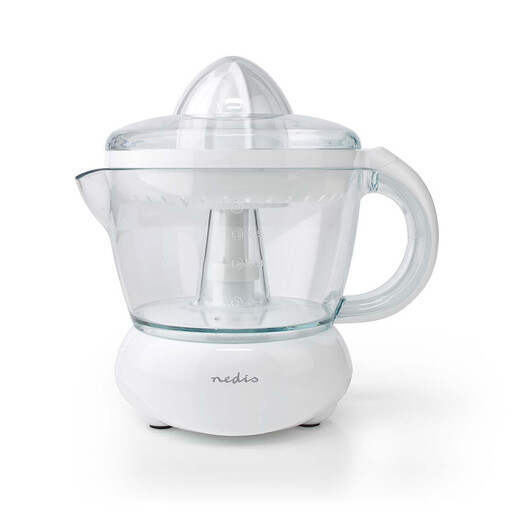
Why it suits this profile: This compact citrus juicer is designed for everyday use and has a transparent jug with a capacity of approximately 0.7 litres. The automatic pressure control keeps operation to a minimum.
The product specifications clearly state the power rating, capacity and operating limit. This means you are not judging the appliance solely by marketing claims about motor power.
25 watts, clockwise and anticlockwise rotation, removable jug and compact design.
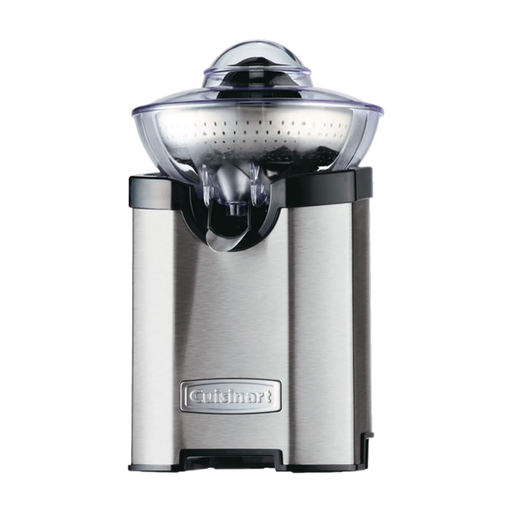
Why it suits this profile: This model combines a stainless-steel housing with a 1-litre collection capacity and an extra-wide spout. It is well suited to people who regularly prepare several glasses.
According to the product specifications, the removable parts are dishwasher-safe. Always check the manual to confirm exactly which parts this applies to.
100 watts, 1-litre capacity, anti-drip system and a three-year manufacturer’s warranty according to the product information.
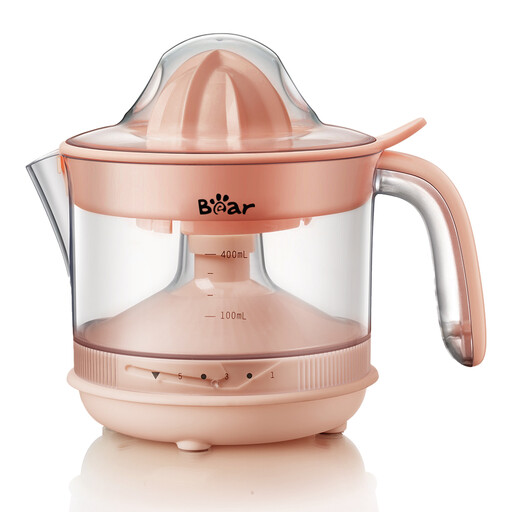
Why it suits this profile: The 110 mm wide filling opening, five pulp settings and one-button operation are practical when different family members prefer different juice textures.
The adjustable pulp strainer means you are not limited to a single texture. The removable parts also make cleaning the citrus juicer more straightforward.
110 mm filling opening, five pulp settings, non-slip feet and a 24-month warranty according to the product specifications.

Why it suits this profile: This is not a traditional citrus juicer, but a slow juicer for households that want to process other suitable fruit and vegetables as well as citrus fruit.
The product information states clear limits: citrus fruit must be peeled, ice cubes are unsuitable and the appliance needs a break after a maximum of ten minutes.
150 watts, 600 ml juice cup, 836 ml pulp container and overheating protection according to the product description.
We have compiled a complete, up-to-date list of products that fully meet these strict selection criteria and the applicable European safety regulations.
Rinse the strainer, pressing cone and collection jug immediately after use. Otherwise, dried pulp can become lodged in small openings. Use warm water and a soft brush for the filter. Check the manual first before putting any parts in the dishwasher.
Wipe the motor base only with a slightly damp cloth. Unplug the appliance before dismantling or cleaning it. Stop using it if the cable is damaged or if you notice an unusual smell, abnormal noise or strong vibrations.
For oranges, lemons, limes and grapefruits alone, a citrus juicer usually requires fewer steps and parts than a centrifugal juicer. Power consumption depends on the wattage and operating time. Compare both the wattage and the time needed to make your usual amount of juice.
This depends on the materials, frequency of use and maintenance. Do not let the motor run continuously for longer than stated in the manual. Clean the strainer after every use and prevent pulp from drying inside the mechanism. The statutory consumer guarantee in the EU is separate from any additional manufacturer’s warranty, so keep your proof of purchase and check the terms and conditions.
In many cases, yes, but check the product description and the pressing cones supplied. A grapefruit requires a larger surface area than a lime. A model with multiple cones, such as the Aigostar, therefore offers more flexibility than an appliance with a single fixed cone.
