
Vandaag of morgen in huis

Kwaliteit gegarandeerd

Welkomstaanbiedingen ontgrendelen: GRATIS bezorging | Tot 80% korting | Gratis 30 dagen JoyPlus-proefperiode
Download de app
Making a glass of fresh orange juice sounds simple, but the wrong citrus juicer can quickly become a source of frustration. A small jug is inconvenient for a family, pulp can build up in the strainer, and some appliances can only run for short periods at a time. Claims such as ‘powerful motor’, ‘maximum juice yield’ and ‘professional’ don’t tell you much without specific details.
So, keep an eye out for these common pitfalls:
An electric citrus juicer uses a rotating cone. Cut the fruit in half, press it onto the cone and the juice flows into a jug or reservoir. This type is a good choice if you want to make fresh juice quickly, without complicated settings.
A citrus juicer with a cone that rotates in both directions can press the fruit from different angles. This can be useful if you regularly juice oranges or grapefruit. An adjustable pulp filter lets you control how much pulp ends up in your juice.
A slow juicer works differently. A screw or pressing system processes vegetables, apples and soft fruit, among other ingredients. According to WOOX product information, the MX0289 is designed for cold-press juicing and has motor protection against overheating. Claims about juice quality or nutritional value come from the brand itself and shouldn’t be taken as medical or nutritional advice.
A centrifugal juicer typically uses a fast-spinning grating system. It’s suitable for certain types of fruit and vegetables, but it isn’t the same as an orange juicer. If you mainly process citrus fruit, a more compact citrus juicer will usually be a better fit.
Don’t just look at the size of the appliance; check the jug capacity too. Measurement markings make it easier to measure out juice for recipes, breakfast or lemonade. According to the product specifications, the Braun MPZ9 has a 1-litre jug with measurement markings. The Nedis KAJC100CWT has a transparent jug with a capacity of around 0.7 litres.
Check the appliance’s dimensions as well. A compact model is easier to fit into a Dutch kitchen, while a larger slow juicer will often need more room for its feed chute and collection containers.
A citrus juicer with a pulp filter is useful when people in your household have different preferences. Check whether the filter is adjustable and easy to remove. The Braun MPZ9 is listed as having an adjustable pulp strainer.
Start-stop operation is handy: according to the Braun product description, juicing starts when you press the fruit onto the cone and stops when you lift it off. This means fewer buttons and steps to deal with.
Removable parts can save time, but always check the manual for exact dishwasher instructions. Certain Braun parts are dishwasher-safe; WOOX product information says its removable parts can go in the dishwasher. The motor base must not come into contact with water.
If you plan to use your juicer frequently, noise levels and rest periods matter too. WOOX lists a noise level below 72 dB and recommends using the appliance for no more than 10 minutes at a time, followed by a cooling period. Nedis lists a maximum continuous operating time of 1 minute. This difference matters when you’re making juice for several people.
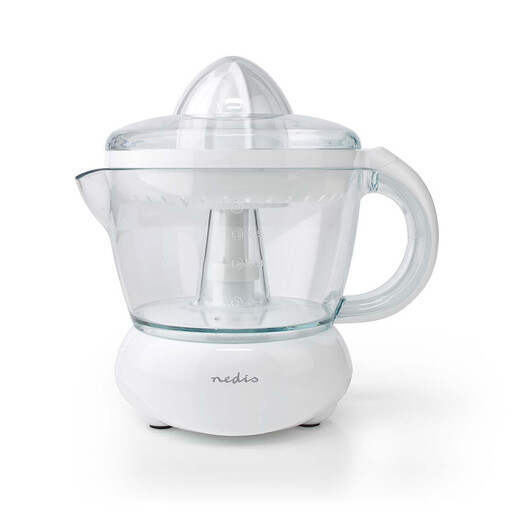
Why it suits this user profile: This compact model is designed for everyday use when you’re making one or a few glasses of juice. According to the product description, it starts when you press the fruit onto the cone.
The transparent jug has measurement markings and is removable. Check the manual before putting any parts in the dishwasher.
25 W power, a jug with a capacity of around 0.7 litres, rotation in both directions and a compact size of 15 × 20 × 19 cm.
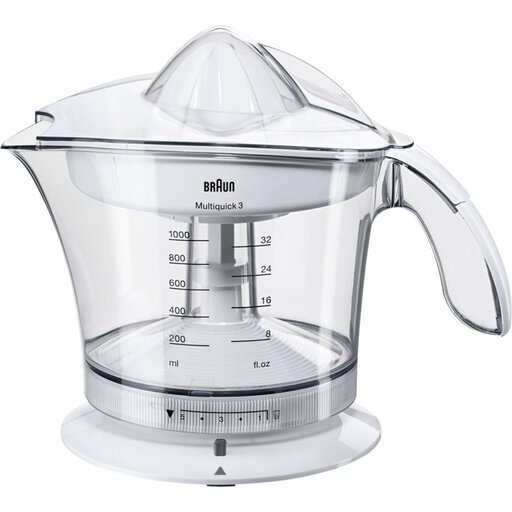
Why it suits this user profile: The generous jug and adjustable pulp strainer make this a good fit for households that regularly make several glasses of orange or grapefruit juice.
The 1-litre jug often means you won’t have to stop and empty it partway through. According to the product specifications, selected parts are dishwasher-safe; check the manual for details.
20 W power, press-to-start operation, rotation in both directions, measurement markings and an adjustable pulp strainer.
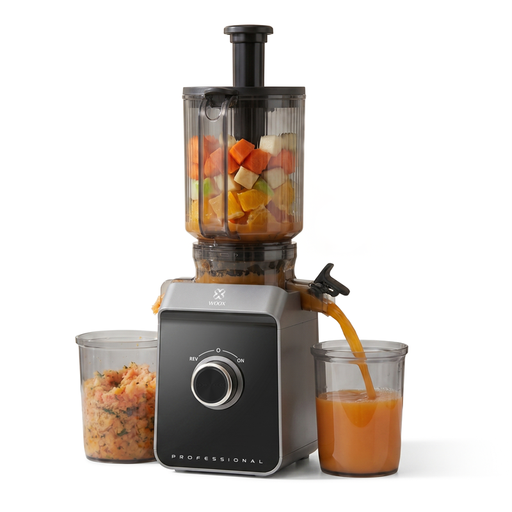
Why it suits this user profile: This model is a good fit if you want to process vegetables and other fruit as well as citrus, and don’t mind cleaning more parts.
The product information lists overheat protection, removable parts and a recommended maximum operating time of 10 minutes per session.
150 W power, a juice cup with markings up to 600 ml, an 836 ml pulp container and a 130 mm feed chute.
We’ve put together a complete, up-to-date list of products that meet these strict selection criteria and comply with current European safety regulations.
Yes, if you mainly juice oranges, lemons, limes or grapefruit. Check the recommended operating time, power and capacity. A jug holding 0.7 to 1 litre is handy if you’re making several glasses in a row.
A citrus juicer uses a cone to juice halved citrus fruit. A slow juicer processes ingredients using a pressing system and is generally more versatile. However, it takes more preparation, has more parts and takes longer to clean.
Unplug the appliance and remove the detachable parts. Rinse off the pulp as soon as possible with lukewarm water and use a soft brush to clean the strainer. Only put parts in the dishwasher if the manufacturer specifically says they’re dishwasher-safe. Wipe the motor base with a slightly damp cloth and never immerse it in water.
