
Fan of soup with pieces
You want the vegetables and lentils to remain recognisable, rather than blending into a smooth soup. DOMO and Princess list a chunky soup setting for specific models.


For chunky lentil soup after an evening class, choose a model whose instructions specifically mention a setting for soup with pieces, then pick a jug capacity to suit the number of portions you need. DOMO lists a Chunky function for the DO705BL, while Princess offers a chunky soup option for the 214001. The Voedingscentrum advises that dried pulses need to be boiled until tender, whereas cooked lentils from a tin, jar or pouch only need reheating.
You want the vegetables and lentils to remain recognisable, rather than blending into a smooth soup. DOMO and Princess list a chunky soup setting for specific models.
After your class, you want to know whether you can reheat cooked lentils or need to cook dried ones first. The Voedingscentrum makes this distinction for pulses.
You want to make more than one bowl of soup, so you compare jug capacities. DOMO, Princess and Philips list capacities for specific models.
First, consider the texture you want and whether your lentils are already cooked. Then compare the portion size and the cleaning involved.
| What to consider | What should you look for? | Best suited to |
|---|---|---|
| Chunky texture | Check whether the instructions describe a setting for soup with pieces or chunky soup. | If I want to keep the vegetables and lentils visible, I look for a dedicated texture setting. Around 36% of consumers prioritise a chunky texture. |
| Cooking and doneness | Use cooked lentils for reheating. For dried lentils, follow the cooking instructions and check that they are tender. | After an evening class, I don’t want to rely on a short appliance cycle to cook dried lentils until tender. Around 29% of consumers prioritise quick preparation using cooked lentils. |
| Portions per batch | Compare the stated jug capacity with the fill limits for your recipe. | If I’m making soup for several bowls, I want a jug that suits my portions without going over the maximum fill line. Around 21% of consumers prioritise making several portions. |
| Cleaning | Read the instructions for cleaning the jug, blade and electrical components. | After a late meal, I want as little cleaning as possible. A cleaning function doesn’t automatically mean the parts are dishwasher-safe. Around 14% of consumers prioritise easy cleaning. |
A stated programme duration doesn’t prove that every type of dried lentil will be cooked through in that time. The Voedingscentrum advises that dried pulses need to be boiled until tender.
Use cooked lentils if you only want to reheat them, or follow the cooking instructions for dried lentils and check that they are tender.
Dried lentils need extra cooking time and preparation beforehand.
Programme names vary between models. A soup setting on its own doesn’t guarantee that the vegetables and lentils will remain recognisable.
Check the instructions for the exact model for wording such as soup with pieces, chunky soup, or a programme designed to help retain texture.
An appliance may have a cleaning programme even if the manufacturer says its parts must be washed by hand.
Check the cleaning instructions for the specific model before choosing it.
For some models, this means cleaning the parts by hand.
For the DO705BL, DOMO lists a 2-litre jug capacity and a Chunky function.
For the 214001 Soup Maker XL, the manufacturer lists a 1.6-litre capacity and a chunky soup option.
For the HR2203/80, Philips lists a 1.2-litre jug capacity. The Philips recipe book describes a farmhouse soup programme designed to retain more texture.
The Belgian model support information for the Easy Soup LM841110 describes a programme for soup with pieces.
This selection includes electric cooking pots whose product information mentions making soup, as well as a saucepan for use on a hob. Not all of them are soup makers with a dedicated chunky soup setting, so check that the cooking method suits your recipe.
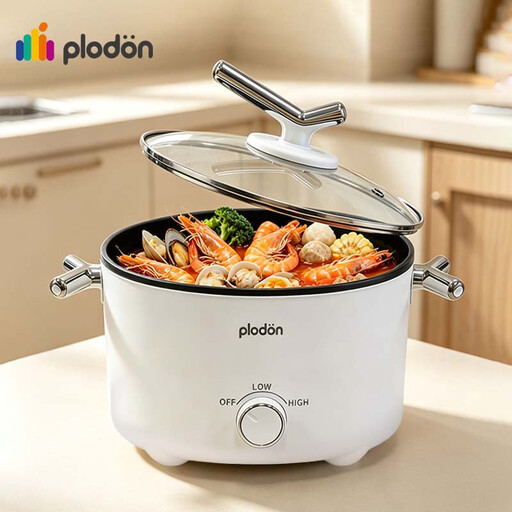 Image unavailable
The product information mentions gentle simmering for soup. Check whether the cooking method is suitable for your lentils and recipe.
The product name lists a 2.0 L capacity, 1000 W power, two power settings and a non-stick coating.
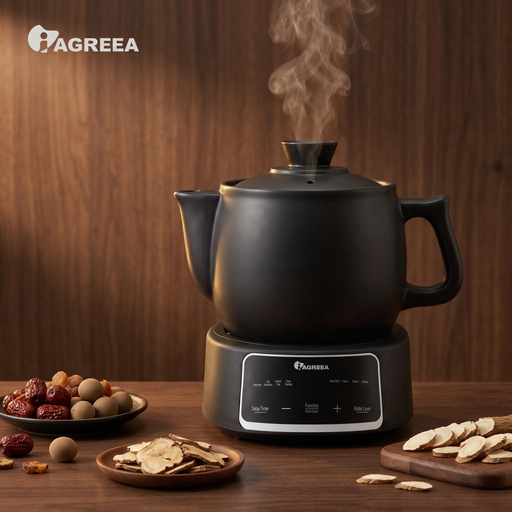 Image unavailable
The product information mentions a dedicated soup setting. Compare the instructions for this cooking pot with the method for your lentil soup.
The product name lists a 3.5 L capacity, 600 W power, four programmes and a delay-start timer of up to 24 hours.
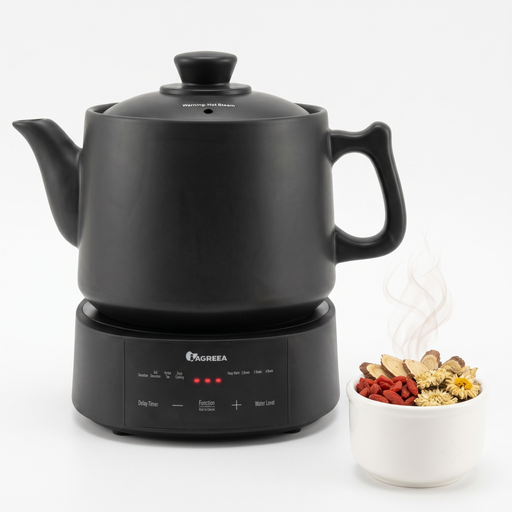 Image unavailable
The product information mentions making soup. Check that the settings and instructions suit the cooking method you want to use.
The product name lists a 4.5 L capacity and 600 W power. It also mentions a delay-start timer of up to 24 hours, four programmes and an adjustable water level.
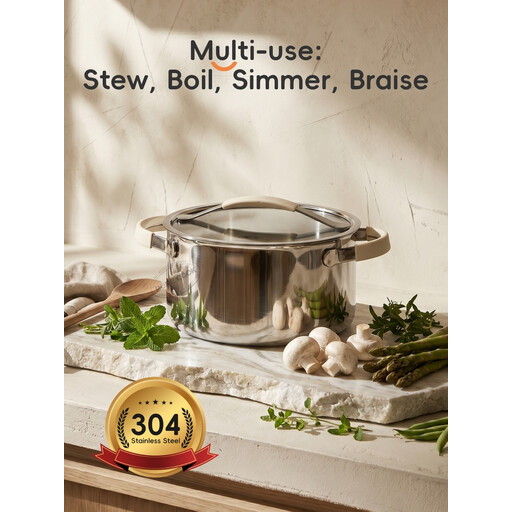 Image unavailable
A cooking pot for anyone who wants to cook lentils on a suitable hob and check for doneness themselves.
The product name lists a three-ply 304 stainless steel construction, a 24 cm diameter, a 5.64 QT capacity and a matching lid. The pot is described as suitable for all hobs.
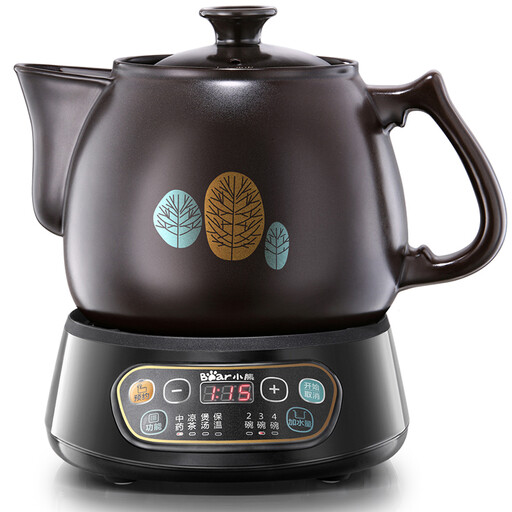 Image unavailable
The product information mentions using it for soup. Check the instructions to see whether the cooking method suits your recipe.
The product name lists a 3.5 L capacity and a ceramic pot.
Don’t assume that you can. The Voedingscentrum advises that dried pulses need to be boiled until tender; lentils from a tin, jar or pouch only need reheating. For dried lentils, follow the cooking instructions and check that they are tender, regardless of the appliance’s stated cooking time.
No. The Consumentenbond distinguishes between blenders that purée soup and models that can also heat ingredients. Check that your chosen appliance actually heats food.
Cool cooked lentils quickly and store them in a sealed container in the fridge. For cooked lentils without salt, the Voedingscentrum recommends keeping them for two days in the fridge or three months in the freezer. For soup made with other ingredients, also check the storage advice for those ingredients.
According to the Rijksoverheid, you’re entitled to a product that works properly, but there is no fixed statutory guarantee period in the Netherlands. If a product is faulty, contact the seller; a manufacturer’s guarantee is separate from your statutory rights.
According to the Rijksoverheid, when you buy from a business at a distance, you’ll often have a 14-day cooling-off period. Check the seller’s information for the terms that apply to your purchase.