
Christmas guests who need to avoid peanuts
A guest with a peanut allergy needs a snack that contains no peanuts. Jeroen Bosch Hospital advises people with a peanut allergy to avoid foods containing peanuts.


Start with the specific restriction: peanuts, including unsalted ones, are not suitable for a guest with a peanut allergy. Choose an alternative for them, and check that product for any other relevant allergens too. If peanuts are allowed, check the ingredients and warnings for the exact product, as a coating may introduce additional allergens. Serving snacks separately and making them easy to identify is a practical way to help prevent cross-contamination, but it cannot guarantee that a buffet is allergen-free.
A guest with a peanut allergy needs a snack that contains no peanuts. Jeroen Bosch Hospital advises people with a peanut allergy to avoid foods containing peanuts.
If peanuts are allowed but, for example, gluten or milk needs to be avoided, check the ingredients and warnings for the exact product. HANOS's information about Duyvis Borrelnootjes Cocktail shows why coated snacks need to be checked separately.
When guests have different dietary requirements, keeping packaging easy to identify and serving products separately can help prevent mix-ups. The Netherlands Nutrition Centre explains how cross-contamination can happen unintentionally.
First, find out what each guest needs to avoid. Flavour, quantity and how you serve the snacks come afterwards.
Choose this when: a guest needs to avoid peanuts.
Bear in mind: a peanut-free snack is not automatically free from other allergens; check the information about cross-contamination too.
Choose this when: peanuts are allowed and you want to check the product for another specific dietary restriction.
Bear in mind: unsalted tells you about the salt content, not whether the product contains gluten, milk or other allergens.
Choose this when: the guest can eat the ingredients in that exact coated product.
Bear in mind: for the Duyvis Borrelnootjes Cocktail product reviewed, HANOS lists gluten and milk, among other ingredients. This information does not automatically apply to other products.
| Consideration | What to check when buying | Who does this matter to? |
|---|---|---|
| The right restriction | Ask which ingredient needs to be avoided; peanuts themselves are an allergen. | If I’m shopping for a guest with a peanut allergy, peanuts are off the menu, even if they’re unsalted. Around 31% of consumers prioritise avoiding peanuts. |
| Ingredients and coating | Check the exact flavour, ingredients and allergen warnings on the packaging. | If peanuts are allowed but another ingredient needs to be avoided, I want to check the ingredients in that particular product. Around 31% of consumers prioritise a specific dietary restriction like this. |
| Cross-contamination | Read warnings about possible traces and keep snacks clearly identifiable and separate. | When serving a buffet for people with different dietary requirements, I want to minimise mix-ups and cross-contamination as much as possible. Around 25% of consumers prioritise careful separation when serving. |
| Quantity and storage | Compare pack sizes and follow the storage instructions on the exact packaging. | Once I’ve confirmed a snack is suitable, I want to choose an amount that works for my guests and store any leftovers properly. Around 13% of consumers prioritise quantity and storage. |
Albert Heijn advises checking the packaging before eating, as product information can change. A claim such as ‘unsalted’ or ‘no artificial colours’ does not prove that a product is free from a particular allergen.
Without further detail, the term does not tell you which ingredient has been excluded. Peanuts themselves are an allergen; a general claim does not prove that a product is suitable for every food allergy.
Ask which ingredient needs to be avoided and check the exact product accordingly. If a guest needs to avoid peanuts, do not buy them a product containing peanuts.
For the Duyvis Borrelnootjes Cocktail product reviewed, HANOS lists gluten and milk as well as peanuts. This applies to that product, not automatically to other coated snacks.
Check the ingredients and allergen information for the exact flavour; don’t assume information about plain peanuts or another product applies.
Cross-contamination can also happen during preparation or serving. And if snacks are transferred to another container, it can be harder to check the original product information.
Keep the packaging to hand and serve suitable snacks separately, making them easy to identify. Use separate serving utensils as a practical precaution. This cannot guarantee that cross-contamination will not occur.
The size of a pack does not change its allergen status. A larger quantity is only useful if the snack is suitable for your guests and you can store any leftovers according to the packaging instructions.
Check dietary suitability first, then compare the pack sizes and storage instructions for the exact products.
Duyvis sells plain peanuts as well as coated peanuts. The unsalted variety is for anyone looking for peanuts without added salt.
Albert Heijn sells own-brand AH peanuts, including an unsalted variety for your everyday shop.
Jumbo sells products including Jumbo Unsalted Peanuts in a 250 g pack.
Lidl’s Alesto range includes peanuts in a spiced batter coating.
ALDI’s Dutch product page describes Trader Joe’s Peanuts as unsalted and sold in a 250 g pack.
PLUS describes its product as extra-large unsalted peanuts in a 275 g tub.
These Joybuy products all contain peanuts and are for situations where peanuts are allowed. They differ in preparation and form, among other things; none is an alternative for a guest who needs to avoid peanuts.
 Image unavailable
An option when peanuts are allowed and you’re looking for unsalted peanuts.
The description lists 99% peanuts and sunflower oil, and mentions that cashews may be present; check the current packaging for relevant ingredients and warnings.
 Image unavailable
A roasted variety for situations where peanuts are allowed and you’re looking for unsalted peanuts.
The description lists 100% peanuts and says they are unsalted; the product name says they are roasted.
 Image unavailable
An option for guests who can eat peanuts and want to shell them themselves.
The peanuts are in their shells; the description mentions possible traces of nuts. Bear in mind that they need shelling, and check the packaging.
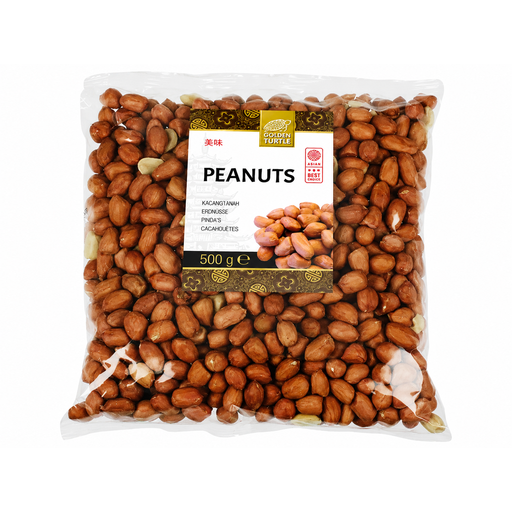 Image unavailable
An option when peanuts are allowed and you want to prepare a snack yourself.
The product description says these are raw peanuts with their skins on; it suggests roasting and seasoning them to make a snack. Bear in mind that you’ll need to prepare them before serving.
No. Unsalted peanuts still contain peanuts. Jeroen Bosch Hospital advises people with a peanut allergy to avoid foods containing peanuts, so choose a snack without peanuts for that guest.
Not necessarily. For the Duyvis Borrelnootjes Cocktail product reviewed, HANOS lists gluten and milk, among other ingredients. Check the ingredients and warnings for the exact product; this information does not automatically apply to other products.
Not necessarily: this warning is about the possible unintentional presence of an allergen due to cross-contamination. The Netherlands Nutrition Centre explains that an allergen can get into a product unintentionally, for example during production. Read the warning on the packaging for the exact product.
Keep the original packaging with the product information and serve suitable snacks separately, making them easy to identify. Using separate serving utensils and preventing mix-ups are practical precautions against cross-contamination, but they cannot guarantee that a snack is allergen-free.
Bear in mind the risk of choking. The MDL Fonds says whole nuts are not safe for children under four. Choose a texture that is suitable for their age and meets their dietary requirements.