
Small gatherings where you want to limit leftovers
Planning one Christmas get-together for a few people? Look at the total weight, not just the number of packets in a pack. Also consider whether you’ll use any unopened toast later.


If you’re buying toast for one small Christmas get-together, compare the net weight with how much you expect to serve. A 100–120 g pack is a more sensible first choice than 240 g if you want to avoid having much left over. A 240 g pack is better suited to several occasions; individual inner packets can help you avoid opening everything at once. Check the exact product’s allergen and nutrition information for your guests, too.
Planning one Christmas get-together for a few people? Look at the total weight, not just the number of packets in a pack. Also consider whether you’ll use any unopened toast later.
If you’re serving toast at different times, a larger pack with individual packets can be practical. Check how much toast you open each time, and seal any opened packets well.
If a guest has an allergy or specific dietary requirements, the ingredients in the chosen product matter. Check the ingredients, possible traces and nutritional values on the current packaging; don’t rely on the name ‘Melba toast’ alone.
First, match the total amount to the number of occasions you’ll be serving it. Then consider how you’ll store unopened and opened toast, and check any labelling requirements that apply to your guests.
| What to consider | What to check when buying | Who it matters to |
|---|---|---|
| Choosing the right amount | Compare the net weight with your plans: the examples listed contain 100 g, 120 g or 240 g. If you’re buying a multipack, check the total weight too. | For one small snack occasion, I don’t want much toast left over. Around 40% of consumers prioritise buying an appropriate amount. |
| Keeping toast fresh | Check whether the pack has individual packets and whether you can store opened toast in a dry, well-sealed container. | If I’m serving toast more than once, I want to open only what I need each time. Around 30% of consumers prioritise storing unused toast. |
| Ingredients for guests | Check the allergens and possible traces on the exact product packaging; compare salt and fibre per 100 g if these values matter to your choice. | If a guest needs to avoid certain ingredients, I want to know what’s in this product. Around 30% of consumers give ingredients the highest priority. |
The toast packs listed are labelled in grams, sometimes with the number of inner packets. The term doesn’t tell you how much toast you’re buying.
Compare the net weight and number of packets with how much you need for this Christmas get-together.
According to Albert Heijn, AH Melba toast naturel consists of 12 packs of 6 toasts, but contains 240 g in total. Smaller inner portions don’t change the overall amount.
Choose this kind of pack if you want to use the remaining packets another time; otherwise, check the total weight of a smaller pack first.
The plain and wholemeal varieties listed contain wheat or other cereals containing gluten. Products may also differ in their soya, sesame or possible traces.
Check the current packaging for the product you’ve chosen. Voedingscentrum recommends looking for the ‘gluten-free’ label or the Crossed Grain symbol when choosing gluten-free products.
A mention of ‘salt’ in an ingredients list doesn’t tell you which type of salt was used. According to Voedingscentrum, using baker’s salt in bread isn’t compulsory.
If the type of salt matters to your choice, check the packaging or ask the manufacturer.
Jumbo lists plain and wholemeal Van der Meulen Melba toast, both in 120 g packs.
According to Albert Heijn, AH Melba toast naturel comes in a 240 g pack with 12 individual packets of 6 toasts.
ALDI Nederland lists Sun Snacks Melba Toast Naturel in a 240 g pack.
These 100 g and 65 g packs are options if you want to buy a smaller amount for a small Christmas get-together. Note the difference in product type: the second option is rice toast, not classic Melba toast.
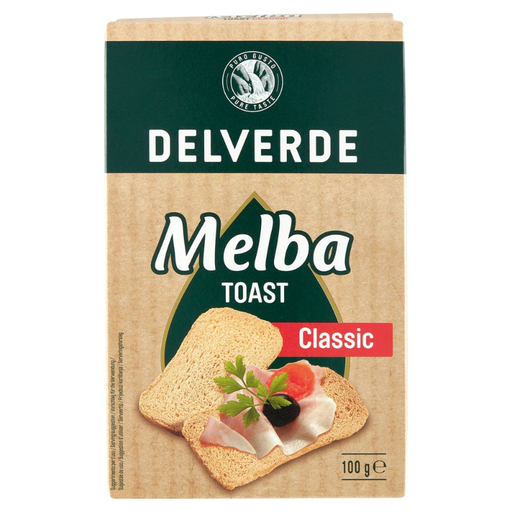 Image unavailable
The 100 g pack is an option if you’re looking for Melba toast for one small occasion. According to Joybuy’s product information, this variety contains gluten from wheat and barley; check the current packaging for other allergens and possible traces, too. If you want to open only some of the toast at a time, check whether the pack contains individual packets.
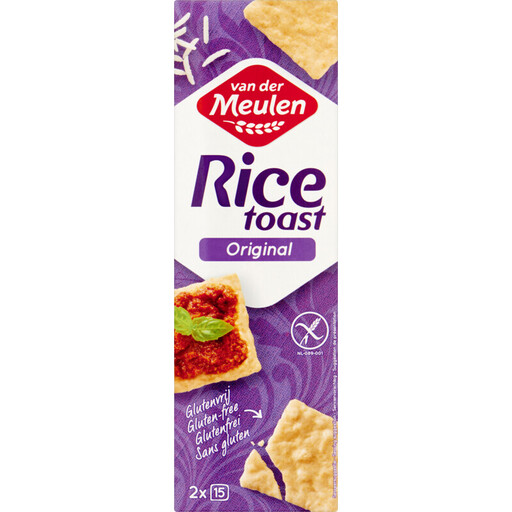 Image unavailable
This 65 g pack is an option if you want to buy a small amount of rice toast; it isn’t classic Melba toast. If a guest has an allergy or specific dietary requirements, check the current packaging: the available allergen information isn’t consistent. Don’t rely on a gluten-free claim in a description without checking it first.
Don’t use ‘half loaf’ as a measure of how much toast you’re buying: the packs listed are labelled as 100 g, 120 g or 240 g. Compare the net weight and any inner packets with the number of times you plan to serve toast.
Don’t assume it is: the Melba toast varieties listed contain wheat or other cereals containing gluten. For a gluten-free choice, Voedingscentrum advises checking for the ‘gluten-free’ label or the Crossed Grain symbol. Check the packaging of the exact product you plan to serve.
No, the product category alone doesn’t confirm this. Voedingscentrum states that using baker’s salt in bread isn’t compulsory. Check the label or ask the manufacturer which type of salt was used in the toast you’ve chosen.
Store opened toast in a cool, dry, dark place in a well-sealed container. Voedingscentrum’s storage guide recommends keeping opened toast and crispbreads in a kitchen cupboard for up to one month; also look out for loss of crispness, a stale smell or a loss of flavour.