
Buyer planning lots of Christmas market portions
You want to work out in advance how many rusks you’ll need. Checking the number of rusks and the weight per pack helps you avoid treating packs with different quantities as if they were the same.


Choose plain rusks if you’re mainly planning to serve lots of simple portions at your Christmas market. Compare both the number of rusks and the weight per pack. Wholegrain is a good choice if you specifically want a wholegrain product, while multiseed or baker’s rusks offer a different presentation. For every type, check the ingredients and make sure the rusks go well with your chosen toppings.
You want to work out in advance how many rusks you’ll need. Checking the number of rusks and the weight per pack helps you avoid treating packs with different quantities as if they were the same.
You’re looking for rusks that are specifically labelled as wholegrain and want to be able to check the nutritional information on the pack you choose.
You’re considering seeded rusks or another type to give your topped portions a particular look. Ingredients and allergens are also important for visitors.
First decide whether serving enough portions, choosing wholegrain or presenting your toppings is the priority for your stall. Then compare the packs and labels of the varieties that meet your needs.
| What to consider | What to check | Who it matters to |
|---|---|---|
| Number of portions | Check the number of rusks and the weight per pack; one pack won’t always contain the same amount as another. | If I’m serving lots of simple portions, I want to know how many packs I’ll need. Portion planning is the priority for around 50% of consumers. |
| Wholegrain and nutritional information | Check that the product is labelled wholegrain and compare the fibre and other nutritional values on the label for that specific variety. | If you specifically want to offer wholegrain rusks, the product name alone isn’t enough; check the label too. Around 30% of consumers prioritise this choice. |
| Presentation and toppings | Check the size, ingredients and allergens; don’t assume the rusks will suit every topping. | If I’m serving a topped Christmas market snack, I want the variety I choose to suit the presentation I have in mind and my visitors. This is the priority for around 20% of consumers. |
The number of rusks in a pack matters when you’re planning portions. The weight can also vary between varieties.
Make a note of the number of rusks and the pack weight for each option before working out how many packs you’ll need.
These terms don’t describe the same product characteristic. According to the Voedingscentrum, wholegrain cereals contain more fibre than white cereals, but nutritional values vary between rusk varieties.
Check the specific pack for the wholegrain label, ingredients and nutritional values per 100 g.
Ingredients vary between varieties. Wheat, egg or sesame may be relevant if visitors ask what’s in a topped snack.
Keep the pack or allergen information for the variety you’re using to hand, and check it again if you switch products.
Once opened, rusks can go soft or lose their flavour. The Voedingscentrum lists these as signs of declining quality.
Keep spare packs sealed and store opened rusks in a dry, airtight container.
Bolletje offers baker’s rusks, wholegrain rusks and multiseed varieties, among other options. Compare the features of each pack individually.
AH stocks plain and wholegrain rusks.
PLUS offers its own-brand plain rusks alongside rusks from other brands.
Goud Gebakken is an ALDI rusk brand, with plain and wholegrain available as separate varieties.
These products include wholegrain rusks, multiseed rusks and another rusk variety to consider for Christmas market portions. The number of rusks or the pack weight varies, so check the pack for ingredients and allergens too.
 Image unavailable
A wholegrain variety for anyone counting how many Christmas market portions they can serve per pack. Before serving, check the ingredients and allergens on the pack.
 Image unavailable
A wholegrain option for a stall where you’re planning portions by the pack. Check the pack weight too, and look at the allergen information on the label.
 Image unavailable
A multiseed variety to consider for topped Christmas market portions. Check the ingredients and allergens, and try your chosen topping before preparing larger quantities.
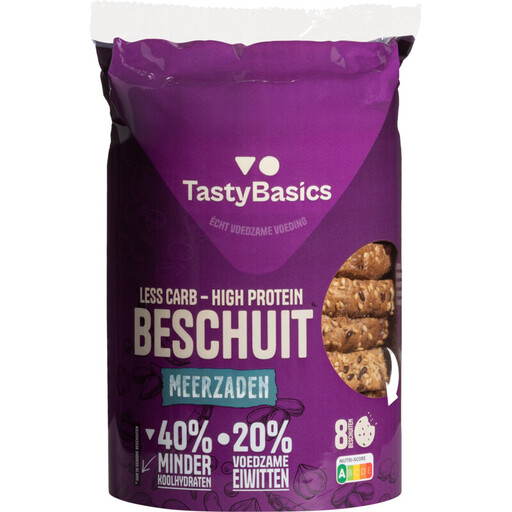 Image unavailable
A multiseed variety with the pack weight listed. For portion planning, check the number of rusks on the pack too, along with the allergen information.
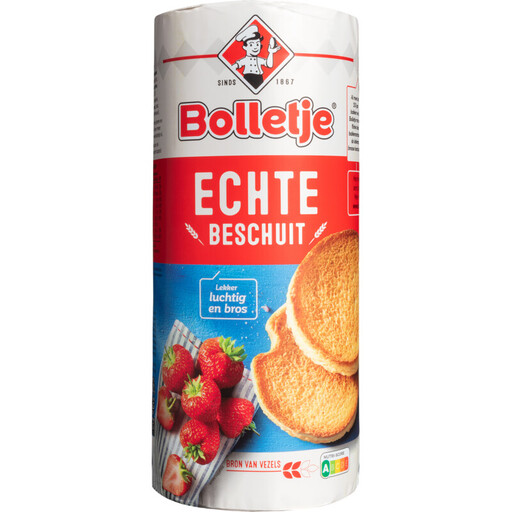 Image unavailable
Rusks for anyone who wants to count portions by the pack. When planning, compare the pack weight too, and check the ingredients and allergens for this variety.
No. Choose wholegrain if you specifically want to offer a wholegrain product. According to the Voedingscentrum, wholegrain cereals contain more fibre than white cereals; check the nutritional information for the rusk variety you’ll actually be serving.
No, don’t assume this for any particular variety. Check the ingredients on the pack, or ask the manufacturer which salt is used if it matters to your choice.
Check the ingredients and allergen information for the exact variety you’re serving. Wheat, egg and sesame are worth checking in the varieties discussed, but their ingredients aren’t interchangeable; check the label again if you switch products.
Keep unopened packs sealed, and store opened rusks in a dry, airtight container. The Voedingscentrum lists softness, a musty smell and loss of flavour as signs that quality is declining.