What should you look for when buying?
When buying nut snacks for a Christmas market, shoppers may have different priorities. Compare products on a like-for-like basis and always check the information for the variant you actually intend to buy.
| What to consider |
What to look for |
Who is this important for? |
| Reduced fat content |
Compare fat per 100 g and check that the comparison with similar products is supported by evidence. |
I want demonstrably less fat for the same amount, so I check both the claim and the label for the exact variant; around 31% of consumers put reducing fat first. |
| Portion and energy |
Compare energy per 100 g and weigh the amount you want to take with you or hand out. |
I want to limit my snack portion, so I look at the portion weight and energy; around 25% of consumers choose portion control as their main priority. |
| Salt and ingredients |
Check the salt per 100 g, the proportion of nuts or peanuts, and the ingredients in any coating. |
If I’m mainly concerned about salt and the ingredients in a crunchy coating, I compare the full list of ingredients; around 19% of consumers start with salt and ingredients. |
| Allergens |
Check the allergen information for the exact variant; for unpackaged products, ask for the information before buying. |
When I’m taking snacks for other people, I want to be able to check the allergens for the exact variant before buying; around 13% of consumers put suitability for those eating the snacks first. |
| Quantity and storage |
Check the net weight and storage advice, and choose a pack size that suits the number of portions. |
For several portions, I want to be able to use the packaging and store any leftovers properly; around 12% of consumers first consider quantity and storage. |
Joybuy product picks
These products are particularly suited to taking nut snacks with you or portioning them out. Their stated fat content is above the threshold for ‘low fat’, so don’t treat them as proven reduced-fat choices.
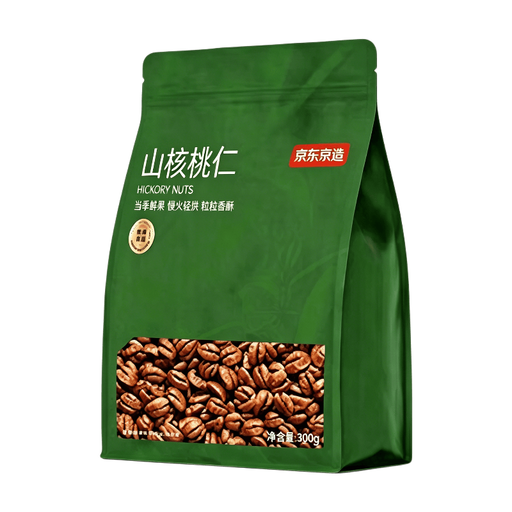 Image unavailable
J.ZAO Lin’an Small Hickory Kernels Non-Fried, 300 g
The individual packs may be handy if you want to take a pre-measured amount with you.
Joybuy’s product information lists a total of 300 g in individual packs.
Fat: 46,4 g per 100 g according to the product information on Joybuy. This is above the European Commission’s threshold of no more than 3 g per 100 g for solid foods to be described as ‘low fat’.
View on Joybuy
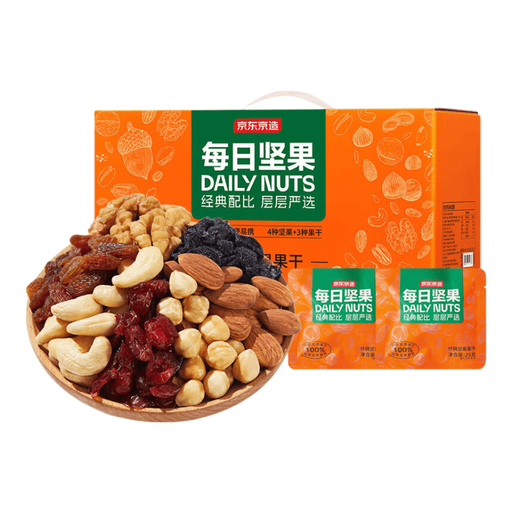 Image unavailable
J.ZAO Classic Daily-Nut Mix, 750 g (30 sachets)
The 25 g sachets may be handy if you want to take or hand out individual portions.
Joybuy’s product information lists 750 g in total, with 30 sachets of 25 g. The mix contains walnuts, raisins, cranberries, blackcurrants, almonds, cashew nuts and hazelnuts.
Fat: 40,7 g per 100 g according to the product information on Joybuy. This is above the European Commission’s threshold of no more than 3 g per 100 g for solid foods to be described as ‘low fat’.
View on Joybuy
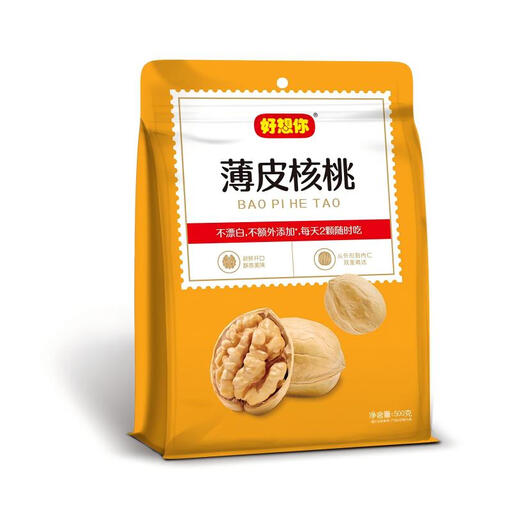 Image unavailable
Haoxiangni Thin-Shelled Walnuts, 500 g (8 packs)
The pack of eight individual portions may suit you if you want to take walnuts in set amounts.
Joybuy’s product information lists 500 g in eight packs. The walnuts need to be removed from their hard shells before eating.
Fat: 66,2 g per 100 g according to the product information on Joybuy. This is above the European Commission’s threshold of no more than 3 g per 100 g for solid foods to be described as ‘low fat’.
View on Joybuy
Frequently asked questions
Does 30% less fat mean the same as low fat?
No. ‘Reduced fat’ compares a product with similar products, while ‘low fat’ has a limit per 100 g. According to the European Commission, solid foods can contain no more than 3 g of fat per 100 g to meet the latter claim. A historical Duyvis listing at Albert Heijn says the product contains 30% less fat than the stated comparison category, but also lists 21 g of fat per 100 g.
Are unsalted or oven-roasted nuts automatically a lower-fat choice?
No. Unsalted refers to the salt content, and a term describing how a product is prepared does not prove that it contains less fat. Check the claim and nutritional values for the exact variant; for example, Jumbo lists 48,6 g of fat per 100 g for its Unsalted Cashew Nuts 200 g.
How do I calculate the nutritional values for a smaller portion?
Multiply the value per 100 g by the weight of your portion, then divide by 100. Use the values for the same variant for both fat and energy. This gives you the amount in your portion without suggesting that the composition per 100 g has changed.
What allergen information must a snack seller provide?
According to the Netherlands Food and Consumer Product Safety Authority, allergen information must be available before purchase. For prepacked products, it appears on the label; for unpackaged products, the seller can provide the information in writing or verbally, for example, with a visible notice saying customers can ask for it.
How should you store nuts after the Christmas market?
Store nuts in a dry, airtight container and follow the storage advice on the packaging. The Netherlands Nutrition Centre points out that fresh chestnuts spoil faster than most other nuts, so plan for those separately.


