
Quiet listener at home
You want to follow choral voices at a modest volume and adjust the sound from where you’re sitting, without turning the volume up.


If space is limited and you want straightforward listening, start with a compact speaker with adjustable sound. If you want to position the left and right channels of a choral recording more spaciously, consider a stereo pair. Listen to vocals and quieter passages at your usual volume: loudness or tone controls may help, but two speakers need more space and may mean a second purchase or connecting cable.
You want to follow choral voices at a modest volume and adjust the sound from where you’re sitting, without turning the volume up.
You want to hear the left-to-right positioning in choral recordings and have space to place two speakers around your usual listening position.
You play recordings through a CD player, computer or phone, for example, and want to check in advance that the inputs and controls will work with your source.
A good fit if: you have limited space and mainly want to listen through a supported app or music service.
The trade-off: you won’t get the physical channel separation of two separately positioned speakers; also check how the audio will be played.
A good fit if: you have a regular listening spot and want to use a source with a suitable connection.
The trade-off: two speaker cabinets and the connection between them take up space; specifications can’t tell you how a recording will sound at your preferred low volume.
A good fit if: you want to combine streaming with separate left and right channels; WiiM describes pairing two Sound Lite speakers for this purpose.
The trade-off: check that your chosen models are compatible with each other and that you can position both speakers appropriately.
A good fit if: you’re looking for a dedicated stereo system with connections such as USB-C or HDMI ARC; KEF lists these connections for the LSX II LT.
The trade-off: check the cable route you’ll need and the space available; the connection options aren’t an independent listening test at low volume.
| What to consider | What should you check? | Who is this important for? |
|---|---|---|
| Choral singing at low volume | Listen to a familiar recording at your intended volume and check whether you can adjust the bass and treble separately. Sonos describes loudness as a setting that boosts certain frequencies, including bass, at low volumes. | I want to follow vocals and quieter passages without turning up the volume; around 33% of consumers say clarity at low volume is their top priority. |
| Stereo separation | Check that you can position two speakers well and that the specific models you’ve chosen can work as a stereo pair. Sonos has requirements for which models can be paired. | I want to hear the left-to-right positioning in choral recordings and have space around my listening spot; around 27% of consumers say stereo separation is their top priority. |
| Connecting to your source | Make a note of your source’s output and compare it with the input on the exact model; also check whether you’ll need an adapter. For example, the Sonos Era 100 requires a separately sold adapter for its line input. | I want to connect my existing phone, computer or music player without guessing which connection will work; around 20% of consumers say source compatibility is their top priority. |
| Positioning and living space | Measure the space available for one or two speakers and listen from the position where you plan to sit. If you share your living space, also consider whether the sound might disturb others. | I want a setup that fits my room and takes my living situation into account; around 20% of consumers say quiet, suitable positioning is their top priority. |
A power rating isn’t a listening test from your listening position. ISO 226:2023 also explains that how loud tones seem depends on both their frequency and sound level.
Listen to a familiar choral recording quietly and compare the available tone or loudness settings at the volume you use at home.
You need compatible models and suitable positioning for separate left and right channels; a single centrally positioned device doesn’t offer the same physical channel separation.
Check model compatibility and decide in advance where you’ll put both speakers.
A USB-C port or wireless connection doesn’t automatically mean every source will work without additional equipment.
Compare your source’s output with the input on the exact model and check whether you’ll need an adapter.
The Era 100 is a compact streaming option; Sonos says two compatible units can be used as a stereo pair.
The R1280DBs is an active bookshelf speaker pair for a fixed listening spot and sources with suitable connections.
The Sound Lite is a streaming option; WiiM describes adding a second Sound Lite to create separate stereo channels.
The Home 150 and Home 150 NV are compact HEOS speakers. Denon says the NV version doesn’t have a built-in microphone or voice assistant.
The LSX II LT is an integrated active stereo system for a fixed setup.
This selection includes portable Bluetooth speakers and compact PC and desktop speaker sets. Check that the connections and positioning suit your recording source and listening spot.
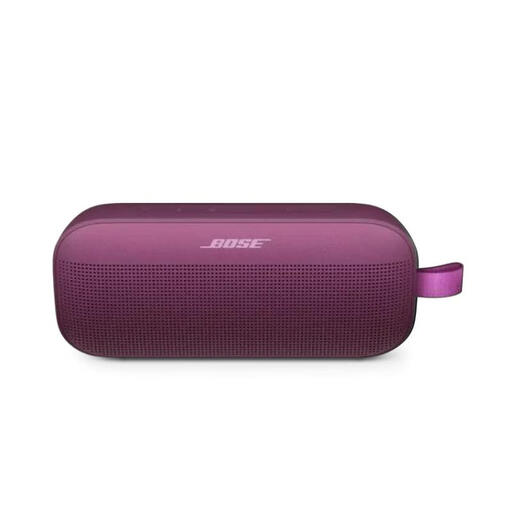 No image available
Suited to anyone who wants to adjust the sound in the Bose app; for stereo playback, the product information says you can pair it with a second compatible Bose speaker.
You’ll need two compatible speakers for stereo playback.
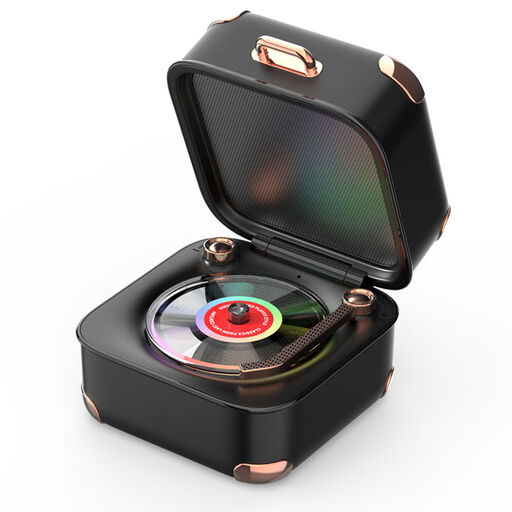 No image available
An option if you want to play music via Bluetooth, a TF/SD card or Type-C; check whether one of these connection options suits your source.
The product name mentions a rotating disc and RGB lighting.
 No image available
Suited to anyone who wants to play music from a Bluetooth device and is looking for a portable speaker.
The product name lists Bluetooth 5.4 and the colour Green.
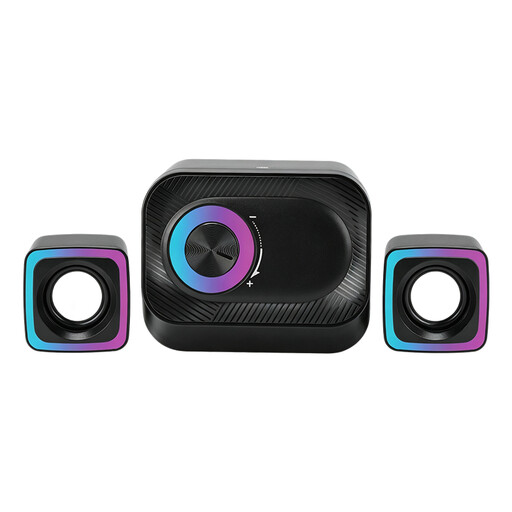 No image available
Suited to a PC setup if you’re looking for two satellite speakers and a volume control dial.
According to the product description, the system is for indoor use in dry conditions only.
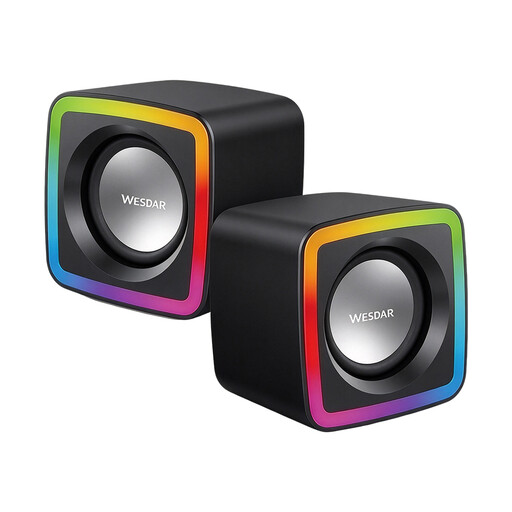 No image available
Suited to anyone looking for two speakers for stereo playback in a compact desktop setup.
According to the product description, the set is for indoor use in dry conditions only.
Not necessarily for every listener. Sonos says the loudness setting boosts certain frequencies, including bass, at low volumes. Try it with a recording you know well to see what sounds right to you.
No. Check compatibility for each system and model. Sonos has requirements for which models can be paired, while WiiM describes stereo pairing with two Sound Lite speakers.
Compare the device’s output with the input on the exact speaker model. The Sonos Era 100 requires a separately sold adapter for an external line source; Edifier lists optical and line inputs, among others, for the R1280DBs, while Audioengine lists USB-C audio for the A2+ Gen 3.
The Dutch government advises trying to agree together on how to manage noise nuisance, for example by deciding when music can be played. If the problem continues, it suggests contacting your landlord, residents’ association or local council, among others; the source doesn’t set a general permitted volume for music at home.
When you buy online from a business, you’ll often have a 14-day cooling-off period. You’re also entitled to a product that meets reasonable standards of quality; according to the Dutch government, the Netherlands has no fixed statutory guarantee period, and you should contact the seller if a product is faulty. Check the terms that apply to your purchase.