
For cooks who want pieces of olive
If you want recognisable pieces rather than a smooth paste for your community meal, look for controls that let you adjust the chopping as you go. KitchenAid and Bosch list a pulse setting on the models mentioned.


If you want recognisable pieces of olive, look for a mini chopper or food processor that lets you control the process in short bursts. For example, KitchenAid lists a pulse setting for the 5KFC3516EER. Then compare the amount you want to prepare in each batch with the stated bowl capacity, but don’t assume that capacity represents a confirmed quantity of olives. Also consider the space needed for storage, what else you’ll use it for and how easy each part is to clean.
If you want recognisable pieces rather than a smooth paste for your community meal, look for controls that let you adjust the chopping as you go. KitchenAid and Bosch list a pulse setting on the models mentioned.
If you’re cooking for a larger group, compare the amount you want to prepare in each batch with the bowl capacity and the number of batches you may need. The stated bowl capacity doesn’t tell you how many olives you can practically chop at a time.
If you want cleaning up after the meal to be straightforward, check the cleaning instructions for the bowl, blades and lid separately. For example, Tefal states that the lid of the K1320404 is not dishwasher-safe.
First decide how much control you want over the texture. Then compare the bowl capacity and the number of batches you may need, and finally check the cleaning instructions for each part.
A good choice if: you want to chop olives in smaller batches and check the texture as you go. KitchenAid lists a pulse setting and an 830 ml bowl for the 5KFC3516EER; Kenwood lists two pressure-sensitive speeds and a 500 ml bowl for the CHP61.100WH.
The trade-off: you may need to work in several batches for a larger quantity. The stated bowl capacities are not confirmed working quantities for olives.
A good choice if: you also want to prepare other ingredients. Bosch lists a pulse function, a 2,3 l bowl and accessories for slicing and grating, among other tasks, for the MCM3501M.
The trade-off: the bowl capacity doesn’t confirm how many olives it can process well in each batch. Accessories also take up storage space and need cleaning.
A good choice if: you want to work without a plug and control how finely the olives are chopped with repeated pulls. Tefal lists a 900 ml bowl for the K1320404.
The trade-off: manual operation means pulling the cord repeatedly. Tefal says the lid is not dishwasher-safe.
| What to consider | What to check before buying | Who should consider this? |
|---|---|---|
| Control over texture | Check whether the appliance has a pulse setting or short-burst control, and which chopping blade is included. | I want to keep recognisable pieces of olive and adjust the texture as I chop; around 31% of consumers prioritise control over coarse or fine chopping. |
| Amount per batch | Compare the bowl capacity with the maximum fill level in the manual and the quantity required by your recipe. | For a meal for a large group, I want to know how many olives I can prepare in each batch and whether I’ll need extra batches; around 25% of consumers prioritise the amount per batch. |
| Cleaning | Check the instructions for the bowl, blades, lid and motor base separately. | After preparing food, I want to know which parts are easy to clean; around 19% of consumers prioritise ease of cleaning after use. |
| Working without a plug | Consider a manual pull-cord mechanism in relation to the amount you plan to prepare and the repeated effort involved. | I want to be able to chop olives somewhere without a plug socket; around 13% of consumers prioritise being able to work without electricity. |
| Other uses | Choose extra slicing or grating attachments only if you expect to use them. | If I want to use the appliance for other preparations too, its extra functions will influence my choice; around 12% of consumers prioritise versatility. |
The stated capacity doesn’t tell you how many olives the instructions say you can process at once. You may need to prepare the recipe in smaller batches.
Check the filling and operating instructions for the model you choose, and adjust the quantity to suit your recipe.
Cleaning instructions can vary from one part to another. Tefal states that the bowl and blades of the K1320404 are dishwasher-safe, but the lid is not.
Check the instructions for the bowl, blades, lid and motor or pull-cord mechanism separately.
With the manual Tefal K1320404, you control the process by pulling the cord. You’ll need to repeat this action for several batches.
Weigh up the effort involved against the benefit of preparing food without a plug socket and the quantity you want to make.
The product range mentioned includes both the compact MMR08A1 mini chopper and the larger MCM3501M food processor.
The CHP61.100WH is a compact electric mini chopper for anyone who works in smaller batches.
The 5KFC3516EER is a mini food chopper for anyone who also wants to prepare dips or dressings.
The K1320404 is a manual alternative for anyone who wants to work without a plug socket.
For preparing olives for a community meal, you can compare compact mini choppers, larger food processors and a manual chopper below.
 No image available
Suitable if you want to chop olives as part of a larger food preparation; the product information recommends using short pulses. The product title lists 750 W and 1,8 l. Removable parts are described as dishwasher-safe.
 No image available
The two stated bowl sizes give you the option of preparing larger or smaller quantities. The product information lists two speeds and dishwasher-safe bowls; the bowl capacity is not a confirmed quantity of olives per batch.
 No image available
The product information recommends short pulses to achieve the desired texture. According to the product information, this model has a 2 l bowl, two speeds and stainless steel blades; continuous use is limited to 30 seconds at a time.
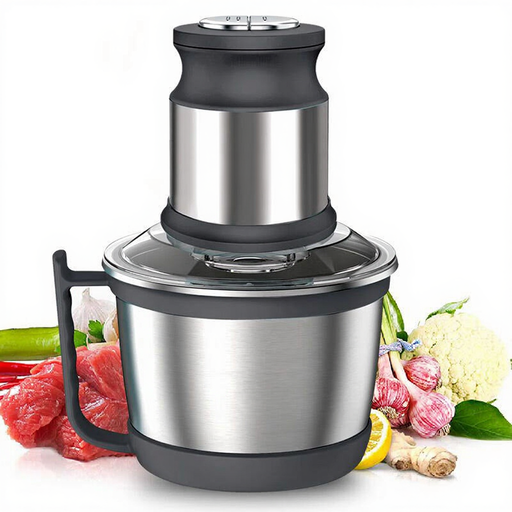 No image available
The product title mentions chopping and a 3 l bowl, making this an option if you’re considering preparing a larger quantity. The product information lists 800 W; the bowl capacity doesn’t confirm how many olives you can process per batch.
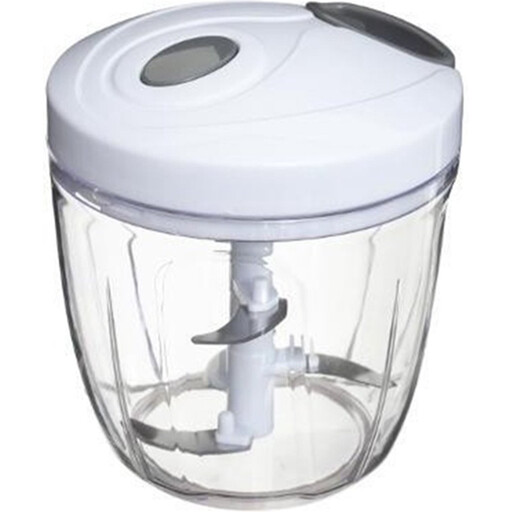 No image available
A manual option if you want to chop olives without electricity. The product information lists a 900 ml bowl, five removable blades and hand-washing; this model is not dishwasher-safe.
Not necessarily; it mainly depends on how many olives you need to prepare and whether you’re happy to make several batches. Manufacturers list bowl capacities of 500 ml and 830 ml for the compact models mentioned, and a 2,3 l bowl for the Bosch MCM3501M. These are bowl capacities, not guaranteed quantities of olives per batch.
Choose an appliance that lets you process ingredients in short, controlled bursts, and follow the instructions. KitchenAid lists a pulse setting for the 5KFC3516EER; Kenwood describes two speeds for the CHP61.100WH, which vary according to how much pressure you apply to the control.
Switch off an electric appliance, unplug it and follow the cleaning instructions for each part. Tefal states that the bowl and blades of the K1320404 are dishwasher-safe, but the lid should be cleaned with a damp sponge or cloth.
Use clean hands and utensils, and chill the dish correctly. The Voedingscentrum recommends keeping opened olive tapenade in the fridge for four days and using a clean spoon. This advice doesn’t automatically guarantee the shelf life of every homemade recipe.
Rules on selling food don’t automatically apply to a private meal. The NVWA sets out requirements for people who sell food from home or provide catering, and states that anyone who sells food several times a year must follow a food safety plan. The exact requirements therefore depend on how the event is organised.