
Small-portion cook
You want to chop a modest amount of cooked chicken at a time, rather than routinely using a large bowl. Check the amount the manufacturer recommends for chopping with each model.


For small portions of cooked chicken, a standalone mini chopper is a sensible place to start. If you already have a stick blender with a demonstrably compatible connection, a chopper attachment could also be an option. Choose based on your portion size, how much control you want over the texture and how easy each part is to clean. A larger bowl alone doesn’t tell you how much chicken you can process effectively.
You want to chop a modest amount of cooked chicken at a time, rather than routinely using a large bowl. Check the amount the manufacturer recommends for chopping with each model.
You want to be able to stop once the chicken has reached your preferred texture, for example for a filling, rather than chopping it into a finer mixture.
You already own a stick blender and only want to choose a chopper attachment if you can confirm that it fits your appliance.
A good fit if: you regularly process small portions and don’t have a compatible stick blender. Kenwood states that the CHP61.100WH has a 500 ml bowl.
Keep in mind: 500 ml is the bowl capacity, not a confirmed working quantity for cooked chicken; a standalone appliance also needs storage space.
A good fit if: you already own a compatible Braun stick blender. Braun specifically lists the MQ3–MQ5 series as compatible with the MQ20WH and gives the bowl capacity as 350 ml.
Keep in mind: the attachment won’t work on its own. Braun lists meat as a suitable ingredient, but this doesn’t confirm a specific portion size or texture for cooked chicken.
A good fit if: you want to use the appliance for other food preparation too. Kenwood states that the CHP62.400SI has a 600 ml glass bowl; KitchenAid lists an 830 ml bowl and a pulse function for the 5KFC3516EER.
Keep in mind: a larger stated bowl capacity doesn’t guarantee that a very small amount will be chopped evenly.
A good fit if: you want to work without plugging in and don’t mind pulling the cord yourself. Tefal lists a 500 ml bowl for the K1330404.
Keep in mind: Tefal says the result gets finer the more times you pull; there’s no confirmed result for cooked chicken.
| What to consider | What to look for | Who is this most important for? |
|---|---|---|
| Amount per batch | Compare the bowl capacity with the model-specific chopping or filling instructions; don’t infer the working quantity from the number of millilitres alone. | If I usually only chop a little chicken, I want to know how much the appliance can handle per batch. Around 40% of consumers prioritise small portions. |
| Control over texture | Check whether the model allows pulsing or short bursts of operation. Tefal says pulling more often produces a finer result, but this doesn’t prove the same result for chicken. | For a filling, I want to keep some recognisable pieces and stop at the right time. Around 31% of consumers consider texture their main selection criterion. |
| Compatibility | Check the full model number and connection. Braun specifically lists MQ3–MQ5 stick blenders with a wavy connection for the MQ20WH. | If I already own a stick blender, I want to know whether the attachment will fit before choosing it. Around 15% of consumers prioritise compatibility with equipment they already own. |
| Cleaning | Check the cleaning instructions for each part. Kenwood says the CHP61.100WH accessories are dishwasher-safe; for the MQ20WH, Braun refers users to the manual. | After chopping chicken, I want to be able to clean each part according to its own instructions. Around 14% of consumers prioritise easy cleaning. |
A bowl’s stated capacity doesn’t automatically tell you how much you can chop in it. For example, Philips distinguishes between bowl capacity and chopping capacity for the HR1393 models; those figures don’t apply to other models.
Check the instructions for the exact model, and don’t fill the bowl based on its capacity in millilitres alone.
Braun lists specific MQ3–MQ5 stick blenders with a wavy connection for the MQ20WH. An attachment isn’t a standalone appliance.
Check your stick blender’s full model number and connection before choosing the attachment.
A cleaning label may apply to certain accessories, not every part. For the MQ20WH, Braun refers users to the manual for cleaning instructions for each part.
Check the instructions for the bowl, blade, lid and other parts individually.
Kenwood offers mini choppers with different bowl materials and capacities, which is useful if you want to compare these features.
The MQ20WH chopper attachment is most relevant if you already own a stick blender that Braun confirms is compatible.
The MMR08A1 is a standalone chopper worth considering if you’re comparing self-contained appliances.
The 5KFC3516EER is worth considering if you want a mini chopper with pulse control for preparing other foods too.
The manual K1330404 is worth considering if you want a pull-cord appliance that doesn’t need plugging in.
This selection focuses on standalone electric mini choppers and compact choppers. Check the working quantity and controls for each model to make sure they suit your portion of cooked chicken.
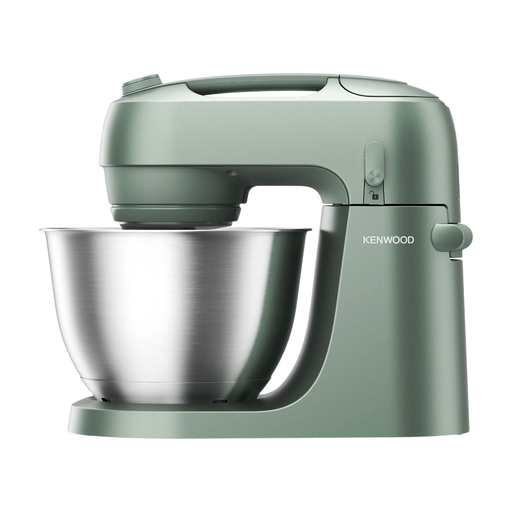 No image available
A compact chopper to consider if you want to process small portions at a time.
Power: 350 W. Removable blade. Bowl capacity: 0.5 l.
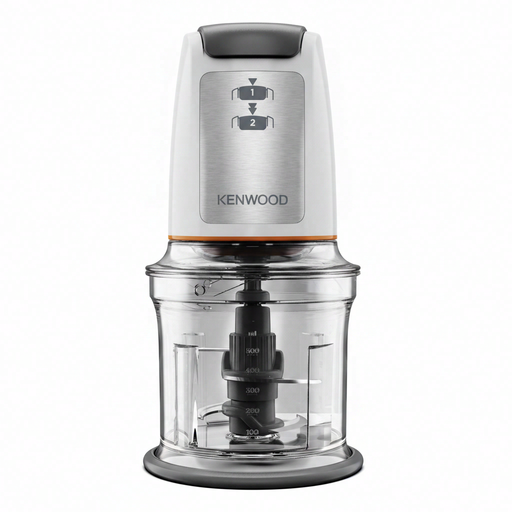 No image available
A standalone mini chopper for anyone looking for a separate appliance for small chopping tasks. Check the model-specific instructions for the amount to process per batch.
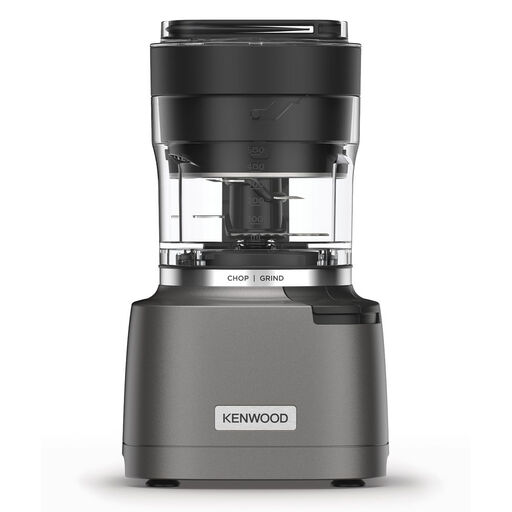 No image available
A compact chopper to consider if you’re looking for a standalone appliance; check the model-specific instructions for small portions of cooked chicken.
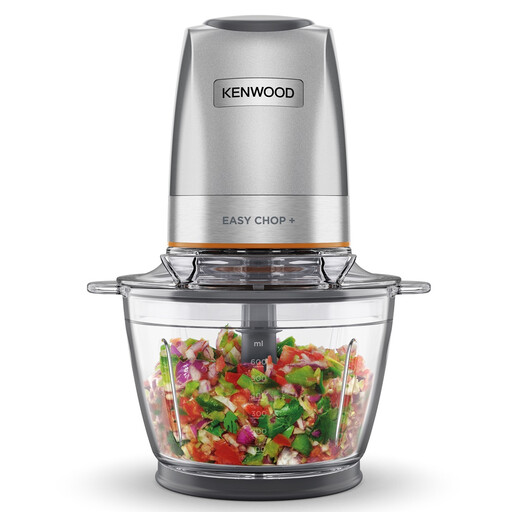 No image available
A chopper with a glass bowl to consider if you want to prepare other foods too; the bowl capacity isn’t a confirmed portion size for chicken.
The product name specifies a glass bowl.
Don’t assume you can. For the HR1393/90, Philips distinguishes between a bowl capacity of 0.7 l and a chopping capacity of 0.5 l, and specifies 100–150 g for meat. These instructions apply only to the HR1393 models mentioned; for any other model, follow its own manual.
Voedingscentrum advises cooling leftovers within two hours, storing them covered in the fridge and eating refrigerated leftovers within two days. Use clean utensils and, when reheating leftovers, heat them thoroughly until steaming hot.
This varies by model and part. Kenwood describes the CHP61.100WH accessories as dishwasher-safe; for the MQ20WH, Braun refers users to the manual to check which parts are suitable. Check the instructions for each part individually.
No. According to the Rijksoverheid, there is no fixed statutory guarantee period in the Netherlands; if a product is faulty, the retailer is your point of contact. A manufacturer’s or retailer’s warranty is in addition to your statutory rights.
According to the NVWA, CE marking is mandatory for electrical products; this is not the same as mandatory testing of every individual consumer appliance. Manufacturers and importers are responsible for ensuring that materials that come into contact with food are safe, and the NVWA doesn’t routinely check them before they are placed on the market. So a CE logo doesn’t prove that the chopper’s performance has been independently tested.