What should you look for when buying?
Compact chopper
Choose this if: you mainly prepare small portions or have limited storage space.
Bear in mind: a small bowl may mean extra chopping rounds when batch cooking.
Food processor with a larger bowl
Choose this if: you often prepare a variety of ingredients or larger quantities for several meals.
Bear in mind: a larger appliance with more parts may need more storage space and take longer to clean.
Chopping by hand
Choose this if: you only need a small amount occasionally or want very precise pieces.
Bear in mind: chopping a larger quantity of apricots by hand takes more work; KitchenAid lists manual chopping as a preparation option.
With sticky apricots, being able to control when you stop chopping matters more than bowl capacity alone. Compare the controls, the blade supplied and the quantity permitted in the instructions for the model you’re considering.
| What to consider |
What to look for |
Who is this most important for? |
| Control over texture |
Check whether the model has a chopping blade and pulse control; short pulses give you the chance to check the texture as you go. |
If I want recognisable pieces and don’t want to keep processing until they become a paste, controlling the texture comes first. Around 33% of consumers put this need at the top of their list. |
| Quantity per batch |
Compare the stated working capacity with the instructions for the exact model; bowl capacity isn’t a maximum for dried apricots. |
When preparing food for several meals, I want to know how much the instructions say can go in at once. Around 27% of consumers prioritise the workable quantity per batch. |
| Cleaning |
Check the cleaning instructions for each bowl, blade and accessory. |
If I want to keep cleaning to a minimum after chopping, I weigh this up alongside portion size. Around 20% of consumers put ease of cleaning first. |
| Space and use |
Check the dimensions, storage options and functions supplied for other food preparation tasks. |
With limited cupboard space, I look for an appliance that’s also useful for other small prep tasks. Around 20% of consumers prioritise compactness and versatility. |
Products at Joybuy
These choppers and food processors are suited to small portions or preparation tasks such as batch cooking. The bowl capacity isn’t a confirmed quantity for sticky apricots: check the manual for the permitted quantity and cleaning instructions, and consult the product documentation for applicable EU requirements and food-contact parts.
 No image available
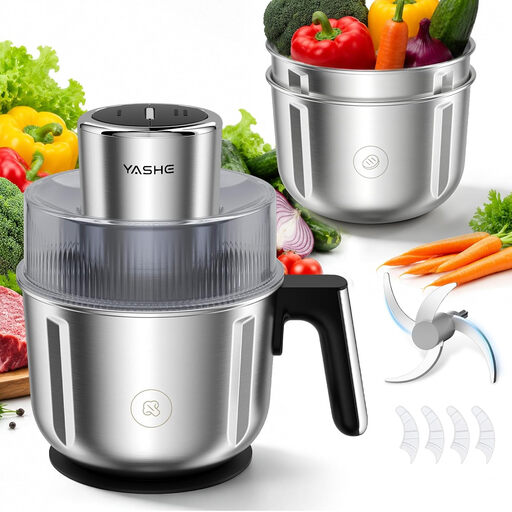
YASHE 25JM08-Q electric chopper, 3 bowls
The pulse control described may suit anyone who wants to check the texture as they chop; consult the manual for the quantity of sticky apricots to process per batch.
The product name lists three bowls. The description mentions two speeds and pulse control.
View at Joybuy
 No image available
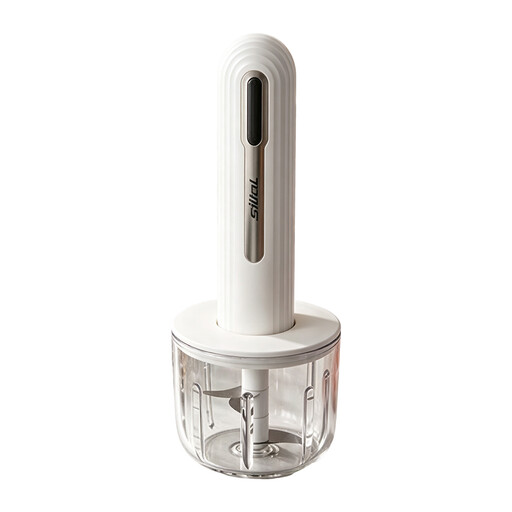
Cordless mini chopper for fruit
This compact model is designed for small portions; the description recommends short bursts of use so you can check the texture as you go.
The product name mentions a transparent bowl and cordless design. Check the cleaning instructions for removable parts.
View at Joybuy
 No image available
ochama food processor, 750 W, 1.8 l
The description mentions short-pulse operation, which may be useful if you want to check the texture as you chop; it doesn’t confirm the result with apricots.
The product name lists a power rating of 750 W and a 1.8 l bowl. The bowl capacity isn’t an apricot limit.
View at Joybuy
 No image available
Bear QSJ-D03Q1 chopper, 2 glass bowls, 300 W
The two bowl sizes may be handy for different preparations; the stated capacity doesn’t tell you how many sticky apricots are suitable per batch.
The product name lists glass bowls of 2 l and 0.6 l and a power rating of 300 W.
View at Joybuy
 No image available
IAGREEA MS-25JM08, 350 W, 3 bowls
The product name mentions pulse control, which is useful for checking the texture as you go; there’s no confirmed apricot limit per batch.
The product name lists three bowls of 2.5 l, 2.2 l and 1.8 l, a power rating of 350 W and two speeds.
View at Joybuy
Frequently asked questions
How can I stop dried apricots turning into a paste?
With a suitable food processor, use the chopping blade and short pulses, checking the texture as you go. For the relevant blade, KitchenAid recommends using cold, dried or sticky fruit; this isn’t general guidance for all brands and models.
Can I put the whole food processor in the dishwasher?
Don’t assume so: check the instructions for every bowl, blade and accessory. Magimix describes dishwasher-safe accessories for the Mini Plus and provides cleaning advice for the bowls; these instructions don’t automatically apply to other models.
What should I do if the appliance develops a fault after purchase?
In the Netherlands, you’re entitled to a product that works as it should, and there’s no fixed statutory warranty period. According to the Dutch government, the seller is your point of contact for a solution if there’s a problem with a product; a manufacturer’s warranty or additional cover you’ve purchased is separate from your statutory rights.
Which product regulations apply to an electric food processor in the Netherlands?
Electrical appliances are subject to applicable EU product regulations, including CE marking where required. Parts that come into contact with food must comply with the applicable Dutch and European rules on food-contact materials, as explained by the Netherlands Food and Consumer Product Safety Authority. A CE statement on a sales page isn’t, by itself, independent proof of compliance.


