
Making small batches of tapenade
You make a small batch each time and want to decide how coarse it is. Having control over the chopping matters more to you than having extra cutting accessories.


For small batches of tapenade where participants want to control the texture, a compact chopper is the obvious choice; ideally, choose a model you can stop partway through. A larger food processor is a better fit if you also want to chop or grate ingredients for other workshop dishes. Compare the usable amount per batch, how the appliance works and how easy its removable parts are to clean – not just the stated bowl capacity.
You make a small batch each time and want to decide how coarse it is. Having control over the chopping matters more to you than having extra cutting accessories.
You prepare food for several participants at once. Compare how much you can process per batch with the time it takes to fill and empty the bowl.
You use the appliance for different preparations, one after another. Parts that are easy to clean and careful allergen management are therefore important.
| What to consider | What should you check? | Who is this important for? |
|---|---|---|
| Control over texture | Check whether the exact model has a pulse setting or another control that lets you stop the appliance partway through, and whether the instructions cover the preparation you have in mind. | If I want participants to choose how coarse the tapenade is, I need to be able to stop and check as I go. Around 33% of consumers prioritise control over texture. |
| Amount per batch | Check the permitted quantity for this type of ingredient and work out how many batches the workshop will need. | With several participants, I want to know how often I’ll need to fill and empty the bowl. Around 27% of consumers prioritise making enough portions per batch. |
| Cleaning between preparations | Check the cleaning instructions for each part, and allow time and set aside the equipment you need to clean the bowl and blade between preparations. | If I use the appliance for different preparations one after another, I want to be able to clean the parts thoroughly. Around 27% of consumers also prioritise ease of cleaning. |
| Other workshop dishes | Make a note of any other preparations on the programme and check which accessories are included with the exact version you’re considering. | If I also want to use the appliance to chop or grate ingredients, I need to know whether the necessary accessories are included. Around 13% of consumers name versatility as their top priority. |
Bowl capacity and the amount you can actually chop are not always the same. Philips lists a 0.7 l bowl capacity and a 0.5 l chopping capacity for the HR1393/00, HR1393/01 and HR1393/90.
Check the permitted quantity for the exact model and plan your portions accordingly, rather than relying only on the number of litres shown on the box.
A smaller usable capacity could mean more batches and more cleaning than you had planned for.
A larger food processor can also chop and grate. These functions are most useful if those preparations are actually on the workshop programme.
Choose the larger model because you have specific additional preparations in mind or need its batch capacity – not just because it has more functions.
Accessories you don’t use take up extra storage space and may mean more cleaning.
The full variant code matters. For example, KitchenAid 5KFC3516EOB does not have the same model code as 5KFC3516ECU; sharing a series or bowl capacity does not automatically make these variants interchangeable.
Before you buy, compare the full model code, included parts and terms for the version you’re considering.
Kenwood offers compact Easy Chop models with different bowl capacities.
The 5KFC3516EOB is a mini chopper for small chopping and puréeing tasks.
Bosch offers both a basic chopper and a larger food processor for additional preparations.
The Daily Collection HR1393 models show why bowl capacity and chopping capacity should be considered separately.
These Joybuy products include compact choppers and larger food processors for making tapenade and preparing other dishes at a cookery workshop. For each product, compare the stated bowl capacity, controls and parts with the quantities and additional tasks involved in your workshop.
 No image available
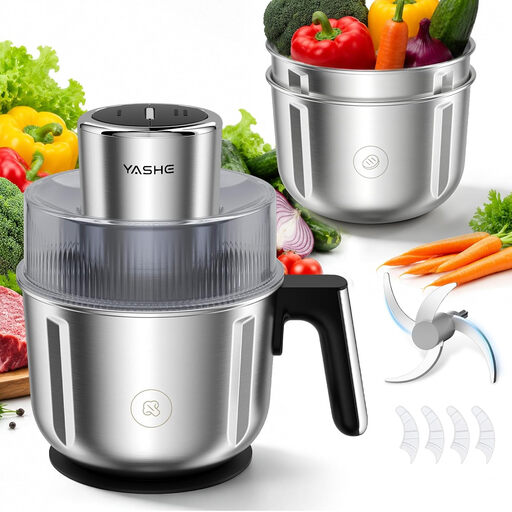
Short pulses and multiple bowls could be useful for processing different preparations separately and checking the texture as you go.
The product description lists three bowls of 1.8 l, 2 l and 2.5 l, two speeds and dishwasher-safe bowls.
 No image available
This food processor could be a good fit if you want to prepare other workshop dishes as well as tapenade.
The product name lists 750 W, a 1.8 l bowl, and slicing, grating and shredding discs. The description mentions chopping and short pulses.
The description lists removable, dishwasher-safe parts; check which parts are included with the version you choose.
 No image available
The two stated bowl sizes and controls that stop the appliance immediately could suit varying quantities and give you control over the texture.
The product name lists 2 l and 0.6 l glass bowls and a power rating of 300 W. The description mentions two speeds.
The bowl and lid are not heat-resistant; avoid sudden temperature changes of more than 50 °C.
 No image available
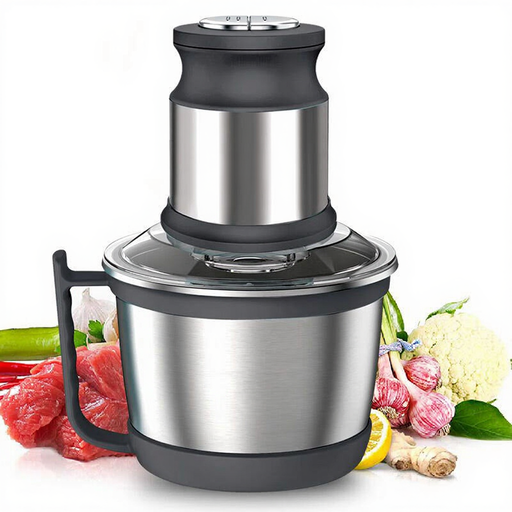
The stated bowl capacity could be useful if you want to process larger quantities; also check the permitted amount for your ingredients.
The product name lists a capacity of 3 l. The description mentions chopping, mixing and grinding with short pulses.
 No image available
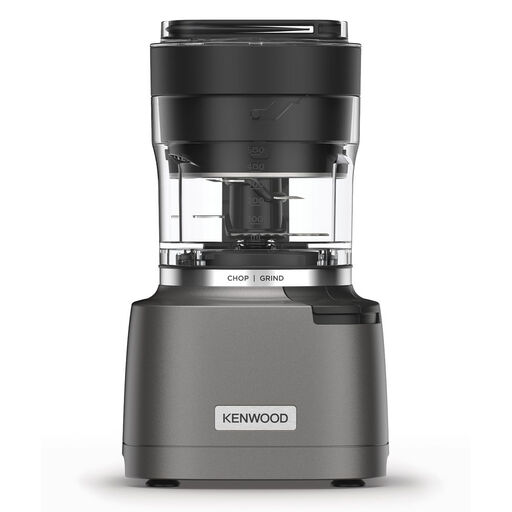
The separate chopping and grinding bowls could suit a workshop where you process different ingredients separately.
The product description lists dishwasher-safe bowls, lids, blades and a spatula.
Choose a model with controls that let you stop it partway through, pause to check the texture and continue processing if needed. KitchenAid says the 5KFC3516EOB has a pulse setting that lets you work from coarse to fine; this is the manufacturer’s claim, not an independently verified result for every recipe.
Don’t assume so: manufacturers list dishwasher-safe accessories or parts, not necessarily the entire appliance. Check the cleaning instructions for the bowl, blade, lid and motor unit for the exact version.
No. When you buy as a consumer in the Netherlands, your statutory rights apply alongside any manufacturer’s or seller’s guarantee. According to ACM ConsuWijzer, the seller must resolve an issue with a faulty product if it breaks sooner than you could reasonably expect under normal use. If you’re buying for a business, check separately which terms apply.
Not just because it’s called a cookery workshop. The NVWA explains that the requirement applies to businesses that prepare, process or sell food; they can use an HACCP food safety plan or an applicable hygiene code. Establish how the workshop is being run before applying this business requirement.
If you sell or provide unpackaged food as a supplier, the NVWA says you must inform customers about any allergens present. The NVWA describes written information and, under certain conditions, information given verbally. The allergens you need to list depend on the ingredients actually used.